Tom Daley reveals he was scammed ordering 10-foot skeleton on Halloween: ‘I even read the fine print!’ (EXCLUSIVE)
"He buys everything he sees on his feed," says husband Dustin Lance Black
By Aaron Sugg
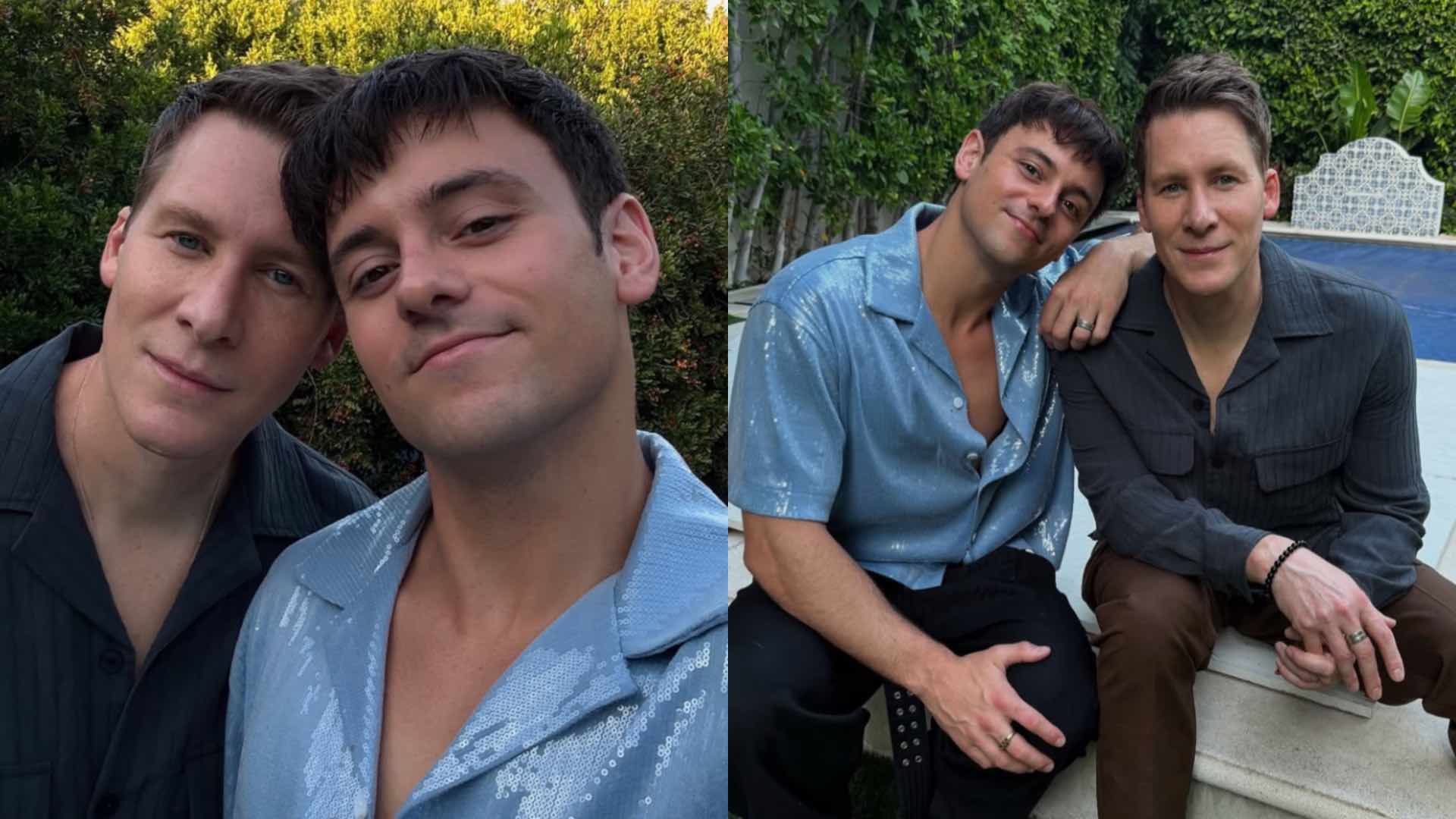
Tom Daley has opened up about his finances with husband Dustin Lance Black, revealing the time he was scammed on Halloween through an Instagram ad while purchasing an alleged 10-foot skeleton.
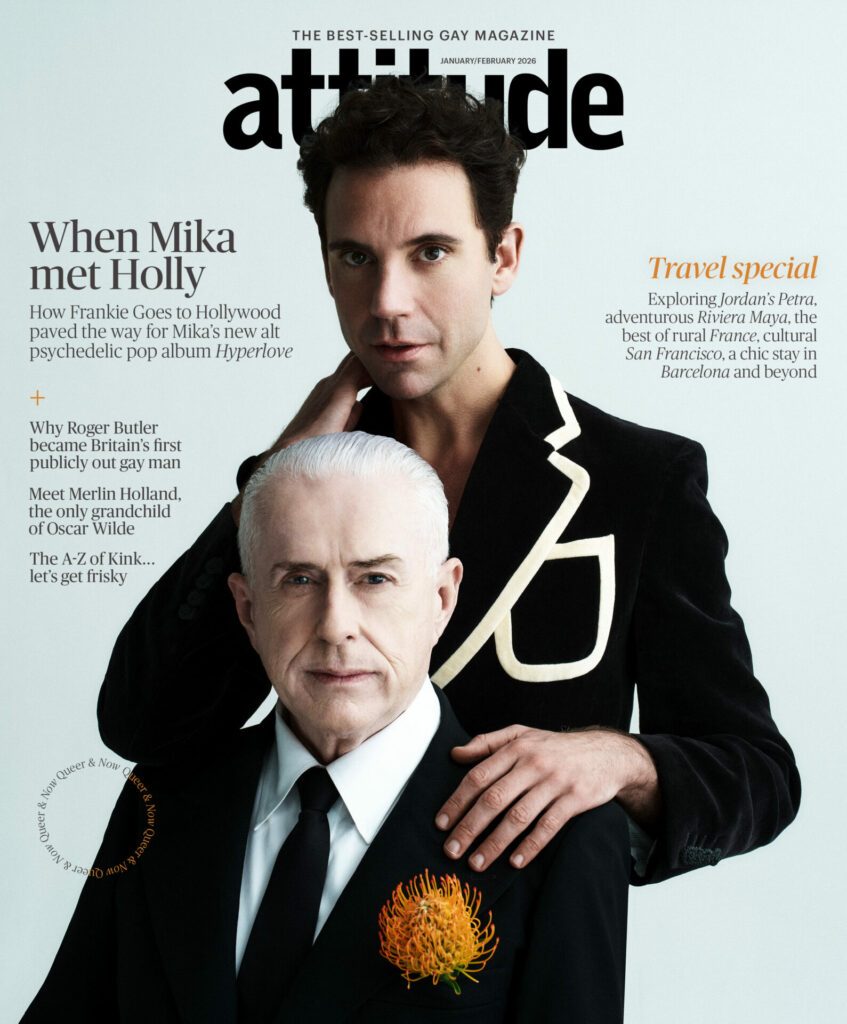
The former Attitude cover star and his filmmaker husband spoke exclusively to Attitude about their differing spending habits, revealing that Tom spends more, purchasing thousands of pounds’ worth of Christmas presents, while Black is the “complete opposite”.
Teaming up with Starling Bank this festive season, the pair highlight the importance of identifying their money languages, saying it helped them decide on future financial investments for their children, whilst giving their candid thoughts on the term “nepo baby”.
You’ve teamed up with Starling Bank, why is this company important to you both?
Tom: I mean, first of all, when we first met, one thing we never really talked about was finance. So, doing this Starling Bank test, where we discovered each other’s money languages, made us realise not only how our relationship wasn’t always compatible, but also how our money habits were completely opposite.
The way Lance grew up, he has quite a scarcity mindset: he worked hard to earn money, but doesn’t like to spend it, preferring to save and squirrel it away. Whereas I’m kind of the opposite. And I came out of his lifestyle enrichment, which basically just means I like to work hard for what I earn, but I also enjoy hosting dinners and having game nights. I like to spend money on my friends and family, enriching my lifestyle so that as many of them as possible are happy. I think that also comes from losing my dad when I was 17, life’s short, and you never know when you’ll get the chance to do the things you’ve always wanted to do.
I feel the same with diving. I’ve always made sure to invest in my career to achieve the results I want. It’s always felt like there’s no time like the present, because an athlete’s career is so short.
Lance: Marrying a Brit, there are a lot of things you just don’t talk about culturally. And I’m from Texas, which is like American times ten in terms of oversharing. So this was a really interesting opportunity. We’re about 12 years into our relationship, and we actually talked about something that a lot of people, I think on your side of the pond, are afraid to discuss.
It was really good. I liked it because I realised we share a joint account that we use to pay for the kids’ stuff and other bills, but I actually had no clue what was going on in his financial world. And he had very little clue about mine. It was really helpful to chat about it and then be able to make decisions based on that, like where we’re going to keep saving and where we might start to spend a little bit.
How do you manage finances together as a couple?
Lance: We both earn, he spends.
Tom: Like Lance said, we kind of keep things separate in our own way. I have my work stuff, and Lance has his. But now that we’ve actually had these conversations and started to figure out how we can best combine things and make our money work for us, we have the joint account. That basically funds all our bills, the house, the kids, and food and other essentials.
I tend to do the budgeting, so I plan out what our month looks like, what we spend on food, the various bills, phone, gym, all of those things. I’m also the one who orders whatever we’re running low on. So when he says he’s the one who spends, it’s also because I keep an eye on what we need as we go.
Lance: The number of packages that arrive at this house, I’d say it probably averages out to dozens per day. Of those, maybe 5% are household necessities. The rest are things he’s seen while scrolling through social media: “I have to have that, I have to have that.” If you’re building a social media ad, a clickbait ad, he’s going to click it and it’s going to end up on our doorstep. And most of the time, it’s mostly disappointing when it actually arrives.
Who would you say spends more money between the two of you?
Lance: He does.
Tom: But I’m also the one who, if we’re going to organise something and I’m going to buy it, usually I’m the one who buys it.
Lance: You tell me, and then you make me transfer money into the joint account.
Tom: Absolutely.
Lance: And I don’t ask questions. You’re just like, “You need to put in X amount more.” And I’m like, okay.
Tom: We actually do need to top up the joint account. Christmas month, all the stuff for the kids.
Lance: That’s how he says it too
Tom: It makes spending money sound sexy.
What’s the most expensive Christmas present you’ve ever bought someone, and how much did it cost?
Tom: I think, actually, your Christmas present this year is probably the most… I bought this old English pub bar, which was meant to arrive on Christmas Eve, but it arrived, like, before Halloween. I bought it from the UK, and including shipping, it cost $10,000, which was a huge expense.
Now that we live in America, we’ve been trying to find someone to come and make something that would fit in that bar area. I say it’s a Christmas present for him, but of course, it’s something I wanted as well.
Lance: I don’t even drink, just so you know. I think it’s beautiful. I love that it’s antique and that it was actually in a pub in London. That’s all fantastic. But, let’s be real, who’s actually going to use it [Tom].
I don’t know if it was the most expensive, but it felt like the biggest sacrifice. When I first started to make a little money doing TV out here on HBO, I bought my mum—a single mother who had raised three boys, paralyzed herself. We were so poor as kids. She had never been on a trip outside the United States, so I bought her a first-class trip to Paris for a week.
Do you think money can buy happiness?
Tom: Sometimes, A frozen yoghurt. Yeah, frozen yoghurt with some chocolate on top. No… but yes… but no. I sound like Vicky Pollard.
Lance: I think that not having money can cause a lot of grief. And certainly, mismanagement of money can cause a lot of grief, both in relationships and in families, and for yourself. Is it the fix-all for unhappiness? No. But I can tell you, getting good care here in the United States, you have to pay for medical care, makes a big difference if you have money. Being alive gives you a better chance of being happy than being dead. So, here we are. But is money sufficient for happiness? Absolutely not.
If you sold your Olympic gold medal, what would you buy with the money?
Tom: I don’t even know if it would fetch any money, ’cause I feel like it’s not even solid gold. I don’t know what it would even go for. I really don’t know. How much do we reckon it would fetch if we sold it?
Lance: I think you could get seven figures.
Tom: You’re joking.
Lance: Because it’s all about the story. It’s an artefact at this point. And the fact that you fought for it for so long, and that you finally achieved it, it’s just a great story. Listen, you’re talking to the guy who knows that stories have value.
Tom: One thing I’ve always wanted is a water slide. Not even like a slip ’n’ slide, but a proper one, you know—like how you sometimes see in American houses. I’m sure the Kardashians have one, where there’s a water slide that goes straight into their pool.
Lance: What he actually wants in our backyard is a zip line that leads to a massive trampoline, which will catapult you into the air and onto the top of a water slide that takes you straight into the pool.
Was there ever a point in your life when money was a real concern?
Lance: I mean, yeah, listen, I got to this place, to my grouping on this Starling tool, because I grew up with no money. Just a little background: my mother was paralysed from polio, and my father took off, never to be heard from again. So three boys, one mum, no job, never drove a car, couldn’t move her limbs.
So, you know, by the end of a month or pay period for her, once she did get a job, there were times when we just didn’t eat, and we thought that was normal. My mum, when I was 13, said, “Go get a job.” So I was delivering newspapers to help pay the rent. Those were really desperate financial times. I don’t think you shake that easily. So, if I seem very conservative in my spending, it’s because I don’t want to get to a position where my kids are hungry the way I was.
Can you explain how you communicate money as a couple?
Yeah, I mean, we’ve only really recently started talking about money, figuring out what each of us has and how best to spend it. You know, mine is very much about lifestyle enrichment and wanting to live a bit more of a YOLO lifestyle, whereas Lance is more about saving, future-proofing, and long-term planning. So I think that’s a big difference between us, but we also balance each other out really well. And I think it’s about having those open conversations. As Brits, you don’t need to talk about feelings, and you certainly don’t talk about money. There are certain things you just… whereas this has opened up those conversations for us to have.
Having a child can bring new financial pressures, how did you prepare for that?
Lance: I don’t think we were prepared for it. It’s very… because now we’re at two children. You know, it can be really expensive. And we’re doing well, but for some people who need childcare, it can really dent your monthly budget in a pretty significant way. I’ve watched how childcare has become increasingly expensive over the years. And these are the people we care most about in our lives. So I think we’ve had to really budget carefully and make some big decisions. Schools are expensive, and it’s different here in the United States, these are all things you have to pay for here.
Are you putting money aside for your children – how are you managing this process?
Lance: No, we’re going to put them to work to pay for us. As soon as they can, “get a job, kid! Daddy and Papa want a holiday.”
Tom: We, have investment accounts for them, don’t we? have investment accounts for them, yeah, that’s I mean, but that’s.
Lance: That has also been a part of these conversations that we’re… unlocking, which is like, because some of it’s like, “Oh, are there better tax benefits in the UK or the US for starting a college fund for kids at this age?” And it turns out that there are good options in both places. So it made good sense for us to invest in that way.
But that’s the kind of thing where these apps are really valuable, because they get you talking about things now that, if you don’t do them now, the future is going to be a bit bleak. So, you know, it’s that idea that if you know better, you can start to do better.
Tom hasn’t really been one to talk about finances or a lot of things, because he’s just British. And so it’s very helpful to start planning for the future. I think now that we’ve talked about it, we both know better and can start to do better.
How are you going to tackle nepotism comments?
Lance: I don’t know what they want to do yet. And we don’t either. I think we’re here to foster their interests, and it starts to become very clear what they enjoy. Whether or not they maintain that interest as things get more challenging, as they move into a particular field, we’ll see. There are only two and seven. But I don’t think either of us are interested in pushing our children into our own fields.
I have interesting views on this idea of the “nepo baby.” Some of it is that these traditions, especially in Great Britain, have a wonderful history of parents bringing their children up in their own field, teaching them about that craft. And that’s why these children often come out incredibly skilled, because they have all the experience of their parents, their successes and their failures behind them.
So I’m not against it. I think if we got rid of children following in their parents’ footsteps, we’d be losing a great deal of history, skill, and craftsmanship. I don’t like the idea of nepotism if it means cutting corners. But if it means learning what your parents did, being inspired by that, and wanting to take it even further.
But what are the chances our kids want to be filmmakers or Olympic champions? I don’t know. They have such varied interests right now that the chances are slim.
Tom: Ah, I mean, you could say that my brother, he followed in my dad’s footsteps by becoming an electrician. But, you know, I know that’s not on the same level in terms of fame or opportunities. As Lance says, there’s that question of, would they count as a nepo baby if they became an athlete and worked hard? Because in an athletic field, no matter what, even if I had influence to get them into any sport, they’d still have to be good in order to beat anyone else, make a team, or achieve anything.
So I think it’s harder to be a nepo athlete, aside from genetics. Everybody has their own struggles when they’re growing up, and I think we’ll just support our children in the way they need to be supported.
Would you say that your finances have impacted your everyday life?
Lance: We are the least materialistic people. The main thing we spend money on is our experiences. That’s kind of what we like, having friends over for dinners, hosting game nights, organising gatherings of people. I probably spend most of my money on bringing family and friends to visit. That’s what I think is important, not so much designer clothing. I mean, we like ours, but we’re just not those people.
Tom: That was in the conversations. That’s where we both kind of land on this—there’s just no… it’s not that we define ourselves by the things we have. Yeah. It’s just not who we are.
Lance: Even in LA, everyone, if you go to a party, usually people have a bartender, caterers, all that. And we’re just like, no, there’s a table over there. Help yourself to the drinks behind the bar, help yourself to the food, bring it aside.
Tom: LA is also incredibly car-oriented. I think there are a lot of people who purchase their car, which they kind of live in, based on it being a status symbol, to try to define themselves to other people. When we went to get a car, we just let Robbie, our seven-year-old, pick out his favourite. So it’s a yellow Jeep Wrangler that looks like a toy. We just aren’t defined by the things we own… neither of us are.
Do you have any financial regrets?
Tom: I don’t really live to regret much. I don’t know if that’s good or bad. I think every decision people make is made for a reason. I don’t think there’s anything.
Lance: Yes, there is. He buys everything he sees on his feed. At Halloween, he thought he was purchasing… in fact, he showed us the photo of what was supposed to arrive: this 10 to 12-foot skeleton emerging from the ground like crawling out, it was huge… he can’t help himself. When it arrived, it was maybe 9 inches tall.
Tom: It was from an Instagram ad. And I just, I got scammed. I even read the fine print and went back. Then I heard about the people, and they were like, “Oh my gosh, so sorry, you must have dispatched the wrong thing.” And then they went silent.
Subscribe to Attitude magazine in print, download the Attitude app, and follow Attitude on Apple News+. Plus, find Attitude on Instagram, Facebook, TikTok, X and YouTube.