
Show Me The Receipts: Alice Weidel, the lesbian leader of Germany’s far-right AfD, and her record on LGBTQ+ rights
She leads a party whose policies have repeatedly opposed LGBTQ+ equality, promoted a traditional family model and sought to roll back trans rights
By Callum Wells
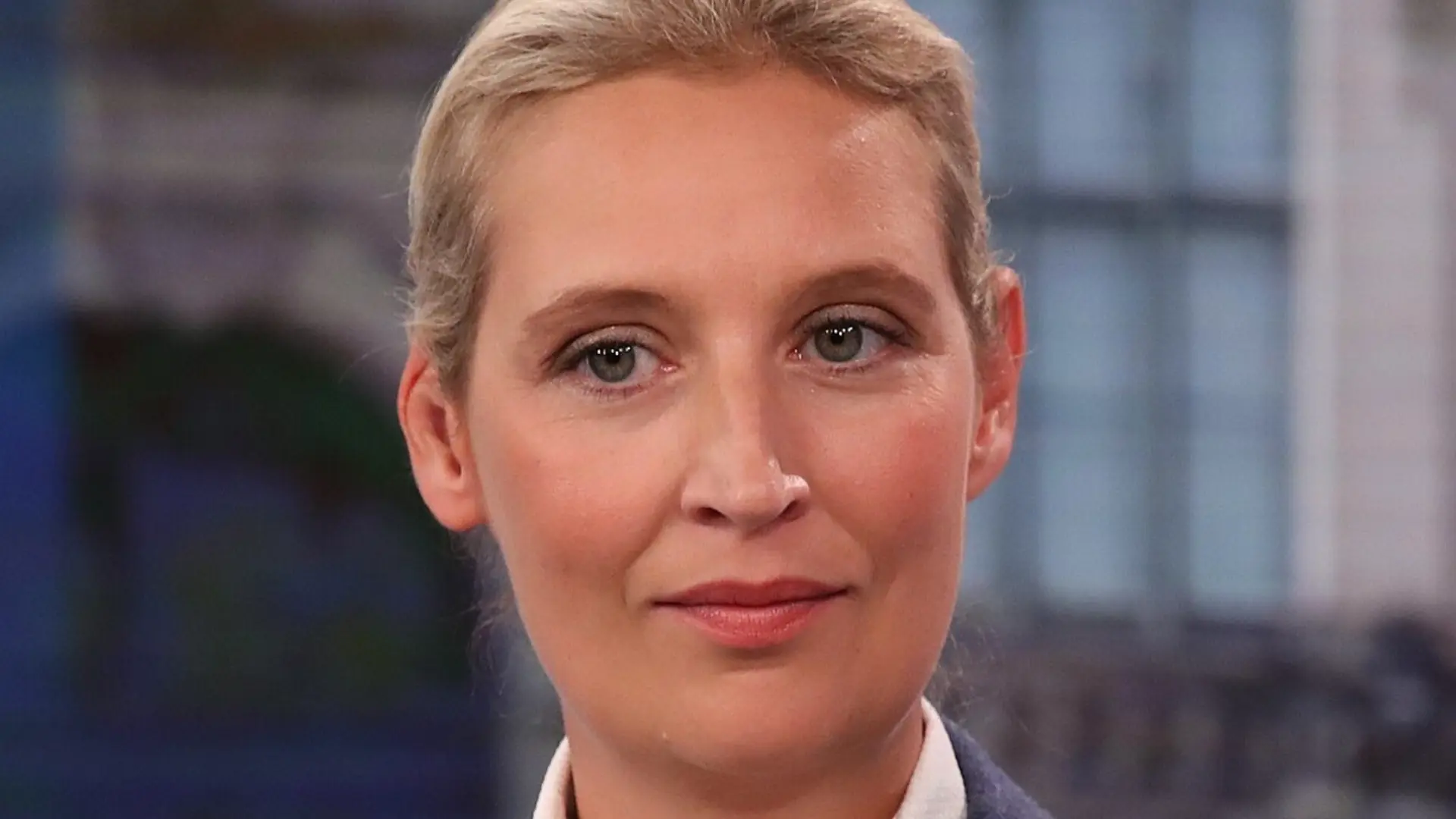
Alice Weidel presents one of the more unusual contradictions in European right-wing politics.
The co-leader of Germany’s Alternative für Deutschland (AfD) is openly lesbian, lives with her female partner and is raising two children with her. Yet she leads a party whose policies have repeatedly opposed LGBTQ+ equality, promoted a traditional family model and sought to roll back trans rights.
Weidel herself has insisted that her private life does not conflict with her politics. In 2023, she famously said: “I am not queer,” and argued that she did not feel discriminated against as a lesbian woman.
More recently, however, she has explicitly said that same-sex relationships should be treated as equal – while still defending the AfD’s preference for the traditional family.
So where exactly does Weidel stand? Let’s examine the receipts.
2013 ×
Weidel joined the AfD in October 2013, shortly after the party was founded.
At the time, the party’s position on family policy was already considerably more conservative than Weidel’s own family life would later suggest.
The AfD has consistently promoted the traditional family as a central social model, with its programmes defining this around a father, mother and children.
2017 ✓
During her first federal election campaign, Weidel was questioned about her relationship with her female partner and whether she considered their household a family.
Her answer was unequivocal: “Family is for me always where there are children.”
She also described herself as a mother and said that she and her partner were raising two children. It was a notably broader definition of family than the one contained in the AfD’s own election programme.
2017 ×
When Germany legalised same-sex marriage in June 2017, Weidel opposed the change.
She argued that marriage was a constitutionally protected institution and said the AfD wanted to retain registered civil partnerships for same-sex couples rather than open marriage to them.
The AfD’s opposition was explicit, while Weidel’s own relationship was an example of the very kind of same-sex family whose legal status the legislation expanded.
2017 ×
Weidel also rejected the argument that same-sex couples needed marriage equality to achieve equal rights.
After the law passed, she described the issue as largely “semantic”, arguing that registered partnerships already provided many of the same rights as marriage.
She specifically acknowledged that marriage equality brought additional adoption rights, but argued those rights could have been extended through the existing civil-partnership system instead.
2017 ×
During the 2017 election campaign, the AfD used Weidel’s image on an anti-marriage-equality poster asking: “Marriage for all, if the country is Islamised?”
The campaign attempted to frame same-sex marriage as a consequence of immigration and Islamisation.
Weidel herself was the party’s lead candidate at the time, while the AfD’s election programme promoted the traditional family and rejected attempts to extend the constitutional concept of family to other forms of partnership.
2017 ✓
There was, however, a distinction in Weidel’s position. She repeatedly said that same-sex relationships should be accepted and that the existence of her own relationship was not a contradiction.
Speaking after marriage equality had passed, she argued that strengthening marriage between a man and woman did not necessarily mean rejecting other forms of relationships.
“The strengthening of marriage does not exclude acceptance of other forms of life,” she said.
2017 ×
But Weidel simultaneously argued that the traditional family should remain the preferred social model.
The AfD’s programme called for political policy to be oriented towards a family consisting of “father, mother and children”, while rejecting attempts to expand the legal concept of family to other forms of households.
That position put her own family structure at odds with the party platform she had helped campaign on.
2017 ×
In an interview that year, Weidel claimed that gay and lesbian people faced a greater threat from what she described as increasing attacks by Muslim migrants than from restrictions on LGBTQ+ equality.
She subsequently described the AfD as the “only real protective force” for gay men and lesbians in Germany in an interview with Focus.
2019 ×
Weidel attacked gender-inclusive language, describing so-called “gender-appropriate” language as an “Orwell project” and accusing advocates of trying to manipulate people’s thinking through “gender ideology”.
The remarks reflected the AfD’s increasingly combative position on gender politics.
2023 ×
Weidel became one of Germany’s most prominent opponents of the country’s proposed self-determination law, which would make it easier for people to change their legal gender.
In an official AfD statement, she attacked the legislation and said it could allow children from the age of 14 to change their legal gender and first name.
She argued that the law interfered with parental rights and that the AfD was considering constitutional action against it.
2023 ×
In an ARD summer interview, Weidel was asked how she reconciled being a lesbian woman with the AfD’s hostility towards LGBTQ+ issues.
Her response became one of the most widely discussed statements of her career: “I am not queer, but I am married to a woman I’ve known for 20 years.”
She said she had two children with her partner and did not feel discriminated against. She also criticised what she called “trans-pop culture” under the rainbow flag, asking how children in schools and nurseries could be protected from it.
2024 ×
Weidel and the AfD continued opposing Germany’s self-determination legislation and broader gender reforms.
The party’s opposition to trans rights became a major part of its campaign against what it calls “gender ideology”, placing Weidel at odds with LGBTQ+ organisations that argue legal recognition and protection for trans people are fundamental rights.
2025 ×
The AfD’s federal election programme continued to define the family around “father, mother and children”, placing heterosexual marriage and biological parenthood at the centre of its family policy.
The party also opposed the country’s self-determination law.
The contradiction was particularly striking because Weidel herself was the party’s candidate for chancellor while living with a female partner and raising children together.
2026 ✓
Weidel did, however, make one of her clearest statements in support of same-sex relationships yet.
In July 2026, she criticised parts of the AfD’s election programme in Saxony-Anhalt, which described a family consisting of a mother, father and children as the best environment for raising children and referred negatively to “sexual deviations”.
Asked about the programme, Weidel said: “I live something different. Same-sex relationships are to be treated as equal.”
She defended her own family, saying that her children had the best possible upbringing, while maintaining that politicians could still promote the traditional family as a societal ideal.
VERDICT
Alice Weidel’s LGBTQ+ record is complicated by the gap between her personal life and her politics. She has lived openly with a woman, raised children with her partner and has said same-sex relationships should be treated equally. But she has opposed same-sex marriage, backed the AfD’s preference for the “traditional family” and repeatedly opposed trans rights and gender reforms.
Ultimately, the receipts show a politician whose personal life is far more liberal than the LGBTQ+ politics of the party she leads.