
Jewish LGBTQ+ Berliners feel unwelcome in queer spaces, says government report
Berlin has recorded a sharp increase in antisemitic incidents relating to the city's queer Jewish community, a government report states
By Aaron Sugg
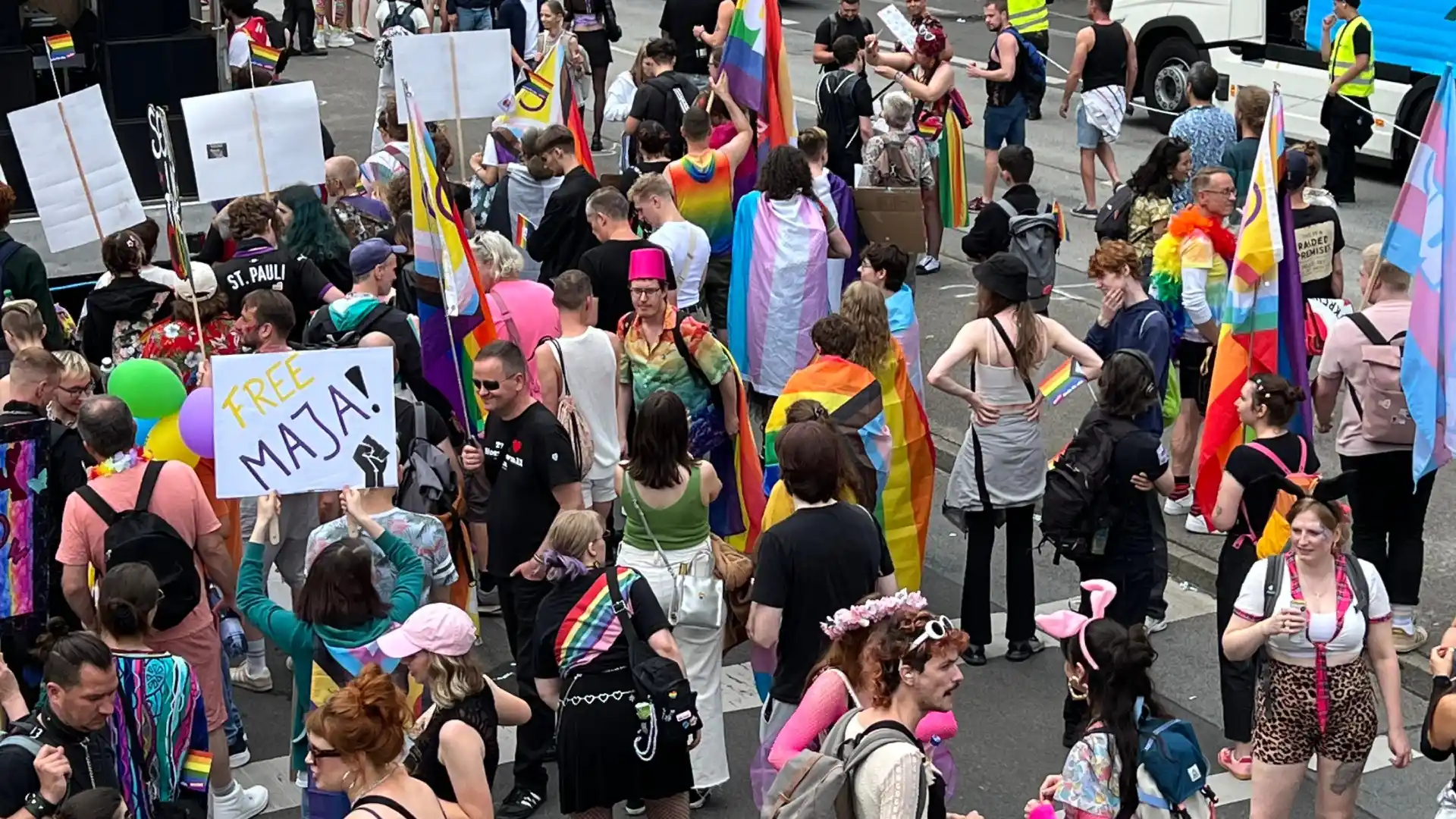
A new government-commissioned report by Berlin’s Department for Justice and Anti-Discrimination concludes that many Jewish LGBTQ+ people feel increasingly excluded from parts of society.
The report states that antisemitism in Berlin’s queer communities predates 7 October 2023, before the Hamas attacks on Israel, a country with a large Jewish population, but has become more visible since then.
As per The Jerusalem Post, the document argues that tensions have increased because some queer activists have become involved in anti-Israel demonstrations, which it says has created pressure on some Jewish LGBTQ+ people to adopt specific political positions.
Government report says Hamas attacks intensified pressures on Berlin’s Jewish LGBTQ+ residents
Following 7 October, Berlin recorded a sharp increase in antisemitic incidents and has since implemented greater security measures to protect Jewish schools, synagogues, and community buildings.
“Queer activists have mobilised for anti-Israel demonstrations, and there have been attacks on Jews. Those who want to be part of the scene are expected to adopt an anti-Zionist position,” reads the report.
The report also links instances of antisemitism in some queer spaces to support for the Palestinian-led Boycott, Divestment and Sanctions (BDS) movement. Germany’s parliament passed a non-binding resolution in 2019 describing the movement’s methods and arguments as antisemitic.
Those standing with the Jewish community “are attacked”
The German parliament stated in its 2019 resolution that the “arguments and methods of the BDS movement are antisemitic.”
Ari Elbert, a board member of LGBTQ+ non-profit Keshet Deutschland, Germany’s Jewish LGBTQ+ organisation, said that members have received fewer invitations to participate in events since the Hamas attacks.
“It’s not always driven exclusively by antisemitic motives,” he told the report. “Allies are attacked, especially in queer-feminist contexts, because people are forced to make a radical decision about which side they are on.
“Anyone who does not want to take a position comes under enormous pressure. Others are afraid of hostility or boycott campaigns and therefore no longer offer us platforms or spaces.”
One interviewee described a major change in Berlin’s LGBTQ+ community after 7 October
One interviewee, identified as A.M., described a major change in Berlin’s LGBTQ+ community after 7 October: “The atmosphere has changed dramatically.”
“Conversations about Israel and Palestine have become highly polarised, and being Jewish in queer spaces now often means that people see you as a political position before they see you as a person.”
Fear has shaken the queer community, with A.M. admitting that they feel LGBTQ+-led organisations are staying silent on antisemitism, leaving them feeling abandoned.