Travel to Jordan: ‘Full of wonders, rich in culture and full of heart’ – why it needs our support now
Jordan is something of an oasis in a region riddled with conflict, with Attitude's travel editor discovering Petra, the Dead Sea and an LGBTQ+ safe space in Amman
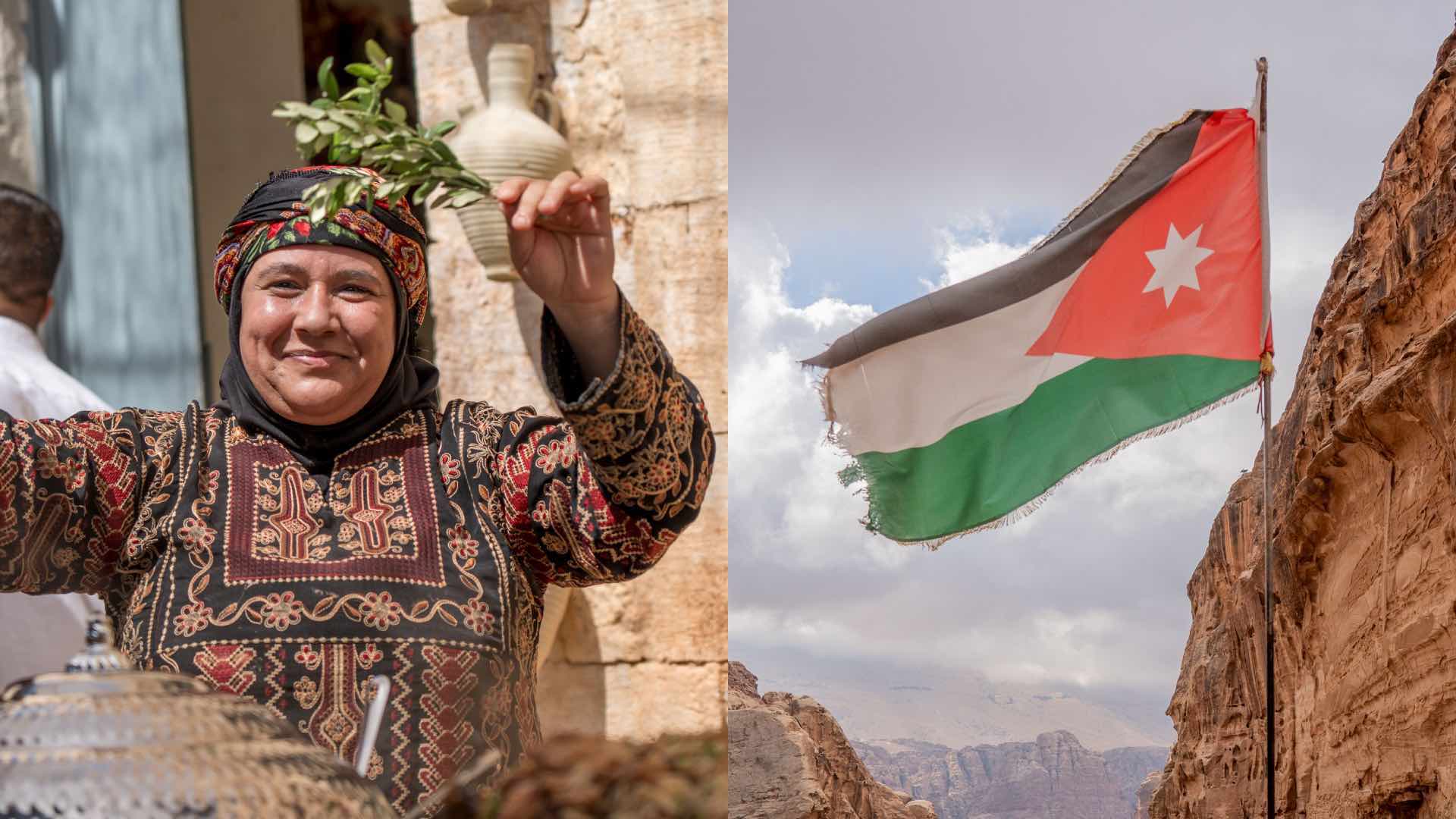
Just over 20 years ago, I visited the Great Pyramid of Giza in Egypt. One of the seven wonders of the ancient world, it was awe-inspiring and far more impactful than I expected it to be. Now, on a trip with G Adventures, I’m about to encounter one of the seven world wonders from the modern list: Petra in Jordan.
We arrive at six in the morning, in the dark, and are the first past the ticket kiosk, walking through half a mile of twisting canyon as quickly as we can, fizzing with excitement all the way. As the sun rises and light starts to filter through the overcast sky, we reach Al-Khazneh, “The Treasury” in Arabic. I’ve seen hundreds of photos of this grand entrance intricately carved into the rose-tinted sandstone of a cliff face, but the way it comes into view through the curves of the canyons is truly cinematic.
It takes me back to my childhood watching Indiana Jones and the Last Crusade, which used it as a set piece. And in a bizarre twist of life imitating art, as recently as 2024, archaeologists discovered a burial chamber under the Treasury containing 12 skeletons, including one holding a ceramic vessel like the famous chalice seen in Steven Spielberg’s 1989 film.
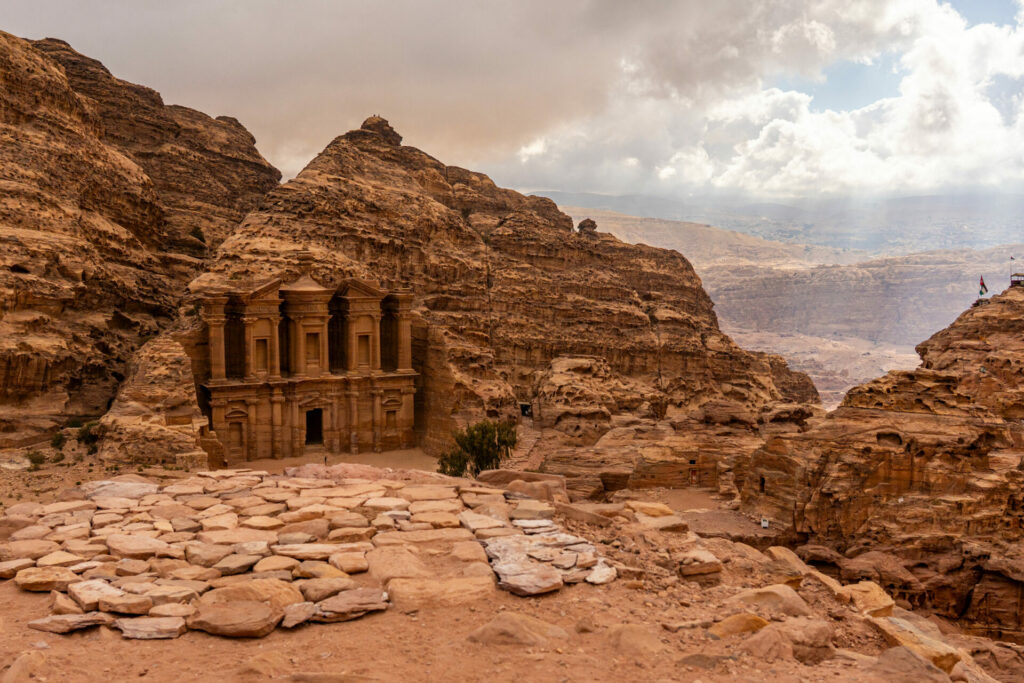
It was named the Treasury by the Bedouin nomadic tribes in the 19th century because they believed the urn on the exterior’s second storey contained treasure, when it is, in fact, solid sandstone. The structure was likely a mausoleum built over 2,000 years ago by the Nabataeans, an Arab people who made Petra their capital.
With most people staying to take selfies, I’m the first to venture further into the Rose City — so named after the Petra sandstone’s pink hue. As I climb the stairs of the Urn Tomb, one of Petra’s royal tombs, I’m shocked at how much freedom I have to walk around these ancient structures.
“The vastness of the city is staggering”
I walk up a hill and look upon a valley of caves and carved entrances and there’s not a soul in sight. All I can hear are birds chirping, the wind, and my steps brushing the sand. From this vantage point, the vastness of the city is staggering.
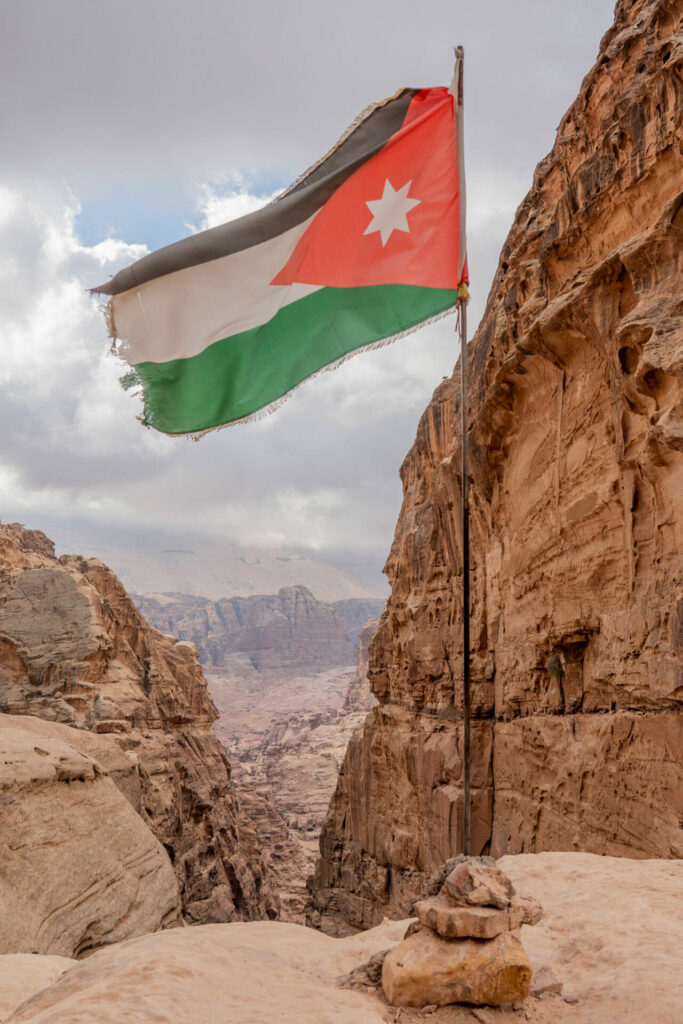
I climb the 800 steps to the mountain-top Monastery, a building almost as impressive as the Treasury but surrounded by amazing views on all sides. There are handwritten signs saying “Palestine” with arrows pointing west.
That one word encompasses Jordan’s current tourism predicament and the reason it is so quiet today. Before war began in Gaza in late 2023, Petra suffered from overtourism, with thousands of visitors each day; today, numbers hover around the low hundreds. Hotels around the site were at one per cent occupancy for much of 2025 and dozens have been forced to close.
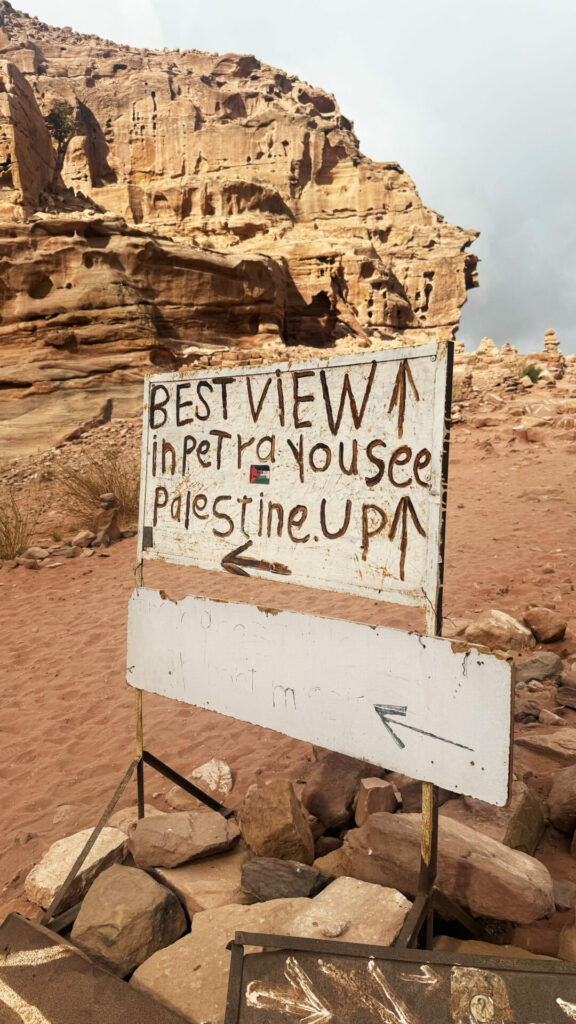
Tourism numbers have dwindled to just 10 per cent of what they were a few years ago, as travellers fear the site’s proximity to the horrors of the war. During my trip, the last days of the conflict were still raging, so we will have to wait and see if tourism numbers return when — hopefully — post-war hostilities finally subside.
Jordan is known as the Switzerland of the Middle East, so although it borders plenty of countries with problematic issues, it finds itself in the unique position of enjoying good relations with them all. It is also one of the only countries in the region that does not criminalise homosexuality. The colonial-era law was omitted when the country created its own penal code in 1951 after gaining independence from British rule.
“Friendly, understanding and not at all pushy”
On my way back down the mountain, I pass all the makeshift shops selling souvenirs that I had already walked by on my journey up. I let them down a second time by saying I can’t buy any of their scarves or jewellery. They are all friendly, understanding and not at all pushy, though I wonder how they have survived the past two years’ devastating impact on tourism.
I meet up with my tour guide and group before a bus takes us to Wadi Rum, a 280-square-mile desert expanse in the south. This is another cinephile hotspot, with many movies filmed here — from Lawrence of Arabia in the early 60s to the recent Dune and Star Wars films.
One movie that has had a huge impact on the area is Ridley Scott’s The Martian, which saw Matt Damon’s character stranded on Mars in a glass dome habitat. Zuhair, our Jordanian tour guide, explains that during the past 10 years the number of desert camps has jumped from 100 to over 400, and many of them offer bubble domes you can stay the night in.
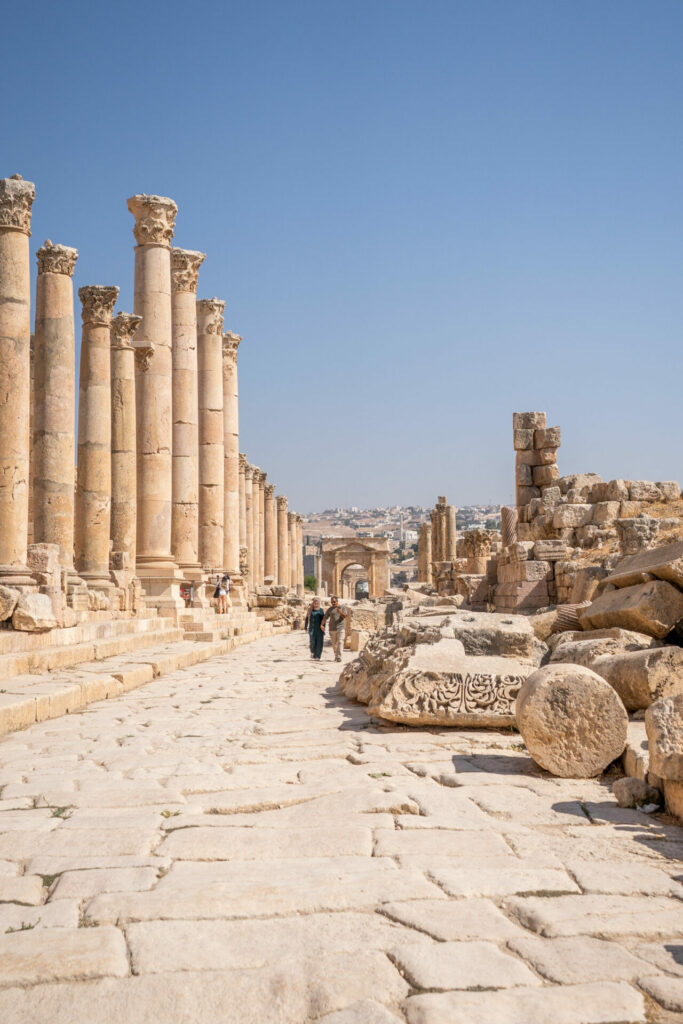
The camp we are staying in that night has a few domes, but we stay in wooden cabins encircling a large swimming pool.
“Euphoric in this moment of solitude”
Soon after we arrive, we are gifted red and white Jordanian Keffiyeh scarves to protect our faces during our Jeep ride through the desert. We jump in the back of the vehicles and hold on for dear life as the local Bedouin drivers take us across the dunes.
The towering rock formations jutting out of the sand are spectacular, and after our rip-roaring ride, I climb one near our camp on my own to enjoy the sunset. As the rock around me fades into shades of reds and purples, I feel almost euphoric in this moment of solitude.
Just west of Wadi Rum is Aqaba, Jordan’s Red Sea coastal city, which is popular with scuba divers. But our next stop is around 170 miles north, to another aquatic destination and one that happens to be the lowest point on earth: the Dead Sea.
“The sands are red hot, and the ultra-salty water creates crystals”
We stay the night at the Hilton Dead Sea Resort, which has its own private beach. Before the trip, it was recommended to bring flip-flops for the beach and I have ignored the advice to my cost. The sands are red hot, and the ultra-salty water creates crystals along the shore which are sharp underfoot.
The crystals can be scooped up and used to exfoliate your skin, and there are buckets of dark Dead Sea mud which have high levels of magnesium and sulphur that nourish the skin and aid many skin conditions. Slapping on mud from head to toe is fun, but so is slipping into the water and enjoying the buoyancy that makes you feel like a clumsy polar bear when you move around.
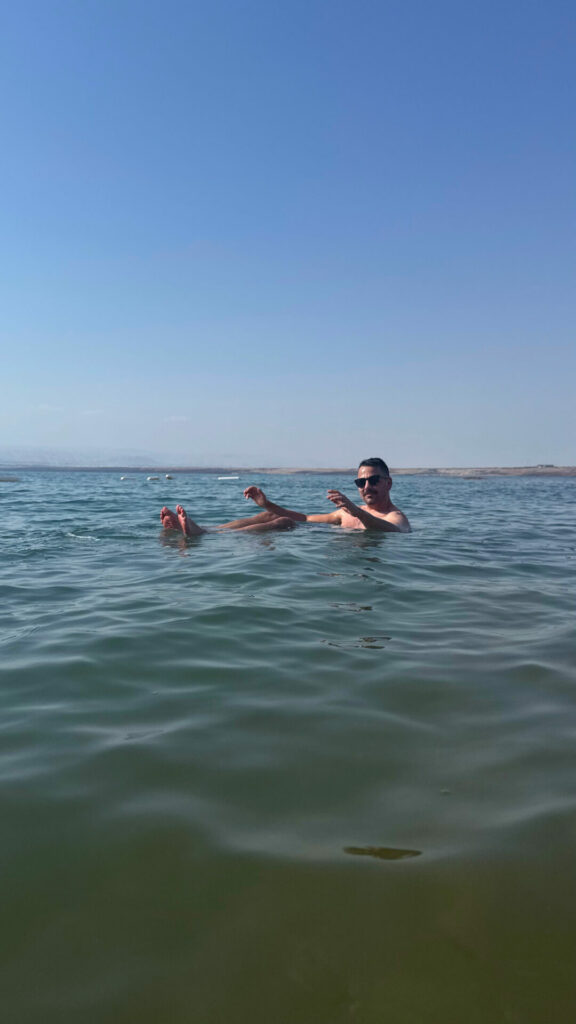
Roughly 10 miles across the water is Israel, though it looks and feels much closer. Conversations with fellow travellers revolve around the awkwardness of having fun when so much atrocity is happening across the border. It is a reckoning we were all aware of when we came to Jordan, and one that we justify in our desire to support the locals, whose lives and income have been inadvertently affected by the conflict.
With our skin feeling supple and soft, we head further north towards the Jordanian capital of Amman, making some stops along the way. For lunch, we visit Beit Khairat Souf, a women-led cooperative in the village of Souf.
This is an excerpt from a feature appearing in Attitude’s January/February 2026 issue.
Subscribe to Attitude magazine in print, download the Attitude app, and follow Attitude on Apple News+. Plus, find Attitude on Instagram, Facebook, TikTok, X and YouTube.