
The Stonewall Inn and the Mafia: Did organised crime protect or exploit queer New York?
Attitude investigates the unlikely alliance between the Mob and New York's persecuted LGBTQ+ community in the 20th century
By Callum Wells
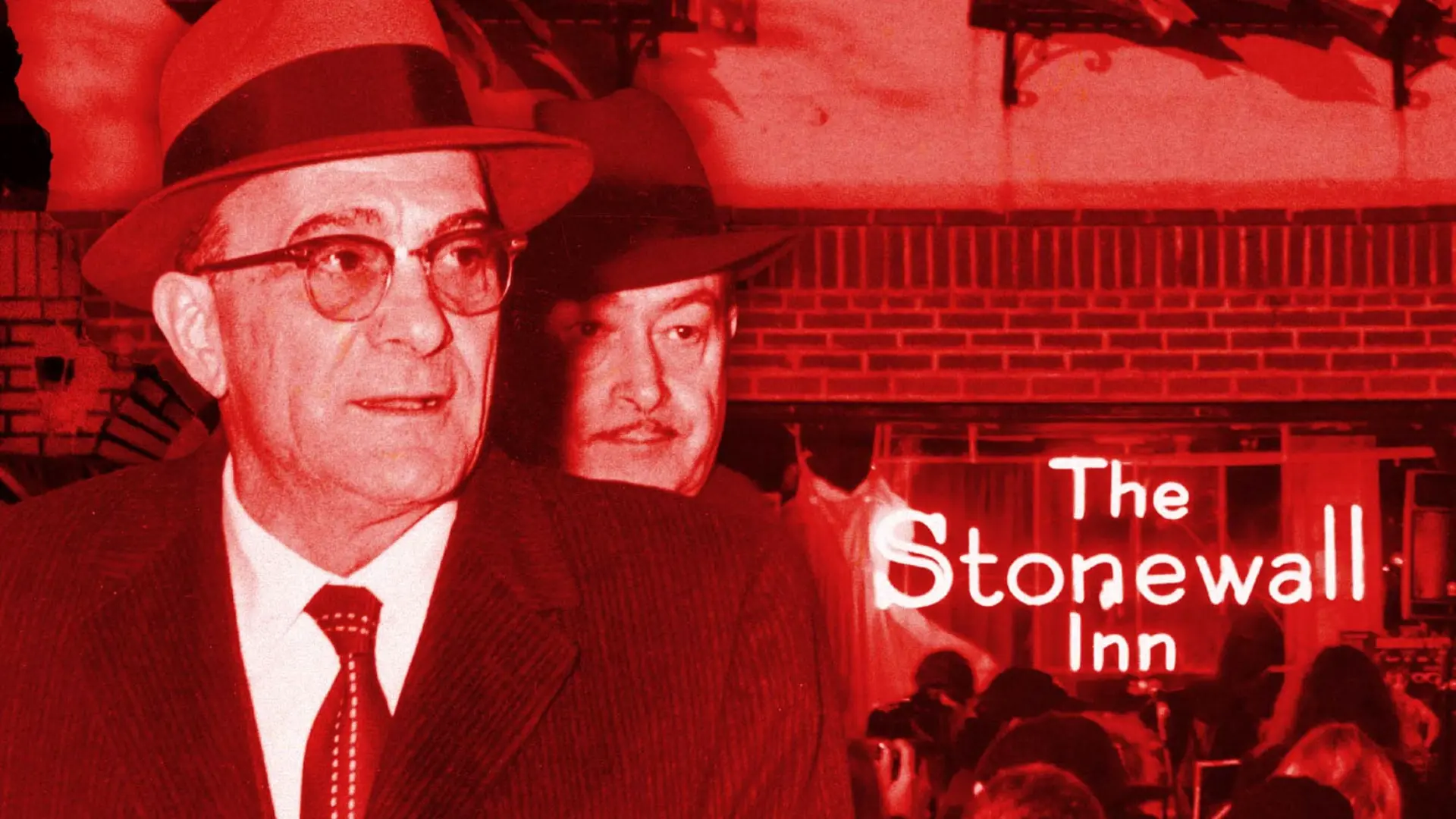
The bricks of the Stonewall Inn are currently for sale. Not the building itself – that remains a hallowed, two-storey townhouse on New York’s Christopher Street – but the literal clay and mortar of the façade. Kurt Kelly, one of the bar’s current owners, found bricks from the Inn in a skip during renovations in 2018, more than a decade after he and his business partner Stacy Lentz bought the historic site in 2006 to save it. The city had ordered the removal of the original façade, deeming it unstable, and was prepared to consign the history of the queer movement to landfill.
Kelly spent hours “dumpster diving”, as he puts it, to rescue the history the city was trying to haul away. “I said, ‘Wait a minute, you’re not throwing away our history,’” he recalls. Today, those bricks are sold to collectors to fund the Stonewall Inn Gives Back Initiative (SIGBI), in a literal selling of the ruins to build a future based on firm foundations.
At the centre of this moral labyrinth sat Matthew “Matty the Horse” Ianniello
Yet that history is far from a tidy tale of liberation and rainbows. When Kelly and Lentz first ripped out the banquettes in 2006, they didn’t just find dust; they found bags of cocaine stashed deep inside the old furniture and behind the walls – relics of a “dive bar” reputation that had clung to the space since its opening in the 1960s. It was visceral evidence that before Stonewall was a monument, it was a business. What many don’t know is that before the famous Stonewall Inn riots, the bar was a “shack” whose existence was steeped in Mob control.
At the centre of this moral labyrinth sat Matthew “Matty the Horse” Ianniello. To the outside world, Ianniello was a decorated Second World War veteran with a Purple Heart and a Bronze Star. To the FBI, he was a powerful capo and, later, acting boss of the Genovese crime family based in New York. To the queer community of Greenwich Village, he was the “Sultan of Times Square”.
With homosexuality illegal in the US – the state of Illinois was the first to decriminalise it in 1962 – gay men were denied entry to mainstream society. As was the transgender community. Although being transgender was not explicitly illegal, many states, including New York, had “cross-dressing” laws in place.
Ianniello recognised that these shunned groups were the perfect “captive market” and franchised queer nightlife, with 82 Club being one of his first venues. In such places, gay men and trans people were forced into the shadows, where Ianniello was waiting to effectively sell them their own freedom at a 500 per cent markup. Hefty door covers and overpriced drinks doubled as a premium for protection from police arrest when they raided the clubs. Pulling the strings from his office at Tito’s restaurant, Ianniello ensured that even social outcasts paid their dues to his Mafia family.
The “marriage of outcasts” that defined 20th-century New York needs to be explained
The Stonewall Inn’s Mafia story began in 1966, when Ianniello backed a young associate named Tony Lauria, known as “Fat Tony”, to purchase the Stonewall Inn for a mere $3,500. At the time, it was a struggling “straight” restaurant. With a simple coat of black paint on the windows and a jukebox in the corner, the Stonewall Inn was reborn as a “private bottle club”. Ianniello repeated this business blueprint with clubs like the Gilded Grape and the Haymarket, which would both flourish during the 1970s.
The business was a family affair in more ways than one. Anna Genovese, the wife of the family’s namesake, Vito Genovese, was reputed to be a lesbian and ran several of the family’s gay nightclubs. It was a rare instance of the inner workings of the Mob directly mirroring the community they both catered for and simultaneously exploited.
To understand the Mafia’s relationship with Stonewall and its other queer bars, the “marriage of outcasts” that defined 20th-century New York needs to be explained: it was a partnership between the Genovese Mafia family that ruled the city and a community that the state had deemed “unfit”.
“I teach the economics of crime,” says Anja Shortland, a professor of political economy at King’s College London, who has spent years dissecting the “protection” offered by organised crime. “The more I think and teach about crime, the more I realise that what we criminalise doesn’t necessarily make sense.”
When the law refuses to protect a group of people, that group looks for “private protection”
Shortland’s perspective is clinical, yet revolutionary. In the 1960s, the state of New York didn’t just disapprove of being gay; it erased the right to exist in public. Offenders could not work for the government, serve in the armed forces, and – crucially – could not be served alcohol.
“The state clamps down on the identity,” explains Shortland. “And yet, we have this thriving scene. My puzzle is: ‘What’s happening at this time?’” The answer, she argues, is a market response to state overreach.
When the law refuses to protect a group of people, that group looks for “private protection”. Shortland notes that the Mafia provided a level of “governance” to the underworld. If they simply robbed every customer, the business would vanish. Instead, they provided a space where people could meet, dance and talk without the immediate fear of being arrested by the state.
That freedom sounds small today. In 1969, it was revolutionary. Same-sex dancing was effectively criminalised in many spaces, with bars risking raids or closure if queer intimacy became too visible. The radical act at Stonewall was not drinking – it was touching.
“The Mafia and the LGBTQ+ community were natural allies because both were social outcasts” – Phillip Crawford, historian and author of The Mafia and the Gays
Even within that community, however, safety was unevenly distributed. White cisgender gay men generally had more protection, more access and more visibility than trans people, drag queens, homeless queer youth and Black LGBTQ+ New Yorkers, who often existed at the sharpest edge of police violence and criminalisation.
The question that now haunts the history of the movement is a gritty, uncomfortable one – was the Mafia the villain of the story, or were they the unlikely guardians of a community with no other friends?
Phillip Crawford, historian and author of The Mafia and the Gays, who has spent decades digging through FBI files and Mob records, calls it a “marriage of convenience”. “The Mafia and the LGBTQ+ community were natural allies because both were social outcasts,” Crawford says. It was a relationship that predated Stonewall by some decades, he explains. The Mafia had been providing spaces for queer people since the 1920s Pansy Craze, a cultural movement which saw openly gay, gender-nonconforming and drag performers achieve mainstream popularity. With the 1920 beginning of Prohibition – banning the sale and production of alcohol – the Mob moved their clientele into illegal speakeasies. When Prohibition ended in 1933, the Mob didn’t disappear; they simply pivoted.
This is an excerpt from a feature appearing in issue 371 of Attitude magazine, on sale in print and digital now. Order Attitude magazine issue 371 in print now, or in digital on the links below on Apple News+ and the Attitude app.