
Guitarricadelafuente on coming out, Troye Sivan friendship and La bola negra: ‘Showing your body, being tender, being afraid – none of those things make you less of a man’
Trust us, his is a one-of-a-kind name you need to know. Here, the rapidly rising actor reflects on what his La bola negra character Sebastián – living in a time of war when he was required to ‘be a man’ – taught him. “I’ve spent the last few years understanding vulnerability doesn’t make me less masculine,” he says
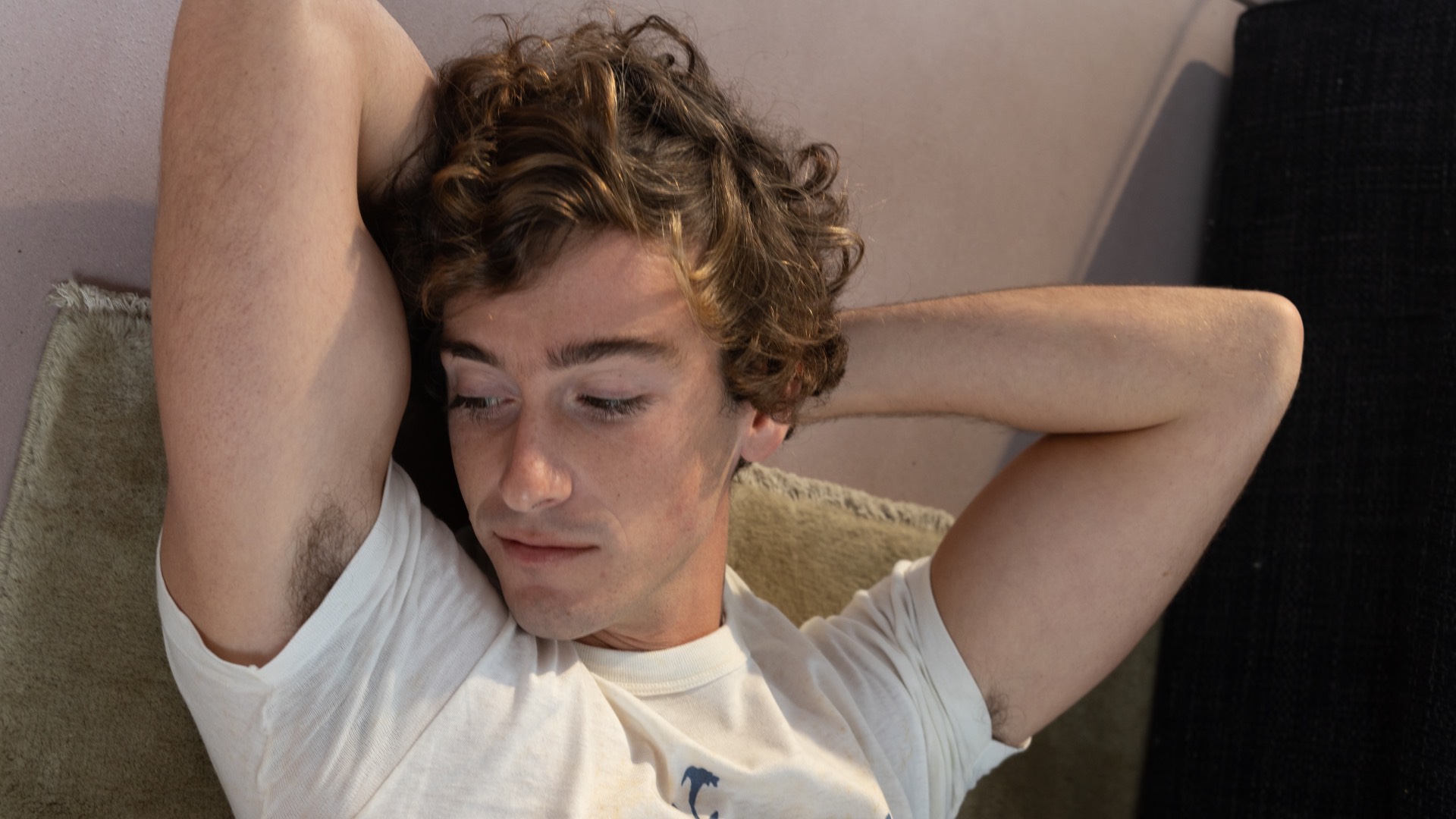
In our view, it’s up there with Lady Gaga: the flex of a stage name belonging to Spanish folk-pop star Guitarricadelafuente (real name Álvaro Lafuente Calvo), which combines his surname and ‘guitarrica’, an Aragonese word for a “small guitar.”
Put it this way: as a rapidly rising star with two Troye Sivan collaborations under his belt, and with Oscar buzz around his role in this autumn’s gay Spanish war epic La bola negra, his is a name you need to get familiar with.
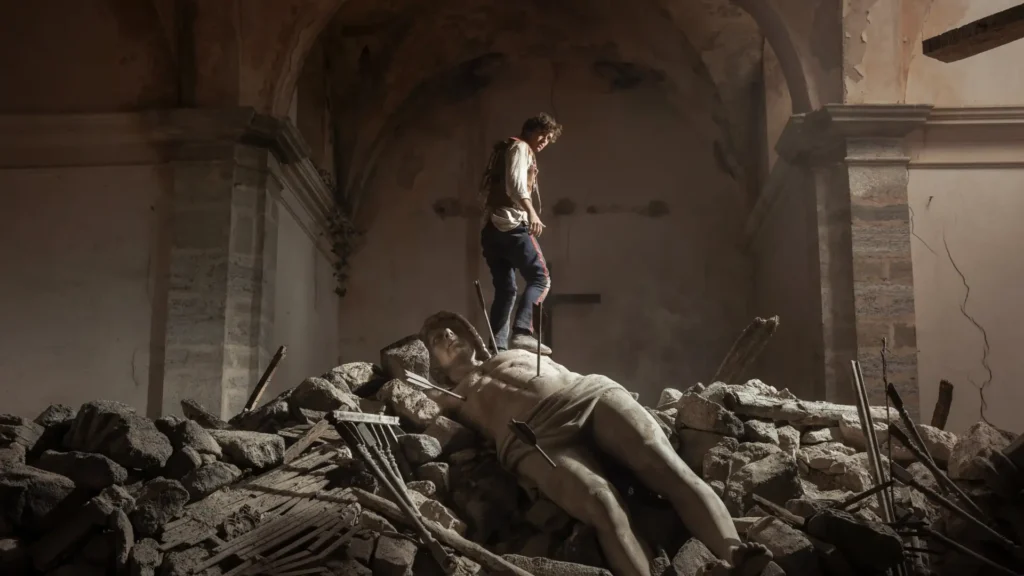
“Sebastián is trapped by this idea of what a man is supposed to be, and it leaves him almost no space to exist,” he recently explained to Attitude in a beautifully written email interview. What follows is the first half of that conversation.
Hi Guitarricadelafuente. How are you? What exciting things are you up to this week?
I’m good! A little tired, but very happy. I’m in Toronto at TIFF [Toronto International Film Festival] at the moment with La bola negra. It’s really exciting to bring the film here and finally experience it at a major festival outside Europe. We made it quite a while ago, so it’s strange and beautiful to see it starting to have its own life and travelling so far. And being here at TIFF with my first film feels pretty surreal.
Troye Sivan is a collaborator and friend of yours. Is he someone you speak to about your artistic endeavours as they’re happening, and did that happen on La bola negra? It’s nice to think that, if you spoke to someone like Troye about your character, or about the film’s message and mission, a little bit of him and of everyone whose opinions you value may have seeped into the film.
Troye is definitely someone who’s influenced me. Before we became friends, he was already a reference for me. I really admired how free he seemed, how comfortable he was with his body, and how he could show vulnerability and still feel very strong. Meeting him opened something in me at exactly the right moment.
With La bola negra, though, I think I went quite inward. Sebastián required me to go somewhere very personal, so it wasn’t really a case of asking people what they thought I should do with him. But of course, everything you experience and everyone you love enters your work somehow. I think that just happens without you really noticing it.
What does it mean to you to be a publicly gay actor playing a gay role?
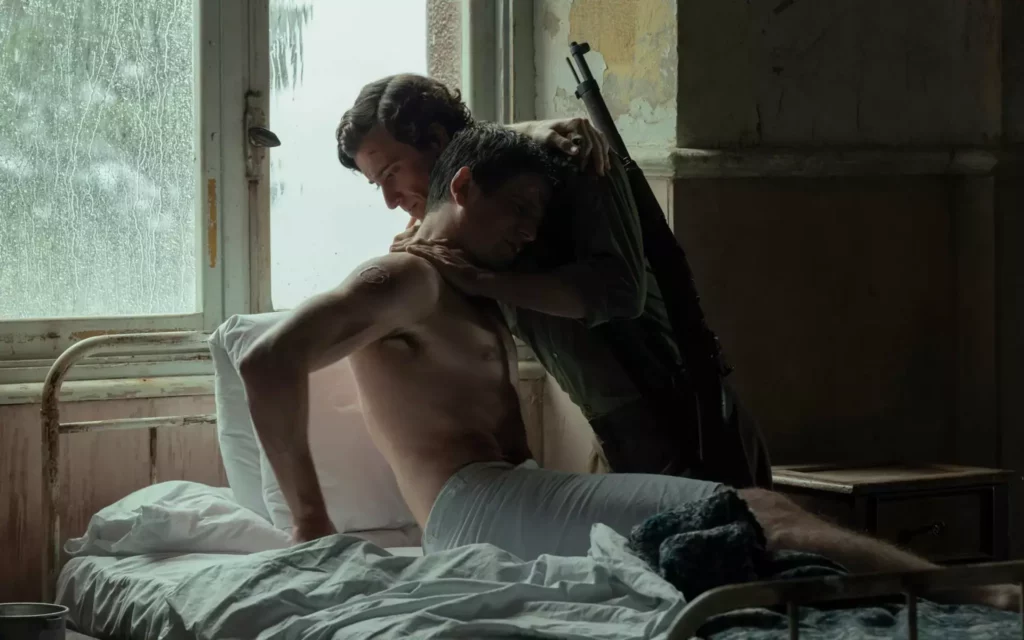
I honestly didn’t think about it in those terms when I accepted the film. I thought about Sebastián as a person. His desire is obviously fundamental to who he is, but so are his fear, his family, the war, where he comes from and his need to survive.
But afterwards I understood it differently. I can be openly gay, make an album like Spanish Leather, sing about desire, show my body, have a boyfriend, and then play somebody who could barely name what he felt without putting himself in danger. And really, that distance is only a few generations. Playing him made me think a lot about the fact that the freedom I have today is something other people before me simply didn’t have.
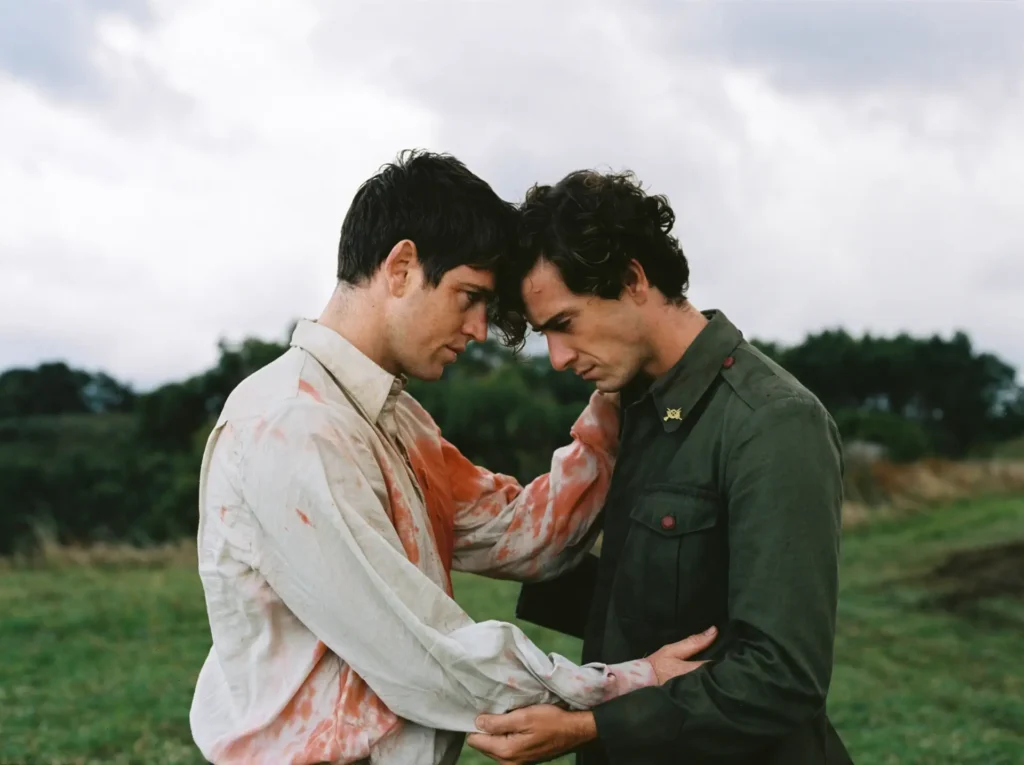
I am interested to learn more about your life as a queer person spending time in rural Spain, as this mirrors your character’s experience. For the sake of any young LGBTQ people privately struggling with their identity, who are inspired by you and the film, can you share a little about your coming out journey?
My experience was actually quite different from Sebastián’s, and I feel very lucky for that. I never really had a dramatic coming-out moment. I never felt that I was hiding, but for a long time I also didn’t feel that I needed to make an announcement about who I was.
There’s actually a funny story. During lockdown I was doing an interview, and they asked what I was doing, and I said something like, “I’m here with my boyfriend.” That was how my mother found out. And it was fine. I hadn’t sat my parents down before because I never felt I had to
I know that isn’t everybody’s experience, especially in smaller or more conservative places, and I don’t want to pretend it is. But I also don’t think coming out has to happen in one particular way. You do it when and how it feels right for you. For me, being able to live it naturally was the important thing.
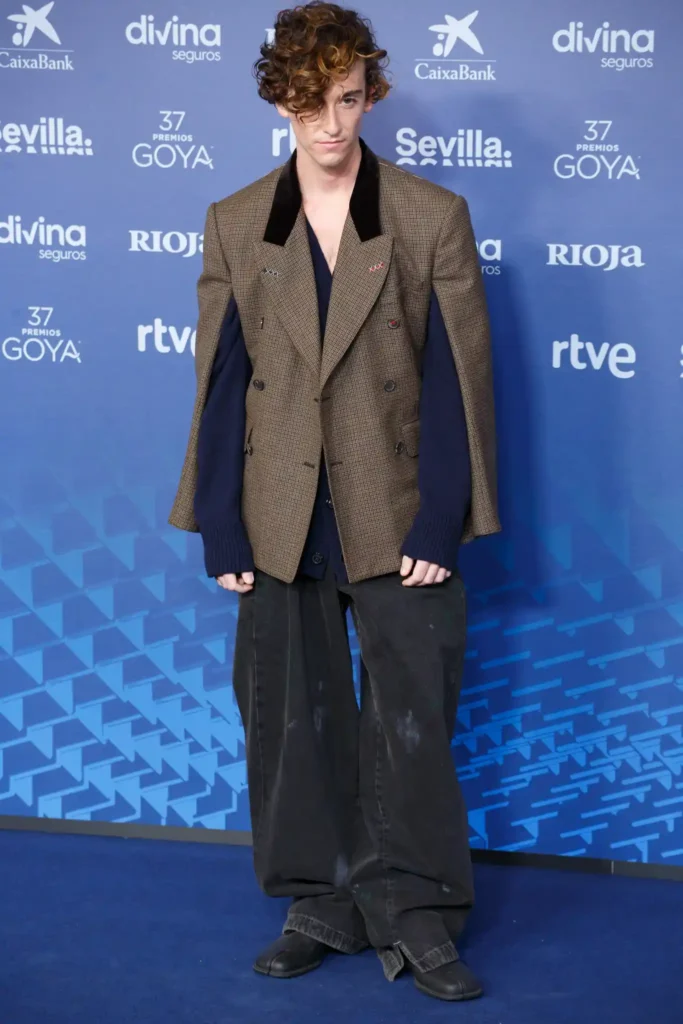
Your 2025 album Spanish Leather has been described as unabashedly celebrating sexiness, homoeroticism, queer desire (“full-time papi!”), sensuality and hedonism – and after its release, you took on this character of a man who has to hide his sexuality. What was that like for you?
That contradiction was one of the things that connected me to Sebastián immediately. Spanish Leather was about giving in to desire and allowing myself to be seen. I was exposing my body more, talking more directly about my personal life, playing with sensuality. ‘Full Time Papi’ is basically about feeling comfortable in your skin and giving yourself permission to desire.
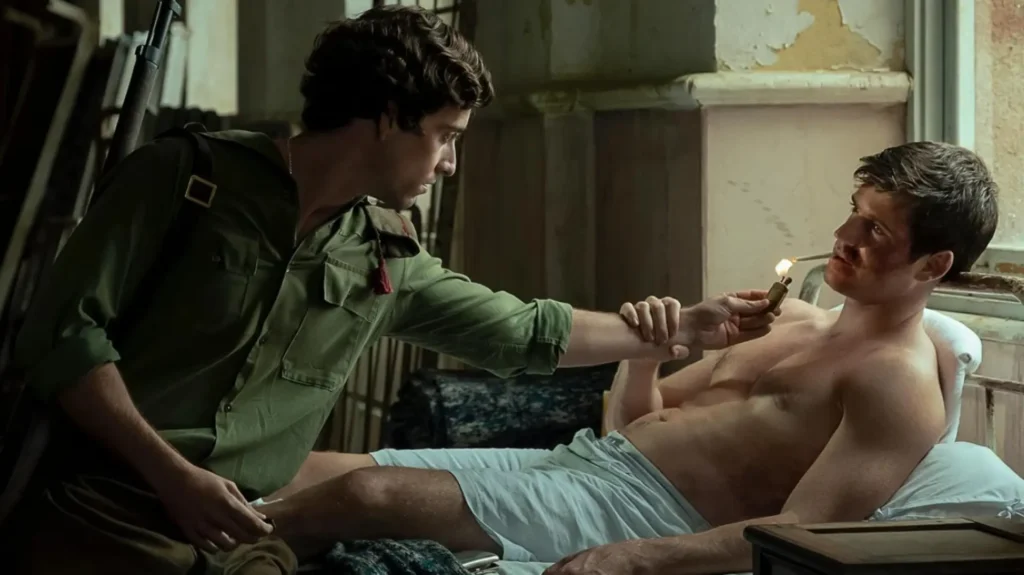
Then Sebastián appeared, and he has all this desire inside him but almost no way of expressing it. He’s surrounded by war and by this extremely rigid idea of what a man is supposed to be. He is constantly fighting against something inside himself that he doesn’t really know how to release.
It made me think a lot about how lucky I am to be able to make something like Spanish Leather today. Sebastián and I can have some of the same feelings, but what we’re able to do with those feelings is completely different.
You told the New York Times that “Sebastián very much lived in a time when he was required to ‘be a man […] that allowed me to learn about myself.” Can you elaborate?
I think I realised how many ideas about masculinity we still carry without noticing. Sebastián lives in an extreme version of that. He’s in a war, surrounded by violence, and masculinity means being strong, being useful, not showing fear, definitely not showing desire for another man.
My life obviously has nothing to do with his, but playing him made me think about the smaller ways we still perform masculinity today. I’ve spent the last few years understanding that vulnerability doesn’t make me less masculine. Showing your body, being tender, being afraid, wanting somebody – none of those things make you less of a man.
Sebastián is trapped by this idea of what a man is supposed to be, and it leaves him almost no space to exist. Of course we live in a completely different world, but some of those ideas are still around. I think playing him made me question how much of that I had also absorbed without really knowing it.
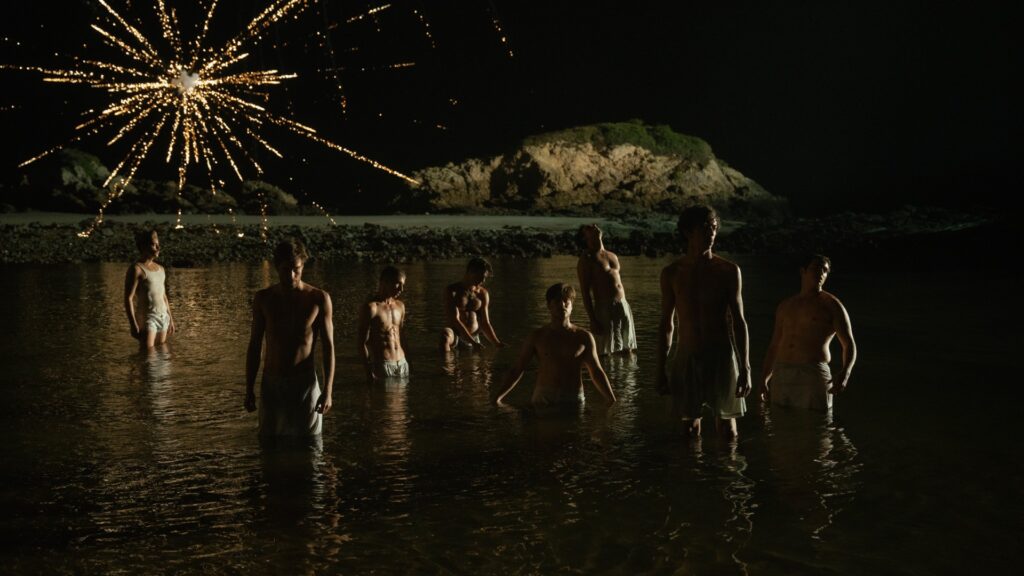
You told I-D that your character is an extension of yourself. In what ways are you similar and what ways are you different?
Sebastián is a guy from a village who carries a desire inside him that he doesn’t really know how to name or express. In a different way, I’d been circling around similar questions while making Spanish Leather: someone leaving a small place, discovering the world, discovering his own emotions and trying to find a place for them. That’s why he never felt completely foreign to me.
Our lives and times are different. But emotionally there were things in him that I recognised very quickly: his desire, his vulnerability, even the way he observes the world.
You also told NYT that the film will influence your upcoming third album. Can you give some insight into how?
I’m still discovering that, so I don’t want to explain an album that doesn’t completely exist yet. But I know the film changed the way I’m writing.
For months I was inside another person’s emotions, another historical period, Lorca, the music of the Civil War, all these images of desire and death and things that couldn’t be said. I also wrote ‘La Nieve’ from inside that world with Raül Refree.
I think acting also took me outside myself a little. With songwriting I normally start from something that happened to me. Sebastián showed me that I can enter somebody else’s story and still find something of myself there. I think that will stay with me.
I imagine your commitment to making this film was all-encompassing, but, at the same time, your music career has been in rapid ascension for years and it’s not like you can just press pause on that. How did you juggle your music career while making this movie? Was it a case of spending a few hours an evening, perhaps, focusing on that?
Honestly, I don’t think I balanced it very well. The film needed all of me while I was shooting it. It was my first time acting, so I couldn’t arrive on set and treat it as something I was doing between other things.
At the same time, Spanish Leather had become such a huge part of my life. I paused the tour for several weeks to be on set and give the film my full attention, but creatively the two things kept overlapping. Even when I wasn’t working on music, that world was still very present in me. And then Sebastián started finding his way back into the music too.
You can read the rest of this interview in the upcoming sixth issue of Attitude Uncut. La bola negra is in UK cinemas now.