
Dean Atta on BAFTA-winning film Two Black Boys in Paradise: ‘People have seen it as something needed’ (EXCLUSIVE)
The poet and filmmaker has been honoured at the PEUGEOT Attitude PRIDE Awards Europe, supported by British Airways
Dean Atta, the award-winning Black British poet and author of Greek Cypriot and Caribbean heritage, has spent much of his career turning personal experience into powerful storytelling. Now, that journey has reached a new milestone with the stop-motion animated short film Two Black Boys in Paradise, adapted from Atta’s celebrated poem of the same name, winning British Short Animation at the 2026 BAFTAs. It is for this and his wider work that Atta is being recognised at the PEUGEOT Attitude PRIDE Awards Europe, supported by British Airways.
Long before the awards and acclaim, writing became both refuge and resistance for a teenage Atta, who was raised in London. He began writing poetry to explore identity, belonging, race, sexuality and social justice. This creative activity provided a space where he could process the world around him and imagine something softer beyond it.
The making of a storyteller
Today, alongside his literary work, Atta mentors young people through organisations including First Story and Authors Aloud, helping children develop the confidence to tell their own stories. That commitment to visibility and self-expression runs through all of his work, from his poetry collections to his screenwriting.
The path to Two Black Boys in Paradise began unexpectedly at a poetry reading in Berlin, where producer Ben Jackson first heard Atta perform the poem live. Speaking to BAFTA, Jackson recalled: “I was struggling with my own acceptance at the time. It blew me away, and I couldn’t stop thinking about it.”
The poem, and now the film, follows Edan and Dula, two young Black boys navigating queer love, identity and self-acceptance. Refusing to hide, their love transports them into a dreamlike paradise free from judgement, creating a tender metaphor for safety, intimacy and belonging.
From poem to BAFTA-winning film
For Atta, the emotions behind the story are deeply personal. He has spoken openly about drawing from his own experiences as a young queer Black man in London, including moments of hostility, violence and public scrutiny. In the world of Two Black Boys in Paradise, however, those realities are transformed into something gentler: a world many queer people have long imagined for themselves, one that is untouched by prejudice.
He tells me about his own complicated relationship with bodies of water and why it felt important to weave that symbolism into the film: “I was inspired by a scene in Moonlight where Chiron is taught how to swim,” he says. “In Two Black Boys in Paradise, we show the boys finding refuge in water, kissing underwater. One of our DOPs [directors of photography], Kevin Paul Lawrence, studied under Barry Jenkins, who [directed] Moonlight, so there was this beautiful intertextuality between all of us.”
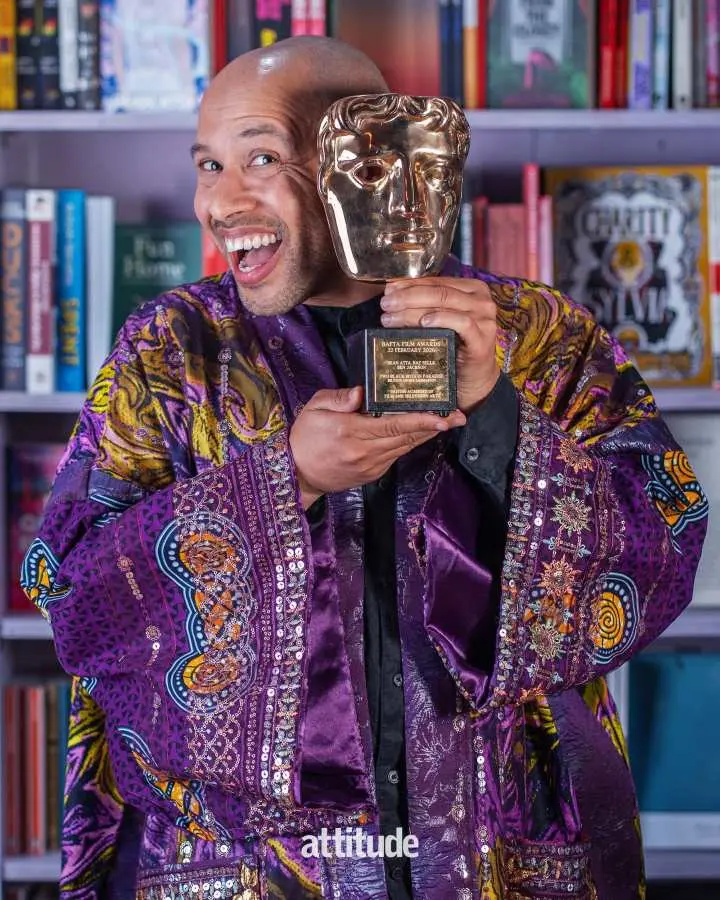
Director of Two Black Boys in Paradise Baz Sells, Jackson and Atta spent over a year developing the project before securing BFI funding, shaping the poem into a visually rich, nine-minute stop-motion film that has since been screened at over 90 festivals and won more than 30 awards.
Available to watch now on Channel 4, Two Black Boys in Paradise leaves a lasting emotional impression, not only as a story about queer love but as a meditation on tenderness and freedom.
“People have seen it as something needed” – Dean Atta on Two Black Boys in Paradise
The response has been overwhelming. “People have seen it as something needed,” Atta explains. “Not just Black queer audiences, but people who’ve felt different, isolated, or like they didn’t belong; it’s helped them engage their empathy.”
That emotional universality is part of what has made the film resonate with so many. While Two Black Boys in Paradise is deeply rooted in Black queer experience, its themes of longing, safety, first love and self-acceptance reach far beyond sexual identity alone. Through its dreamlike stop-motion world, the film invites audiences to reflect on the simple human desire to exist openly and be loved without fear. In many ways, its softness feels radical, offering tenderness and vulnerability in place of trauma, and picturing a world where queer love is not merely tolerated, but protected and celebrated.
Beyond the film, Atta’s wider body of work continues to centre queer joy and radical self-belief. His acclaimed collection There is (still) love here explores the power of fully embracing who you are – themes that remain at the heart of everything he creates.
Dean Atta’s full interview appears in issue 371 of Attitude magazine, on sale in print and digital now. Order Attitude magazine issue 371 in print now, or in digital on the links below on Apple News+ and the Attitude app.