Black Burns Fast review: An instant queer teen comedy classic
A candy-coloured boarding school caper which elevates queer joy and whimsy, but underscored by bite and depth, screening at this year's BFI Flare: London LGBTQIA+ Film Festival
Unpopular opinion: I may be the only LGBTQ journalist alive who doesn’t love Heartstopper. The lovely Love, Simon and the frothy Sex Education, with its bawdy, sexually honest edge, were the balm I needed after decades of LGBTQ content steeped in sorrow. Although Heartstopper defined the shift, it was always a little too idealised for this writer, teasing an adolescence unrecognisable to most queer people over 30.
If it was fleetingly true to life for some, I fear it’s now already a time capsule – if rarified parts of the world did reach safer-than-ever status for young queers between Trump terms, then, in the UK at least, with the rise of Reform, that world of possibility already feels painfully out of reach.
Teen comedy Black Burns Fast, with its high velocity feel-good factor and stylistic gloss, is the new tonic we need. It made me laugh out loud in its first 30 seconds. It’s a flighty, silly, absurdly funny and fairly simple story about a schoolgirl coming out as gay. But it resists the twee and serves socially conscious bite in spades.
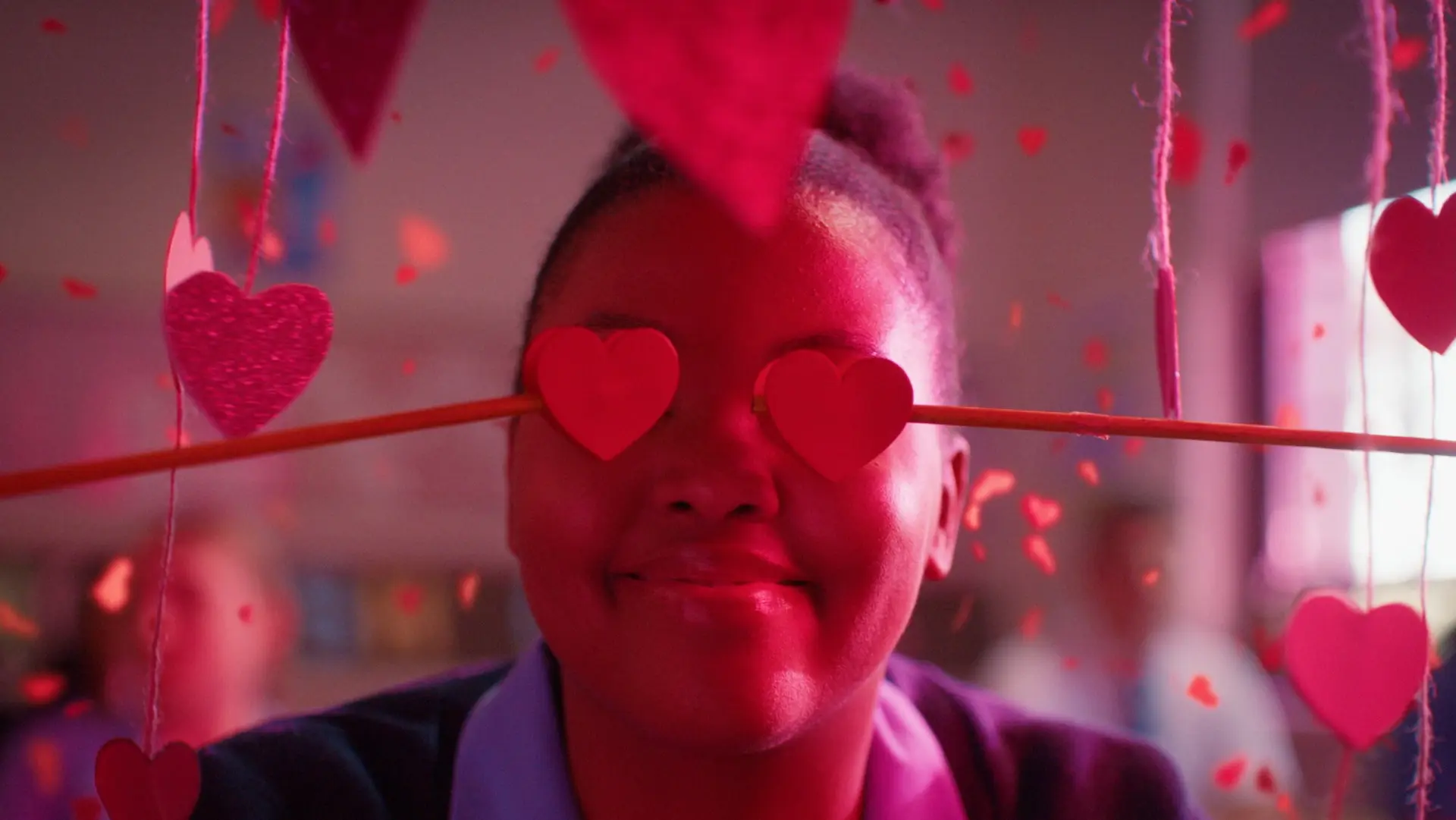
It is saturated not only with hand-drawn Heartstopper-style doodles, but also with charmingly rudimentary special effects and physical props, like when 17-year-old Luthando (a vivacious Esihle Ndleleni) clocks the object of her lesbian affection in class, and literal props – handheld hearts on sticks – obscure her eyes.
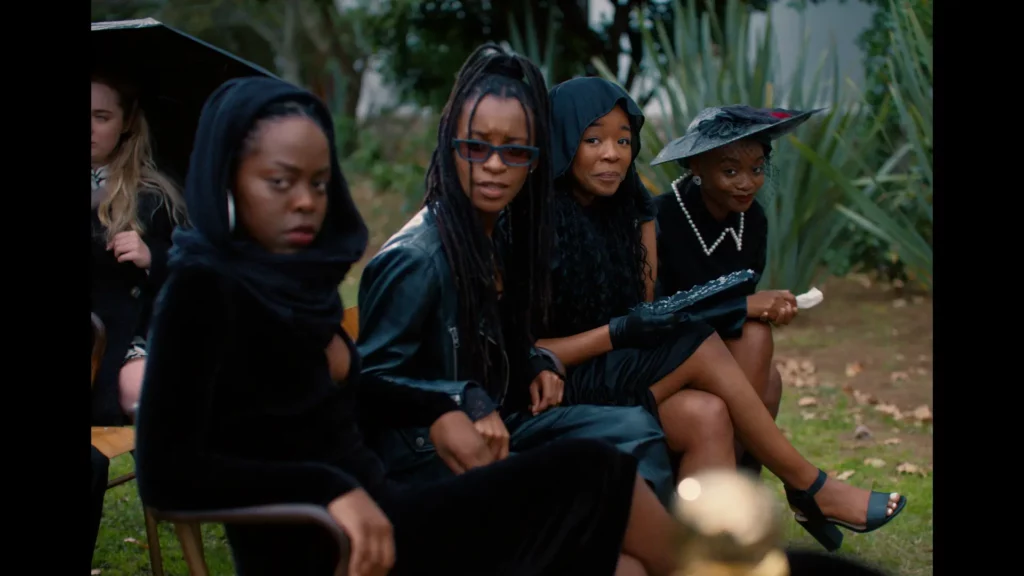
Black Burns Fast immerses us so completely in the socially complex soap opera of a well-to-do all-girls boarding school in South Africa that the camera feels like another character through whose eyes we see events unfold. Pushing youthful energy ever skywards, the performances from the young cast are uniformly bold.
The loveliest element is the gang of vivacious girlies, all bursting with confidence, who support Luthando through her coming-out journey. They seem to feed off each other’s energy, becoming more than the sum of their parts, demonstrating for young viewers in Africa and beyond the sometimes life-saving power of community as safety net. If there are a few too many characters to keep track of, I don’t know who you’d lose, and if the joyful Khensani Khoza stands out from the crowd, it’s as a leader – a force to be reckoned with – rather than a queen bee.
Luthando, and indeed all the girls, need each other’s support, and not only because of gossiping classmates, problematic but grotesquely funny teachers and wily boys. (“Bitches love romance!” declares one.) It’s the religious undercurrent of Catholicism that most shapes the story both at school and at home.
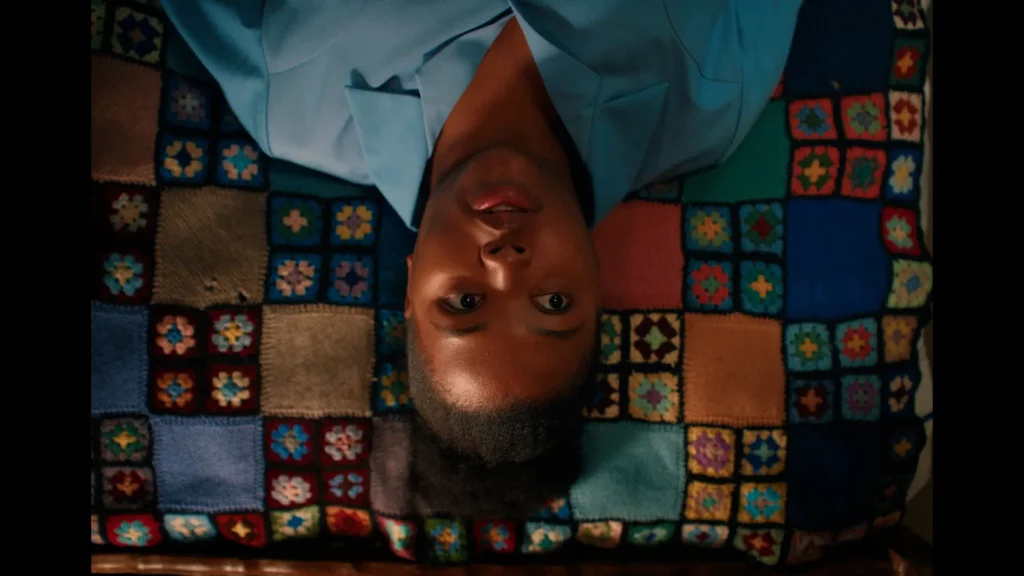
It may have been a while since you’ve seen a coming-out scene in which an arrogant parent refuses to accept their child’s sexuality, especially with this much sting, but it needs to be seen. “At least you don’t have to worry about me getting pregnant anymore!” Luthando rationalises. It’s acted masterfully by Ndleleni, with the stilted body language of someone desperately trying to sell a joke. I rewatched the moment three times – she is a beam of light.
Then there are the microaggressions. “They just need someone to fill in the quotas,” says one of Luthando’s white classmates during a discussion about university applications. Her retort, turbocharged with self-assurance as she comes to terms with her queer identity, gets her sent out of class. “Only a few years ago you wouldn’t have had to compete with me,” she points out. “Missing those Apartheid days, huh, Braddy?” Her wally of a teacher, stumbling over his words in expertly written and delivered dialogue, awkwardly censors the discussion. “We can’t be talking about… That was 30 years ago. Tata Madiba [Nelson Mandela], you know, said that we’re not gonna… We’re gonna be in peace, all right.”
The film prompts gentle reflection on racism, politics, history and the state of legal rights for LGBTQs worldwide, but its impulse is always overwhelmingly in the direction of fun. A scene of Luthando discovering masturbation for the first time, curtains drawn in her pink-hued bedroom, is a riot, as is the climactic genre touchstone of prom night, in which our gloriously overdressed girls look fit for their wedding days. They’re all having such a laugh, and it’s infectious.
Black Burns Fast is playing as part of the BFI Flare: London LGBTQIA+ Film Festival, running from 18–29 March 2026.
This review first appeared in Attitude Uncut, the all-new digital magazine that will be published six times a year (between Attitude print issues) and available exclusively on Apple News+ and via the Attitude app. Featuring long-read journalism inspired by themes resonating within the LGBTQ+ community, each issue will provide a deep dive into topics as varied as sexuality, identity, health, relationships and beyond.