
BFI Flare: Bearcave and letting the light in on lesbian representation
In an op-ed for Attitude, co-director Krysianna B Papadakis reflects on sensationalist storytelling, queer-baiting and happy endings ahead of Bearcave's premiere at BFI Flare: London LGBTQIA+ Film Festival tonight
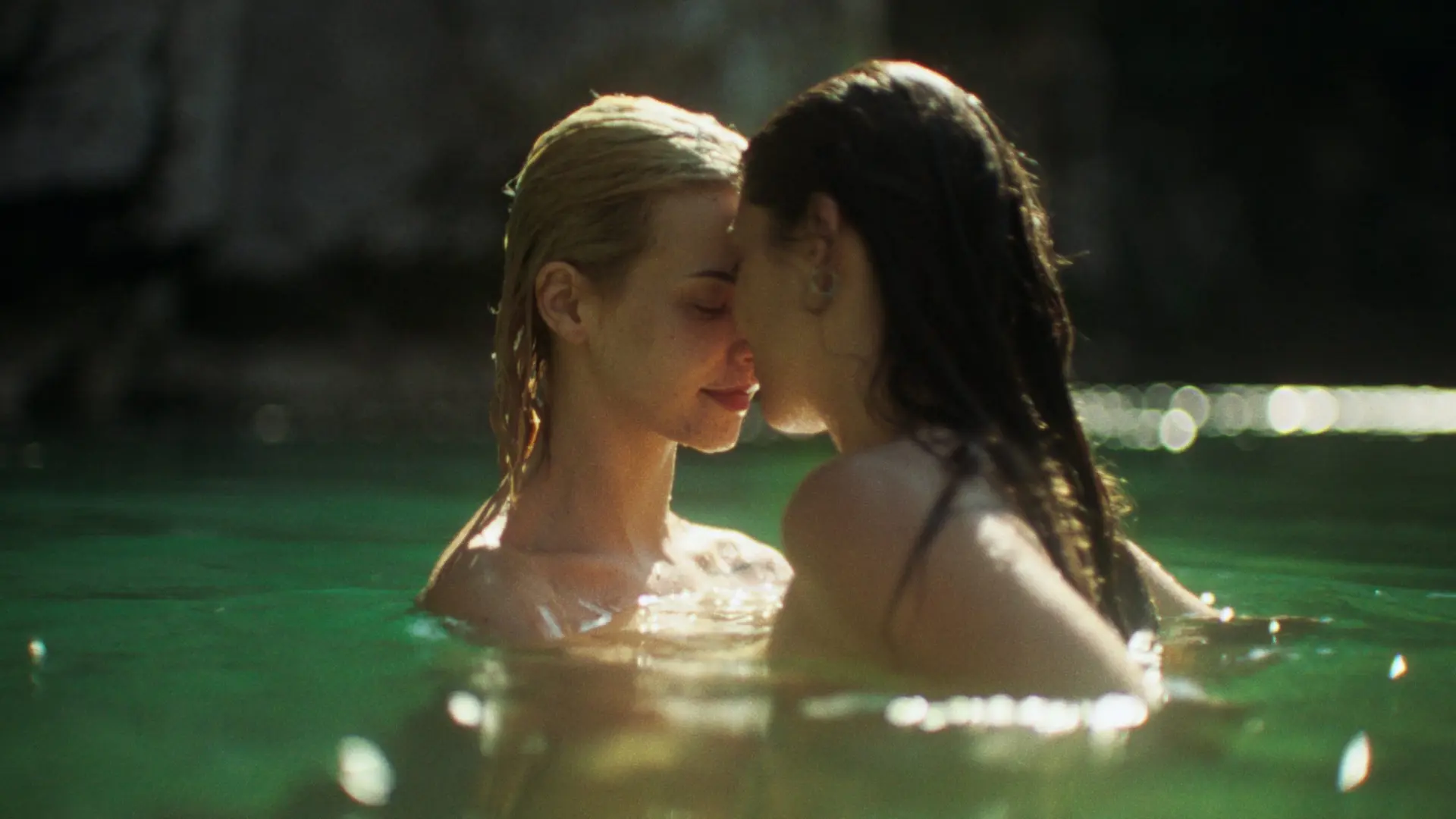
When we started brewing a story set in a village in northern Greece, we didn’t think it would be a love story – let alone one that we now proudly proclaim as a queer mountain Odyssey. Rather, by ruminating on the objectives and emotions of our two protagonists, we felt that we had stumbled upon their romance, like opening a door that flooded a light onto the corridor of our minds.
It was obvious, all along, that the two women we had been writing about were deeply and uncontrollably in love. I wondered if the lag in our realisation was partly due to a hesitation to name something as love between two women, even when it was so obviously hanging between them – a sad habit I’ve adopted from growing up in a world completely devoid of lesbian representation.
A lot of people still treat queer representation as a matter of politics – a redressing of historical inequity. But what we don’t acknowledge often enough is how much it hurts the mind to never see oneself in stories. Something I realised all too young was that, for a queer woman in the Balkans, to love film was to be forever slightly starved.
Many of us got by with the piss-poor queer representation that films and TV provided – usually the bad, infrequent dregs of badly-conceived characters or sensationalist, sleazy storytelling that made you more ashamed to be queer than proud, or crappy side plots whose romances never manifested, or were crushed to dust in the narrative factory of ‘bury your gays’ tropes, of straight culture’s obsession with lesbian death, darkness, or insanity.
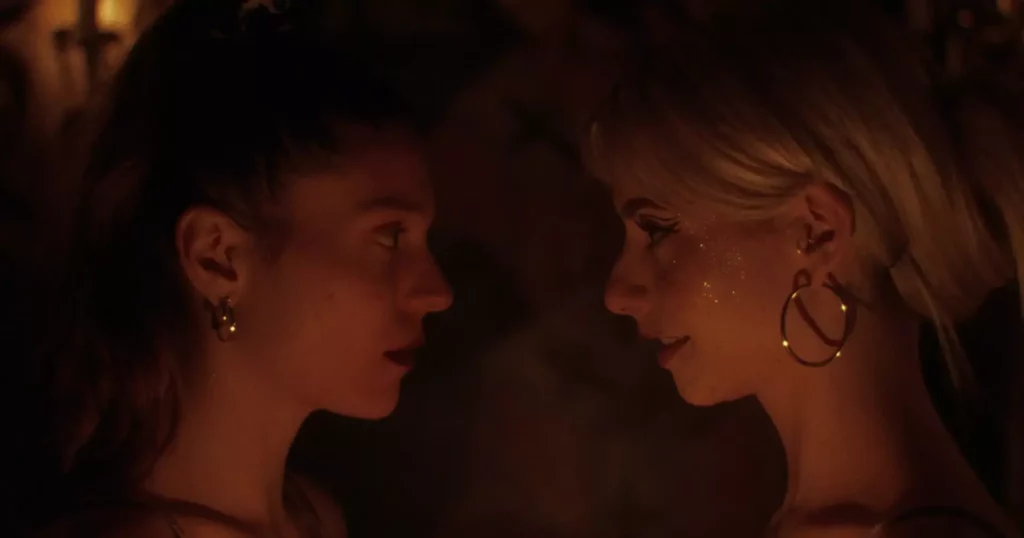
Rejecting the male gaze was barely an option when that was all we were offered, especially in Greek media. The queer-baiting was probably even worse for our brains – having us do the detective work of connecting barely visible and implicit dots of sexual tension. By their sheer rarity, these tiny moments felt to us like gay hot air balloons in the middle of the screen. But the characters never said the quiet part out loud, allowing straight culture to never let go of its right to deny the existence of queer women.
Strangely, I am not entirely ungrateful for this deprival we endured. It made me extremely astute as a viewer, as I learnt to hold a microscope to every small moment, every lingering gaze and suggestive line. What better preparation for a filmmaker than to be forced to always read between the lines? It made me a better director, more subtle, more surgical. But as a person? As a lover? As a kid in life grappling with otherness in 2000s Greece, it left me weak, confused, and afraid.
For too long, to be a lesbian watching film was to have to settle for seeing yourself depicted in doubt, in gazes held too long, in small off-hand remarks and slight touches. It’s why the floodgates of joy break so furiously when we are given explicitly queer stories, unbridled and unleashed, even if imperfect. Only a handful of media offer this ecstatic experience, of lesbianism made self-aware.
Watching our protagonists in Bearcave be so furiously in love healed something for a lot of people. Something we were sure about as writers and directors is that we wanted Bearcave to end ecstatically, for the queerness to be undeniable and exuberant and for the film to offer a clear image of hope, of love, of romance fulfilled. I know that’s a bit of a spoiler, but I think it’s a worthwhile one, especially for lesbians. We are so often forced to be satiated with stories that are too small, too bitter, too incomplete.
Bearcave is the answer to this desire. It’s a film about hope, and freedom to soar through life with whoever you choose. I mourn the dreams of Greek women who weren’t afforded this freedom, whose romance had to exist in secret, or simply in the confines in their hearts. Bearcave is ultimately for them, our way of expressing gratitude for their existence, an homage to their struggles and desires. But, above all, this film is a gift to the future, to the new generations of queer people coming of age and falling in love in complicated places.
As queerness is increasingly coming under attack, we must continue to nourish each other with our stories. It’s why institutions like BFI Flare remain so important – a place and time for community to form, for queer people to take up the full canvas of the screen, to fuel each other with our fantasies and learn.
Bearcave is co-written and directed by Krysianna B Papadakis and Stergios Dinopoulos, it stars Xara Kyriazi and Pamela Oikonomaki. The film has its UK premiere tonight as part of the BFI Flare Festival, an additional screening takes place at 5:10pm on Sunday 29 March at BFI Southbank (NFT1), tickets are available here.