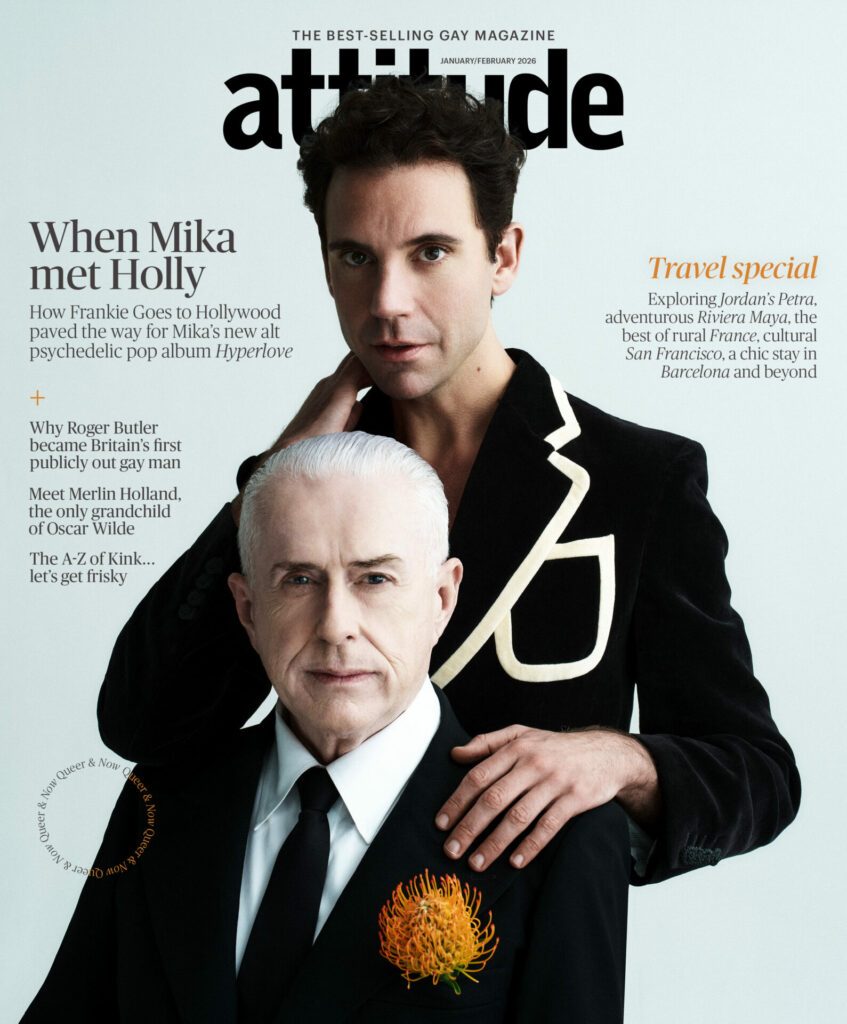
Exploring Paris through its LGBTQ+ history reveals why the French capital is the city of love
"While Marie-Antoinette was eating cake within the palace, the gays were having theirs too," writes Attitude's travel editor
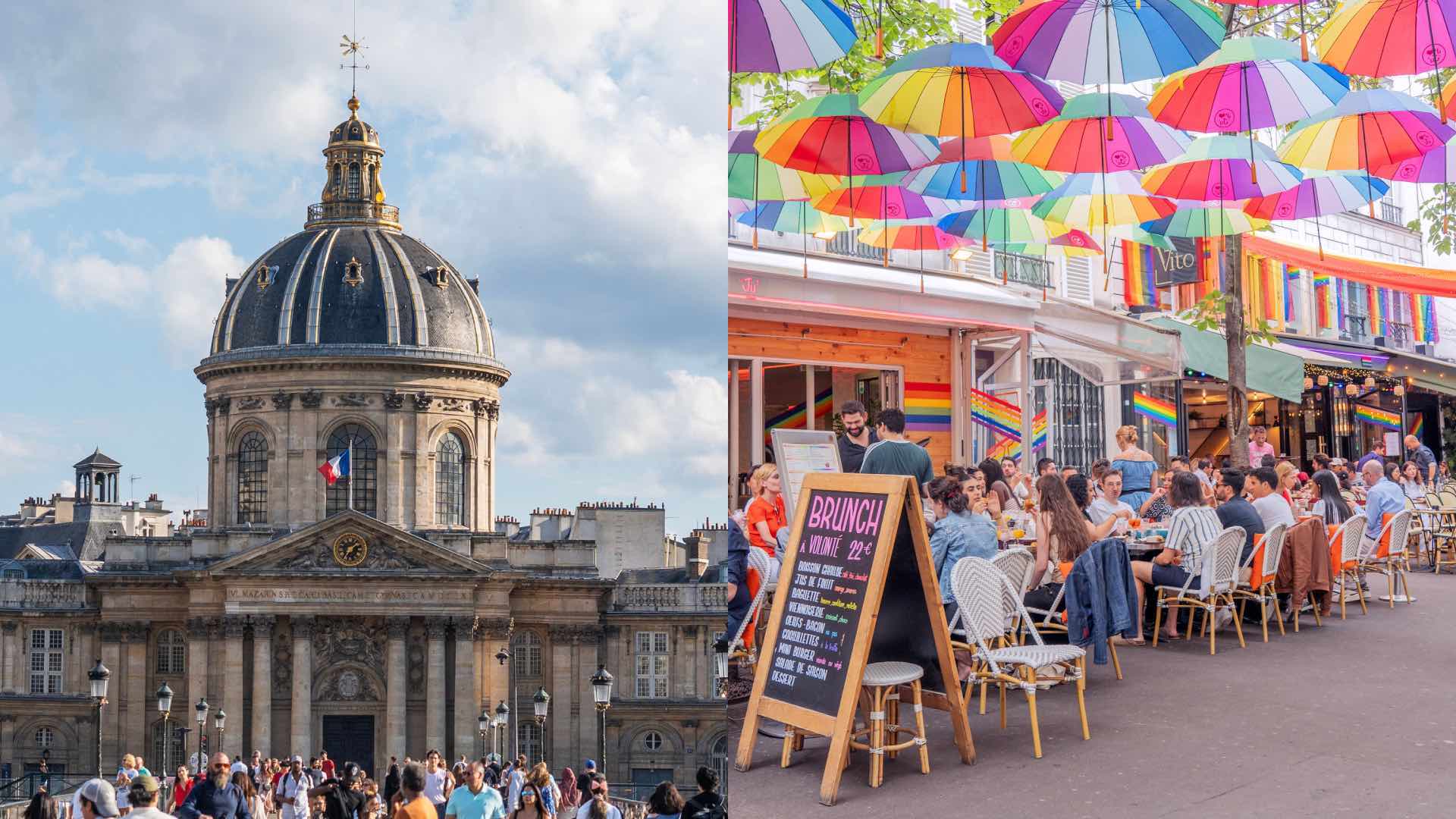
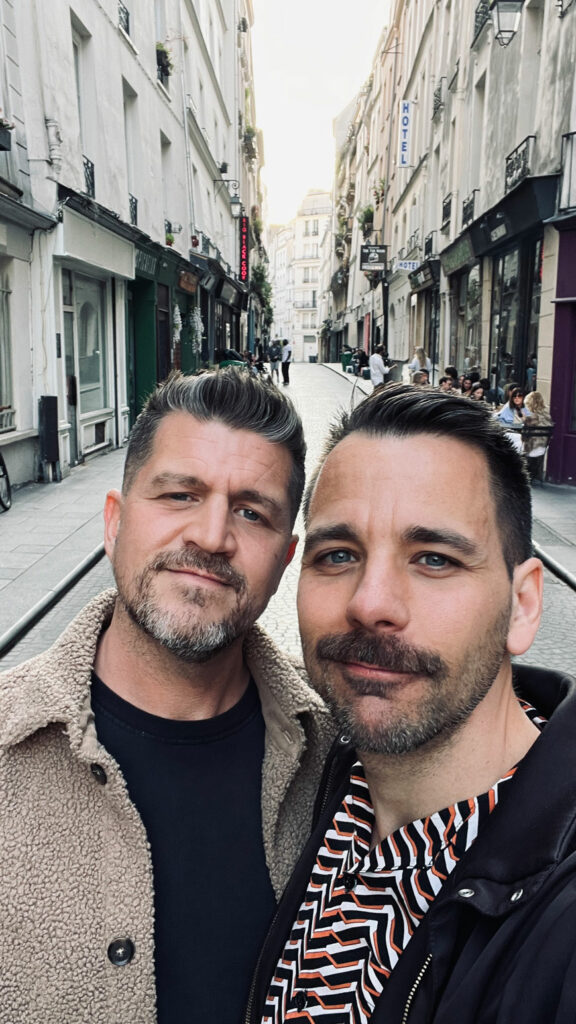
I feel the need to clutch my metaphorical pearls when my boyfriend and I are told we have been brought to Paris’s centuries-old gay cruising ground for our first stop on our private LGBTQ+ history tour, which is the perfect way to start our weekend away in the City of Love. Alex Mesturoux, our guide from Queer Tours France, looks sweet and innocent, but he is brimming with salacious, scandalous and scary tales of the French capital.
The cruising spot in question is in the Tuileries Garden, where you’ll find the world’s largest museum, the Louvre. In 1667, when the home of the Mona Lisa was still a palace, the royal gardens were opened to the public. As they were out of police control, prostitutes and gays could enter the park and play out of sight of the eyes of the law. While Marie-Antoinette was eating cake within the palace, the gays were having theirs too.

The immaculately manicured gardens are full of long hedges, which make the perfect hideaways for a little faire l’amour aided by the darkness of evening. And Alex reveals that history is still repeating itself in the maze in the Jardin du Carrousel in front of the gardens.
“Open the Grindr app, you will find a lot of people” – Queer Tours France tour guide Alex Mesturoux
“What’s pretty mind-blowing is that today it is super busy with tourists, but if you come here at night and open the Grindr app, you will find a lot of people.”
We exit the Tuileries Garden and cross the street to admire the glistening gold statue of Joan of Arc on horseback. In the 1400s, this young woman from the north-east of France travelled to the battlefields when the English were dominating the French during the Hundred Years War. She helped secure major victories against the invaders and soon stood by the side of Charles VII of France during his coronation.
But she later fell into the hands of the English. They put her on trial for heresy, which included blasphemy for wearing men’s clothes. Recently, some historians have theorised that Joan may have been trans, but it’s hard to be sure about putting a trans label on this icon, who was found guilty of heresy by the English and burned at the stake 600 years ago.
Was Joan of Arc gender non-conforming
It is safe to say that she was gender non-conforming: she wore men’s clothing, including armour, and had what today would still be considered a very masculine role on the battlefields.
Interestingly, some years after Joan’s death, Charles VII was criticised for gaining the throne with the support of Joan, because she had been convicted of heresy for cross-dressing. He duly asked for help from the church. Within their records, they discovered Eugenia, a woman from the third century who cut her hair and dressed in men’s clothing in order to become a monk.

Sources say Eugenia was known to heal people and was beatified to sainthood after her death. So you could say a gender-bending monk helped the king gain his legitimacy.
Who decides which words are gendered male and female in the French language?
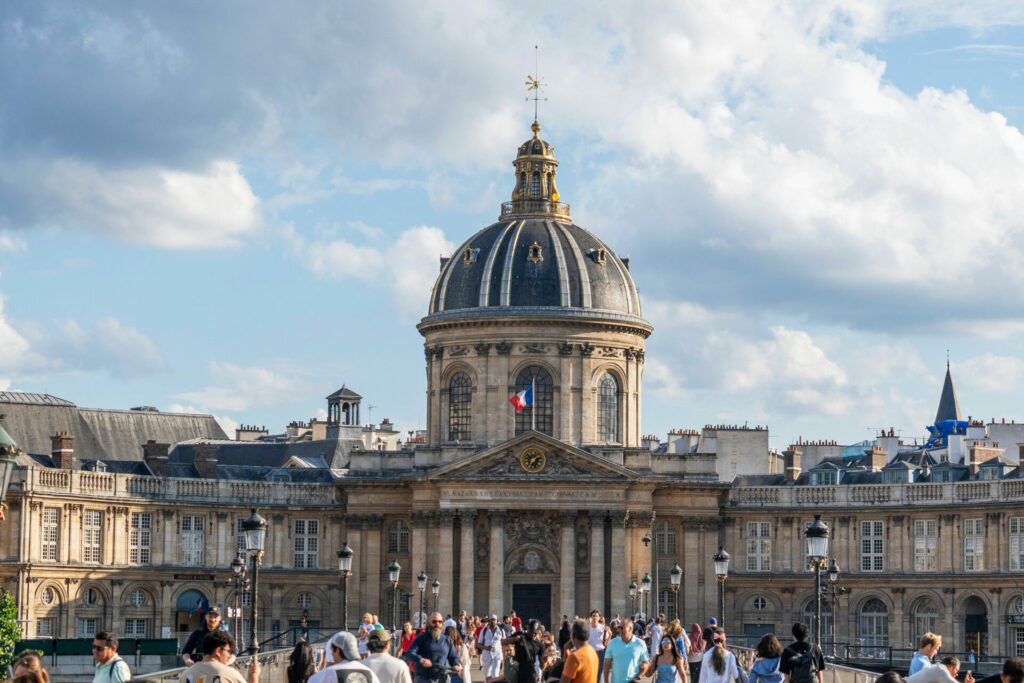
Our next stop is the Pont des Arts, a pedestrian bridge with magnificent views of the Parisian skyline. Looking south, at the end of the bridge is the grand, domed French Academy, home of the French language. Here, Alex answers a question that has been bewildering me since I started taking French lessons at six years old: “who decides which words are gendered male and female in the French language?”
Indicating the building, Alex explains, “This is the place where you have a bunch of grey-haired old white men gathering every now and then to protect the French language. This institution has been here since the 1600s. And we had to wait until 1981 to have a woman elected in there.”
The woman in question was Marguerite Yourcenar, a writer whose most famous book Memoirs of Hadrian, about the Roman Emperor who had a male lover, is currently being adapted for TV. In 1980, the stuffy men said that because she was a lesbian and wrote in a masculine way, it was acceptable for her to join their ranks.
Forty years on, there are only nine women within the 40-member public institution, and Alex says the group is resisting the use of non-gendered pronouns.
In other streets along the Seine, we learn of an 18th-century trans spy, two queer French kings, and the pornographic pamphlets featuring Marie-Antoinette in various poses with other women, which later influenced the code lesbians used to identify each other in the late 1800s and early 1900s.
This is an excerpt from a feature appearing in Attitude’s September/October 2024 issue.
Subscribe to Attitude magazine in print, download the Attitude app, and follow Attitude on Apple News+. Plus, find Attitude on Instagram, Facebook, TikTok, X and YouTube.