The Traitors star Matty Hyndman recalls conversion therapy pressure as survivors speak out (EXCLUSIVE)
So-called “conversion therapy” is the practice of pressuring LGBTQ+ people to “change” a same-sex attraction or deny a trans identity. It’s now eight years, five prime ministers and a change of government since we were first promised a ban, and LGBTQ+ people are still subjected to the heinous practice, which is often rooted in religious oppression. Here, Attitude speaks to Traitors star Matty Hyndman and actor and writer Emmanuel about their experiences
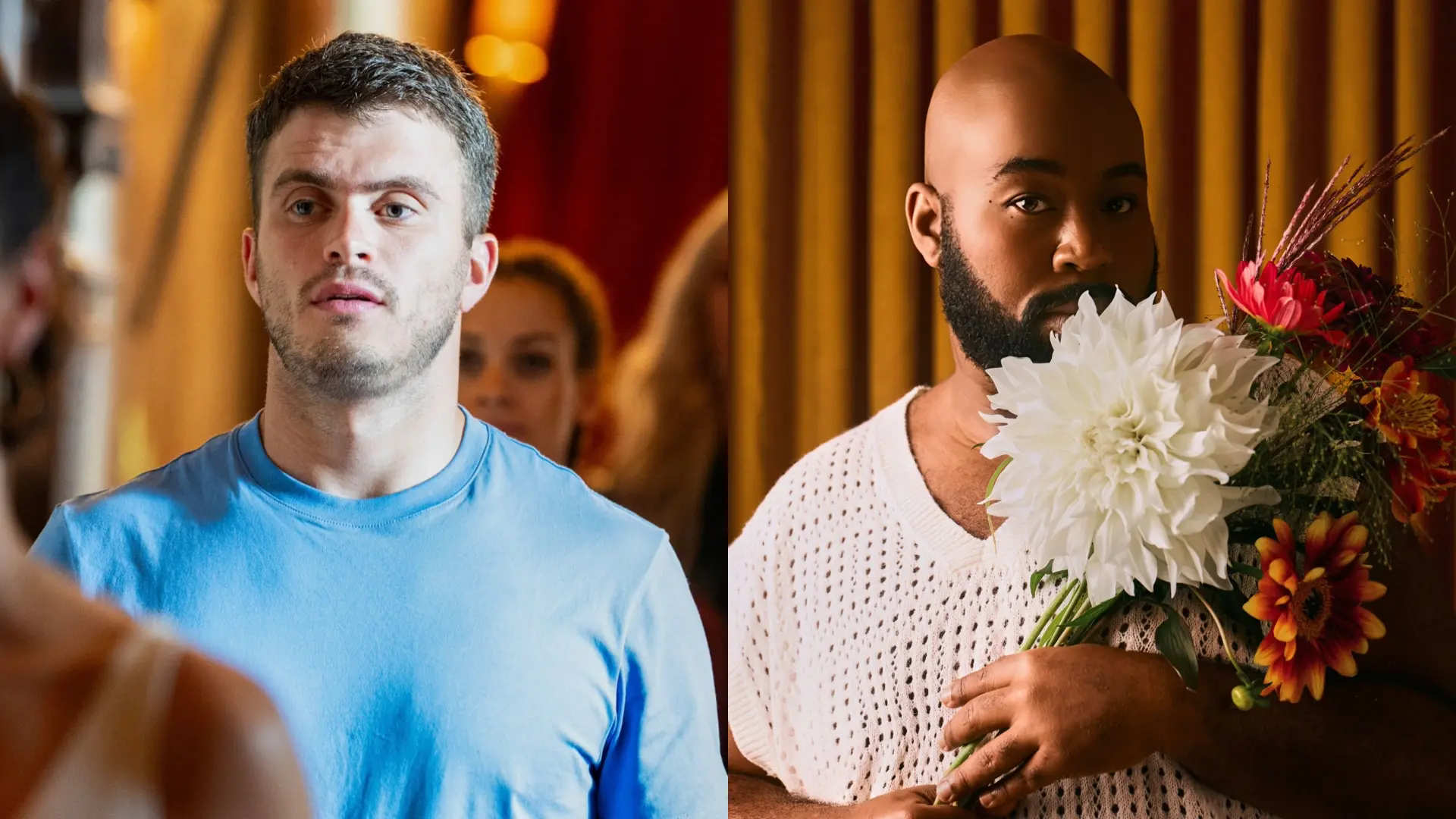
“I remember people pushing me to the floor, smacking my head, praying for the demon to come out. I felt dizzy and sick and wanted to swear, wanted to scream.” Emmanuel was just 16 when a Pentecostal pastor outed him to an entire congregation. Their prayer, that day, was to turn him straight.
It’s been eight years, five prime ministers and two monarchs since the government first said it would ban so-called “conversion therapy”, yet the LGBTQ+ community is still waiting. The current Labour government is no outlier. In Keir Starmer’s first address to Parliament as prime minister he said how “ proud” he was that the UK has “the largest cohort of LGBT+ MPs of any Parliament in the world”, and the manifesto that landed him there said that conversion therapy is “abuse” and pledged to ban it.
But too many people like Emmanuel are still being subjected to horrendous conversion practices. The UK government’s National LGBT Survey from 2018 found that seven per cent of LGBT people have been offered or undergone conversion therapy.
“The pastor was like ‘There’s a homosexual amongst us, and we need to cast out this demonic spirit'” – Emmanuel on being outed by a pastor
Emmanuel had left his home in south-east London shortly after his family discovered he’d been looking at gay porn online. He slept on West End streets, “begging for money, keeping myself up talking to strangers” before travelling on three buses to his performing arts college each morning. A supposed friend would only let him stay if he “did sexual favours”. Emmanuel felt “confused and didn’t know what to do. My family said I could come home, but only if I went to church.”
Emmanuel, now 33, had “loved and adored” the church he attended as a child. But his parents’ new Evangelical church was different: “I was walking into an ambush. The pastor was like ‘There’s a homosexual amongst us, and we need to cast out this demonic spirit.” He didn’t name me, but there were about 60 people all praying for this homosexual spirit to be cast out. I felt like I wanted to throw up.
“He then outed me and called me to the front. In that moment, I could see the congregation staring at me, and I just wanted to die. He called the congregation to lay their hands on me.”
Matty Hyndman, the 35-year-old Traitors star, was mere moments from similar treatment nine years ago, when he was living on a ship as one of a group of 400 missionaries touring the world. He’d long internalised the messages of sermons telling him that being gay was a sin. “There’s a paradox that goes on,” he tells Attitude. “I was in denial about my sexuality, but at the same time I was praying not to be gay. I prayed and hoped that God would bring along the woman that was gonna be the one and that everything was going to be OK.”
“The whole dialogue was basically ‘This is a sin; we want you to go through counselling’” – Matty Hyndman on reactions from fellow missionaries
He had begun to make his peace with being a gay man when his fellow missionaries found out. “The whole dialogue was basically ‘This is a sin; we want you to go through counselling.’” He’d already seen another gay man “go up and confess to the whole community”, but this was not for Hyndman. “Thankfully, I was able to say no and moved on,” he says. “I was comfortable and confident in what I felt, and two days later I was on a flight back to the UK. But it shouldn’t be down to luck.”
He continues, “When someone is offered conversion practices, whatever that looks like, the risk of saying no is huge. I had to walk away from this vocation that, at that point, I felt very strongly about. I lost a lot of friends. That’s a massive risk, and when someone is at their most vulnerable, their most alone, their most afraid, to be asked to make that decision is massive. Is it any wonder that plenty of people would say yes? That they’ve been trying so far [to pray the gay away] so they might as well try this too?”
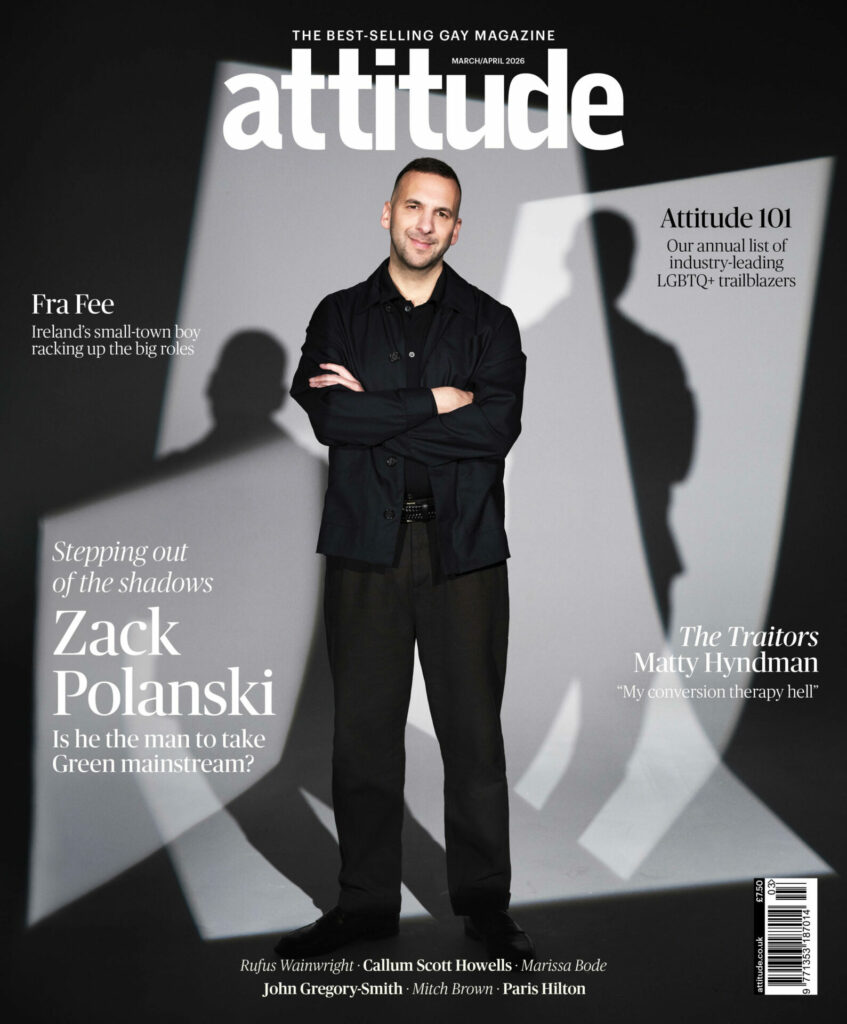
This is an excerpt from a feature appearing in Attitude’s March/April 2026 issue.
Get more Attitude