
Meet the gay man managing The Chancery Rosewood, home of the Attitude Pride Awards (EXCLUSIVE)
Michael Bonsor, managing director at The Chancery Rosewood, talks to Attitude about transforming London’s former US Embassy into an open house, the emotional intelligence behind exceptional hospitality, and why the truest expression of luxury may be making somebody feel they were always meant to be there
By Aaron Sugg
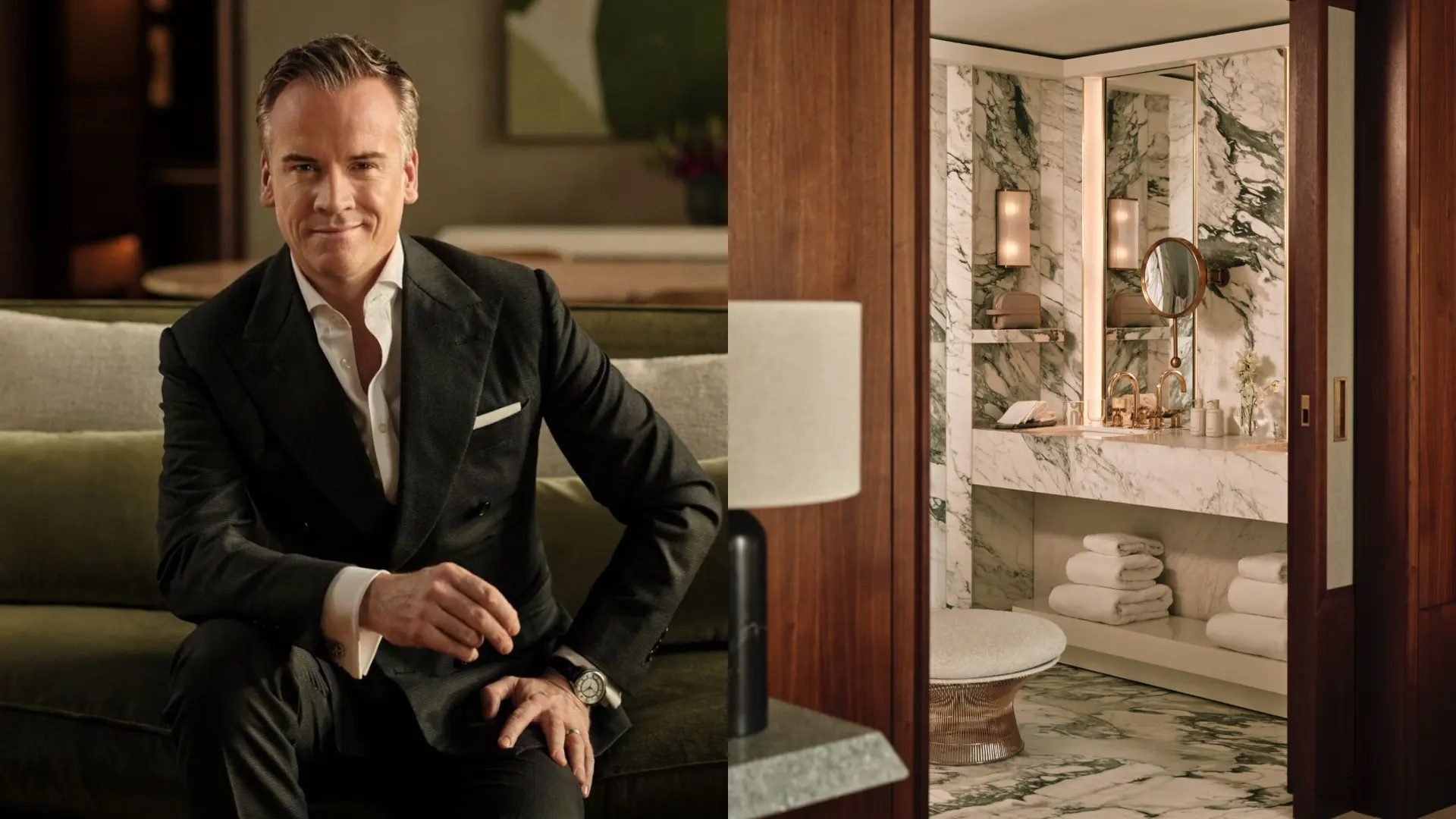
Luxury hospitality is a particularly fascinating business when viewed through a queer lens. As LGBTQ+ people, spaces can make us feel small, scrutinised – or uplifted. The grandest hotels are, by definition, exclusive. Their architecture can inspire wonder, but their scale, rituals and price points can also intimidate.
Yet behind the grandeur lies an industry devoted to servicing human needs. At its highest level, well-trained hospitality notices hesitation before it becomes discomfort, understands a preference rather than needing it explained, and removes a small indignity that reminds a guest they are somewhere unfamiliar.
Few buildings embody that as perfectly as The Chancery Rosewood. Designed by architect Eero Saarinen and opened in 1960 as the US Embassy, the imposing Modernist façade has occupied Grosvenor Square for generations. It was a building defined by controlled access, armed guards, appointments and bureaucracy.
Today, after an ambitious renovation, it is a hotel with hundreds of employees (referred to by Rosewood as associates), an art collection, eight bars and restaurants, and a desire to become part of London’s cultural and social fabric. At this year’s PEUGEOT Attitude PRIDE Awards Europe, supported by British Airways, its ballroom became a setting in which LGBTQ+ lives, achievements, resistance and joy were afforded the most spectacular of stages. (See page 150 for a round-up of this event.)
Presiding over the building’s transformation is Michael Bonsor, The Chancery Rosewood’s openly gay managing director and a hotelier whose relationship with the industry began almost at birth. He describes luxury as respect: for a person’s time, individuality and emotional ease. Perhaps the most revealing fact about the new Chancery is that the former embassy was built to control who could enter – until Michael Bonsor and his team added 32 doors. And every one of them is open.
Attitude met with him to discuss a life shaped by hotels, the making of a new London landmark, and what it takes to make someone feel truly welcome.
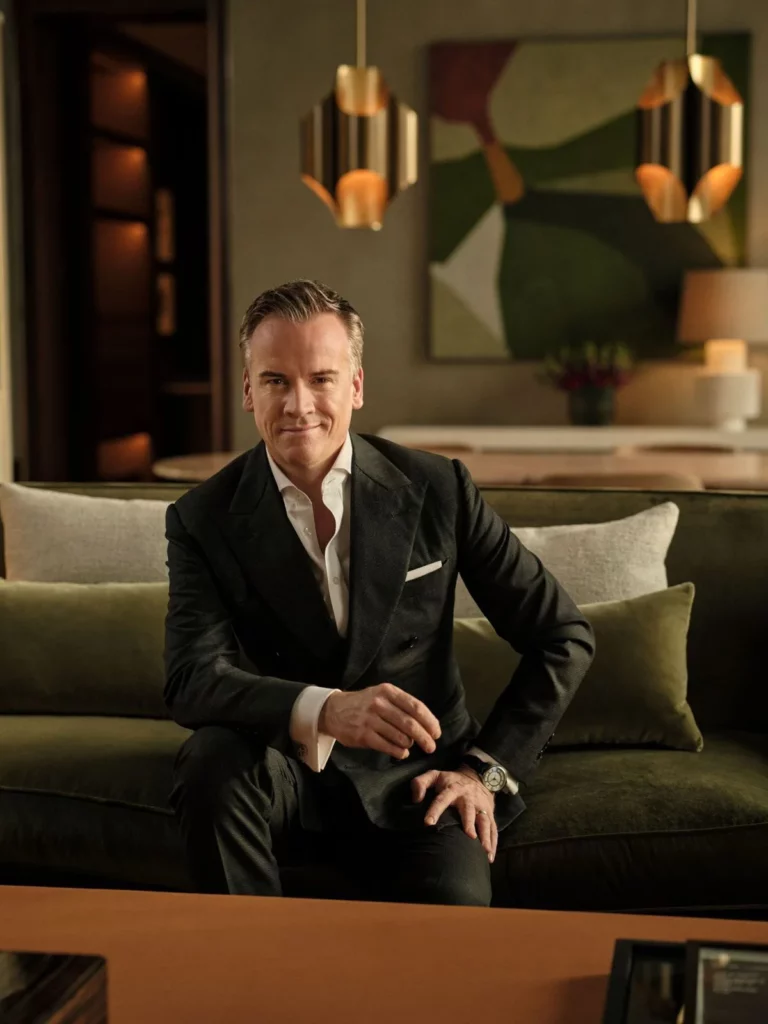
Attitude: You were immersed in hotels almost from birth. What first drew you towards hospitality as a career?
Michael Bonsor: From the age of about three days old, I was in a hotel. My parents had hotels up in Scotland, so I was there from the beginning. When we went on family holidays, all the other children would be playing at the pool; I would be trying to get behind the concierge desk to understand what everybody was doing. The writing was probably on the wall. I started working in the family business when I was still quite young, initially in the back, working away in the kitchen. When I got a little older, I moved to the front of house, working in the restaurant and bar, and I loved it.
That was in Inverness, which wasn’t the most diverse place, but it is an enormous tourism destination. As a young person, I loved meeting all these people from different backgrounds and nationalities.
I did flirt with architecture and interior design, and my father was an accountant, so I looked at finance too, but I kept coming back to hotels.
Hospitality is built around the ability to read people, particularly at the upper end of luxury. Is that an instinct somebody can learn, or do you either possess it or not?
I would hope that the skills we use in hospitality exist in everybody. We simply hone them. The luxury environment is a wonderful place for learning and training because we have such talented people within our teams who can coach and mentor others. I speak to many young people and visit schools, because a luxury five-star hotel can be very off-putting from the outside. In reality, we have systems in place to develop people properly. If you have the right smile and the right attitude, there is a place for you in hospitality.
The Chancery Rosewood began as an extraordinary vision on paper. How long had you been part of its journey?
Almost every hotel company in the world wanted this property. At one point, I believe around 30 companies were pitching for the project. That process began approximately 10 years ago, so it has been a long journey.
I have been with Rosewood for 14 years. Although I wasn’t directly involved in those initial pitch meetings, I was based in London and supported the process behind the scenes, so I have known the project from its very beginnings. I formally joined the project three years ago, two years before we opened, as employee number one. Initially it was mine, but I now share it with close to 500 associates.
What was the greatest challenge in developing the hotel?
It was an enormously important project for a multitude of stakeholders. It is a listed building, and not everybody loves Brutalist architecture. There was considerable pressure. It had to be incredible. It had to blow everything else out of the water. It needed to be loved by the local community while also welcoming an international jet set. There were many people to please: our partners, the neighbours and everybody who had lived through years of drilling and dust. We had to balance those expectations and continue making decisions that would ultimately bring us to where we are today.
You went from the activity of a functioning hotel to becoming an office of one. What did that period teach you about yourself?
Leaving Rosewood London in Holborn, where I was surrounded by an established team, and moving into an office of one was a real test. Initially I had to learn how to manage myself, create my own schedule and build my own diary. In a functioning property, much of that momentum is naturally created around you. Hospitality is normally so people-led and social, so being one of one required a very different skill set.
The hotel contains over 830 works of art. Is there a detail guests might easily overlook that feels especially personal to you?
The art collection is incredible. Some dear friends of mine have their work hanging in the property, which I love seeing as I walk around. We worked with wonderful curators who proposed many of the pieces, but a small group of us ultimately selected each work individually. We considered each piece and the feeling it should create within a particular area. That level of thought sits behind every detail.
When operating within the upper echelons of luxury, what separates genuine distinction from something that is merely expensive?
Even within luxury hospitality, we create barriers. Guests are usually told when they can check in and when they must check out. At The Chancery Rosewood, there is no check-in time and no checkout time. We pick you up and we drop you off. For guests in some of our suites, there will be somebody waiting at the aircraft door. In our largest suites, a car can be waiting below the aircraft at Heathrow or Gatwick, taking the guest away without entering the terminal. It is a completely different experience and the first of its kind in the city. It is about being entirely respectful of a client’s time.
Our team also builds personal relationships before arrival. They may conduct video calls, walking clients through the suites and hotel so that the environment is already familiar to them.
Luxury is also about removing unnecessary decisions. I have stayed in hotels where I have said, “I want to go to a hip restaurant tonight,” and received a list of 40 suggestions. I do not want 40 restaurants. I want somebody to recommend one restaurant. Then I know that you understand me. You are the expert, you have listened, and I trust you. That approach is authentic, and it respects the fact that everybody is time-poor. The onus should not be placed back onto the client to research, think and make more decisions.
We also continue the relationship after the guest leaves. We send gifts and maintain a form of aftercare. For us, the journey begins before the guest reaches the hotel and continues after their stay.
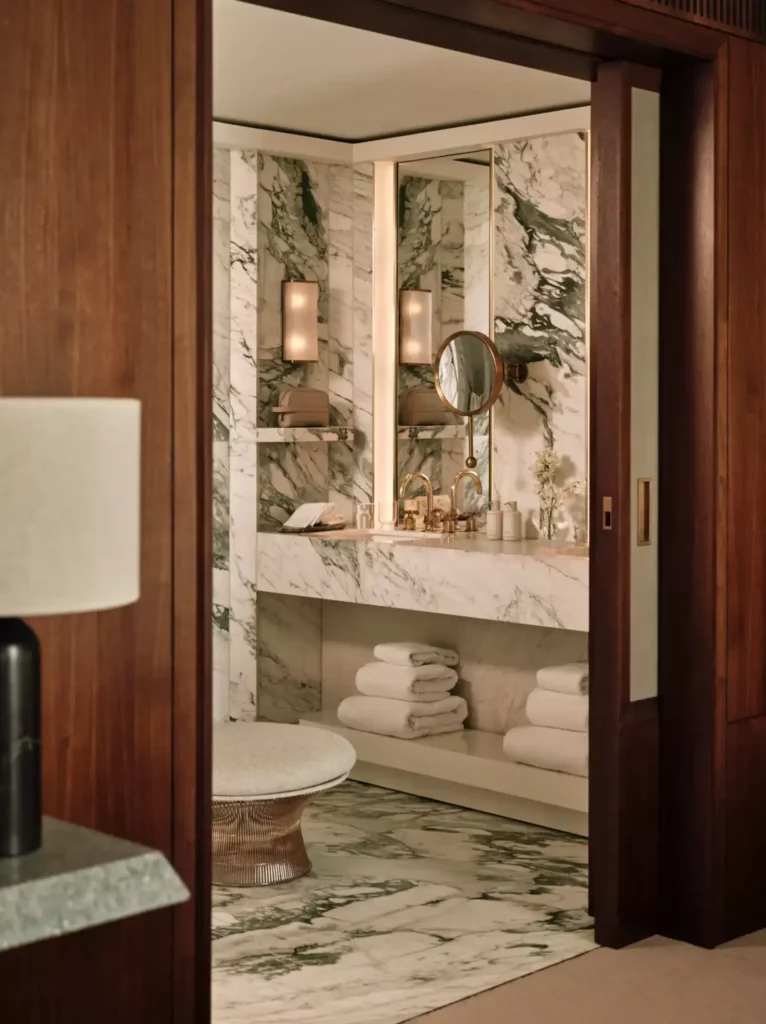
Luxury hotels can appear intimidating. Has being a gay man shaped your understanding of welcome and belonging?
I think it has. I have been very fortunate in my personal life and career. To my knowledge, I have not experienced a situation in which I was victimised or treated differently because of my sexuality. I recognise that I am in a privileged position, and that is not everybody’s story. But I do think sexuality can change how you view other people within an environment, and my sexuality has probably brought greater empathy into my interactions.
With our associates, I am always looking for the person who may be a little more reserved or shy. I make a point of speaking to that individual, checking in with them and helping them feel at ease, perhaps more than I would somebody who is naturally outspoken.
I see it with guests too. Some clients stay with us in London several times each year, but for another guest, this could be the one special trip they may never repeat. There can be nervousness when they arrive, so it is important that we almost cosset that person more. Because of the price point, people may have a particular idea of what the hotel will be like. Will it be pretentious? Will somebody look at them as though to say, “What are you doing here?” or ask, “Can we help you?” in a way that does not feel remotely hospitable.
The Chancery Rosewood hosted the PEUGEOT Attitude PRIDE Awards Europe at a formative moment in the hotel’s life. What does an alignment with Attitude and LGBTQ+ culture communicate about the kind of place you want the hotel to become?
It highlights community. Hotels should sit at the centre of their communities. Rosewood believes we are here to enrich people’s lives.
We cannot forget the role hotels play in people’s lives. Many of your happiest memories may have taken place in a hotel, on holiday or during a significant celebration. Hotels are generally happy places. They are where lifetime memories are created.
The community surrounding this property should feel welcome here. Yes, we have guests staying from all over the world, but we also need thousands of people to enter the property every day to keep it alive. The hotel should become a meeting place for people of different cultures and backgrounds. Everybody should feel genuinely welcome.
You look after some of the world’s wealthiest, most powerful and recognisable people. What has that taught you about human nature?
That anything is possible – and perhaps that I am not quite as quirky as I thought I was. I am actually relatively normal.
The era of rock stars throwing televisions out of windows appears to have passed. People are healthier now and often more focused on wellness. You would probably recognise much of our guest list, whether actors, models, entrepreneurs or politicians. But we also have everybody else entering the bars, restaurants, café and events, creating a genuine melting pot of cultures and experiences.
Professionally, you have to understand the nuances of those cultures: their preferences, and the things you should and should not do. It is very easy to say, “I feel comfortable with people from different backgrounds.” That is not enough. You need specialists within your team who genuinely understand different nationalities, religions and sexualities if you want people to feel authentically welcome, because there are nuances that a hotel must understand.
Without betraying any confidences, what is one of the more extraordinary guest requests you have encountered?
At Rosewood London, we once had elephants in the courtyard for an Indian wedding. There were horses too. That was interesting. We have repainted suites in different colours. Guests have arrived with their own rather obscure bedding. Somebody once requested a bath filled with Guinness. Name it and we have probably done it.
Years from now, how would you like Londoners to speak about The Chancery Rosewood?
When somebody enters the property, we want it to feel as though it has existed for several decades. Many of the hotels surrounding us have been here for 150 or 200 years, and we want to feel embedded within the community and London’s social scene. There is a fascinating juxtaposition with what this building was before. You needed an appointment, and there were men with machine guns standing outside. We underestimated how many people had previously entered the embassy for visas. People have returned to the building almost in tears. They remember a time when they did not know whether their visa would be approved, and then it was. It became a pivotal moment: perhaps they travelled, met their partner or began an entirely different life. When people attended those appointments, they saw only a small portion of the building. Now we have opened every floor, and we have added 32 doors. You can move from the rooftop bar all the way down to the ballroom on the lower levels. It was once a very closed building. Now it is very open.
This is a feature appearing in the September/October 2026 issue of Attitude, available on digital platforms and in print now. Buy here.