
Special’s Ryan O’Connell: ‘I didn’t let anyone f**k me for 10 years – now I really own my body’ (EXCLUSIVE)
Renowned for his refreshingly candid writing, Ryan O’Connell, creator of Netflix hit Special, discusses his latest collection of “slut diaries”, covering everything from family relationships to sex and addiction
By James Hodge
Ryan O’Connell is the writer, director, actor and comedian behind Netflix sensation Special – a comedy-drama charting his experiences of living with cerebral palsy and his struggles after being hit by a car. Celebrated for his ability to find humour and heart in the midst of struggle, his storytelling is powerful.
His latest collection of essays, Inspiration Porn, explores how his struggles have led to queer joy, tackling every aspect of his life from challenging family relationships, and bodily transformation to addiction and sex. Here, Attitude speaks to O’Connell about embracing his differences, the struggles of confessional writing, and the comedy of capturing his sex life in his self-described “slut diaries”.
Why did you name your essay collection Inspiration Porn?
Disabled people are often seen as “inspiring” for just going outside and greeting the day. It can be very infantilising. I’ve always kind of resented the idea of being seen as inspiring. Looking back on my own life and writing my “slut diaries”, the thing that would have most gooped and gagged 15-year-old me would have been the realisation that later in life I’m allowing myself to get railed by so many men! I started reflecting on other areas of my life where I have achieved more than I ever thought possible and thought, ‘Is it problematic that I’ve become my own inspiration porn?’ In a way, the title reclaims a term that had felt hurtful and dehumanising and made it something I could be proud of and find value in.
You began your career as a blogger. What made you want to return to the essay form?
When I began as a writer for Thought Catalog, I was churning out three new posts a day, inhabiting an authoritative voice that said “Hi, I’m in my twenties and I’m figuring things out and this is how you do life.” I felt like I was a total imposter because I didn’t really know what the fuck I was doing: I was blogging from the front lines of despair. Now, in my late thirties, I feel I actually have some wisdom to share.
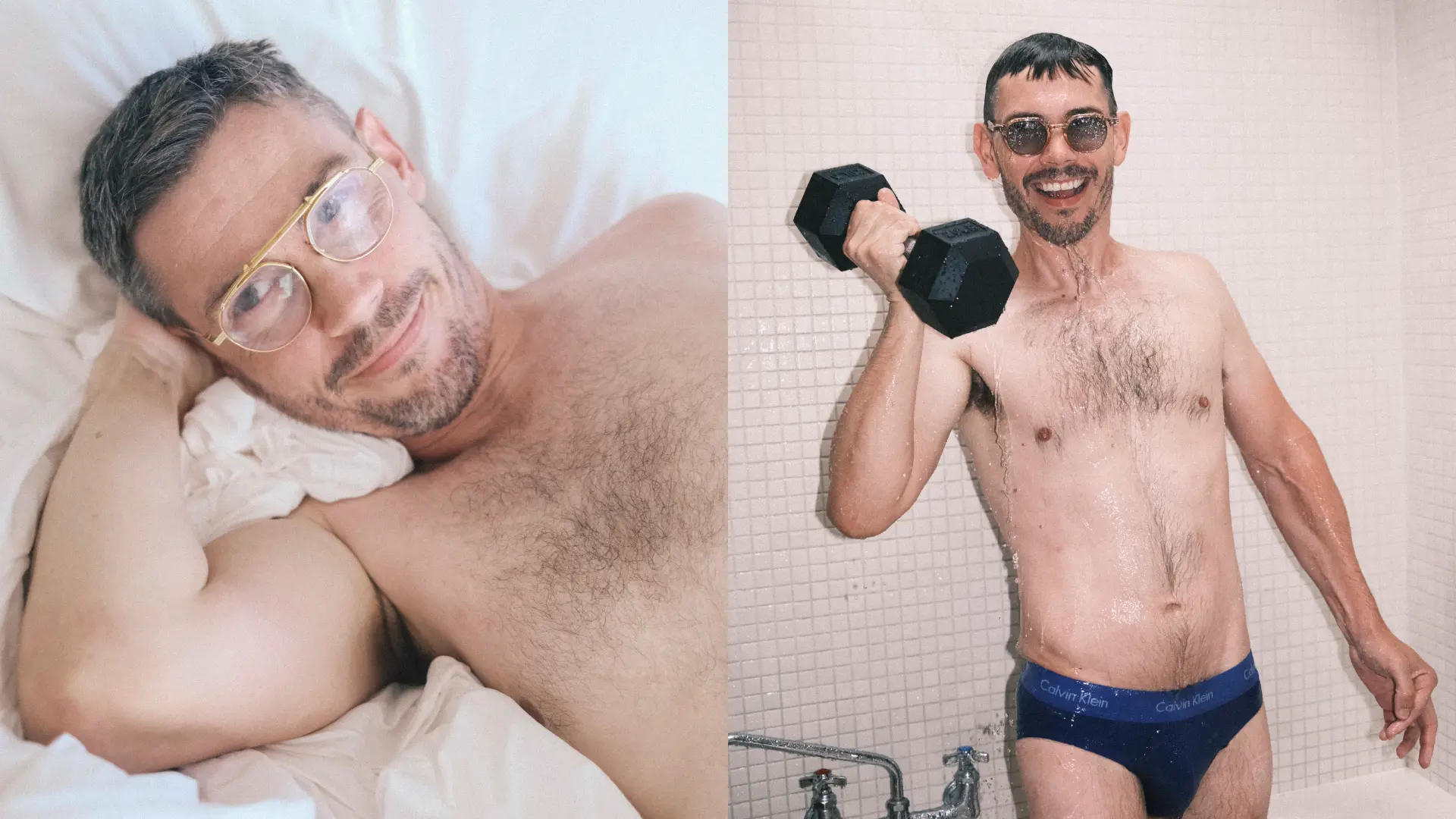
The book is accompanied by a very raw and sexy photo series…
It comes from my ambivalence with social media, in a world where life is now more lived online than in reality. Everyone has become their own salesman in a way that feels icky to me. I wanted to work with Ryan McGinley because I love the way he photographs sex and sexuality so playfully. McGinley’s work is dynamic and interesting. It turns out tongue-in-cheek can be sexy.
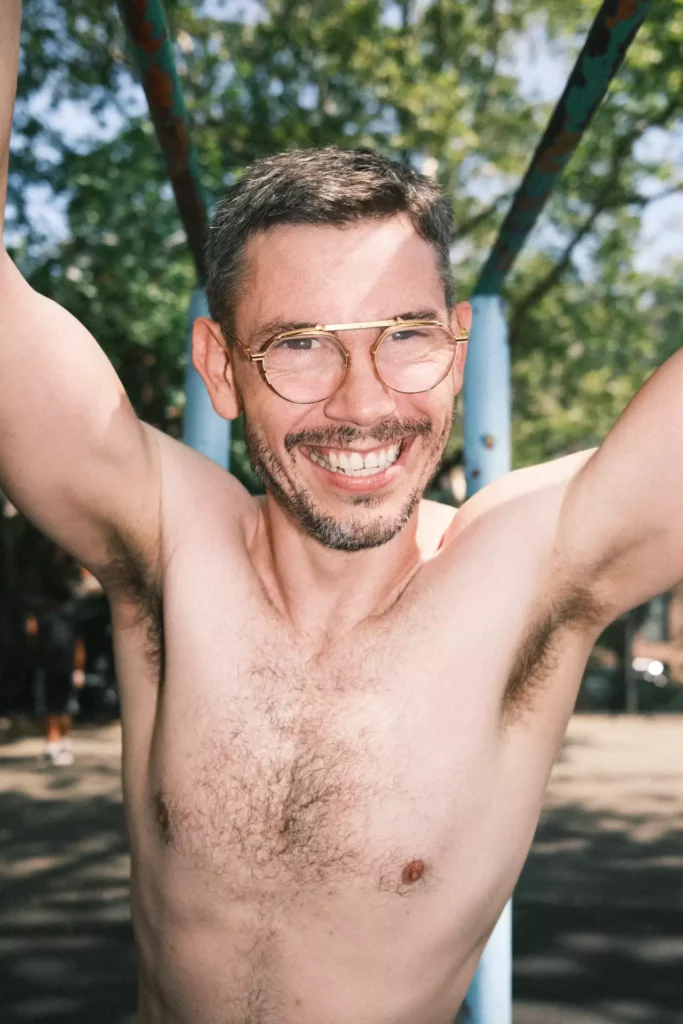
It feels very brave to share imagery and stories that are so funny and yet so vulnerable-making.
It was easier being vulnerable and open when I was younger. In my twenties, confessions were a means of survival – releasing my shame into the wild. As I get older, I get more self-conscious about sharing my life. The way the internet commodifies identities and trauma leaves a sour taste in my mouth. What is genuine and what is a career chess-move? I had to combat that feeling by rediscovering that pure and honest place. Writing unselfconsciously is more needed than ever.
Your writing emanates queer humour and irreverence. Who are the voices that inspire you?
Paul Rudnick, the writer of Addams Family Values. Ryan Murphy. John Waters. Gregg Araki. Gary Indiana. I’ve always had more of an indie art fag sensibility. I appreciate artistic sensibility and dark humour.
Much of your previous writing has been about your experiences living with a disability, but here it feels like your body has become a source of empowerment.
Opening up my relationship in 2021 has led to more acceptance of my body. I got sober, I lost 30 pounds and I felt in control of my body for the first time. I felt hot for the first time! I used to feel like gay Shrek, when actually I was pretty cute. I didn’t let anyone fuck me for 10 years, but now I really own my body; I show it off. It’s empowering.
Is there an irony that the challenges you have had with your body have led to so much success?
All the things I was embarrassed by are the reason why I own a house. All the things that were my scarlet letter, all the things that were keeping me up at night, all the things that I felt like I needed to take a dry erase marker to are the reasons why I make a living as a writer today. It shows that the things that make you uniquely who you are, the qualities that make you inherently different, the things that you’re indoctrinated to feel shame about, are actually your biggest superpower.
The book is fuelled by nostalgia for the 2000s. What do you miss and what are you happy to leave behind?
I miss a world without smartphones, and I’d leave behind painkillers and celibacy.
You talk about your struggles with success and your endless drive to achieve. What do you put this down to?
It’s tied to being gay and having a disability – I got a double serving. I have been chronically underestimated, and constantly proving people wrong is like my strange addiction. I love it.
You write brilliantly about sex, a topic notoriously hard to capture in writing. What makes good sex writing?
Write from a place of truth. Sex is a rich muse because it can be a million things all within the span of three thrusts: hilarious, nourishing, lonely, connected – sometimes all within the same moment. It’s a gamut of emotions. It’s fascinating how people show up in a sexual experience: what baggage they’re bringing to the sexual encounter, what demons you can exorcise together. It’s delicious and a privilege.
What piece of advice would you give that twenty-something writer now?
Put a dick in your butt and stop doing painkillers, you stupid bitch.
This is a feature appearing in issue 371 of Attitude magazine, on sale in print and digital now. Order Attitude magazine issue 371 in print now, or in digital on the links below on Apple News+ and the Attitude app.