
Farming creator Clifton Carpenter opens up about coming out during Pride Month: ‘Don’t be a sheep’ (EXCLUSIVE)
"How can you build a career and build a life if you're not being 100% authentic?" Carpenter tells Attitude
By Callum Wells
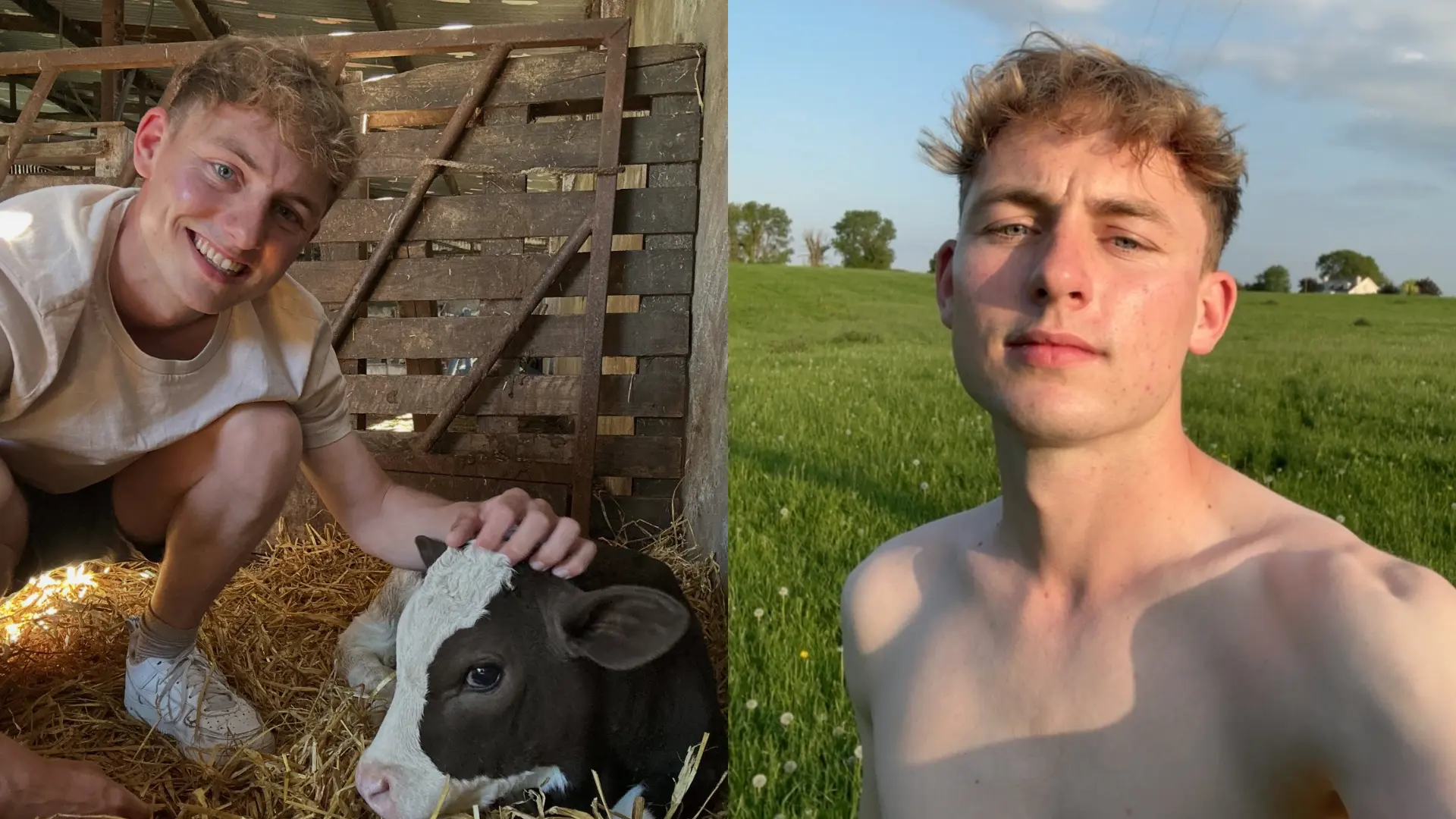
When Clifton Carpenter hit ‘post’ on his Pride Month coming-out announcement, he wasn’t expecting to become a source of visibility for LGBTQ+ people in agriculture. But after sharing that he was “officially a gay farmer boy” with his 76.3k Instagram followers, the young farming creator was inundated with messages from people thanking him for showing that there’s still room for queer people in one of society’s most traditionally masculine industries.
Speaking exclusively to Attitude, Carpenter reflects on why Pride felt like the right time to come out publicly, the overwhelmingly positive response from the farming community, why representation in rural life still matters, and the advice he’d give to any young LGBTQ+ person who’s struggling to live authentically.
Attitude: You came out publicly during Pride Month. Why did that feel like the right moment for you?
Clifton Carpenter: Around June 2024 was when I initially came out to my family and friends. Then in August 2025 I started making content online about farming. I remember getting a few messages asking, “Are you gay?” or “What’s your story?” They weren’t hateful comments or anything, just a few DMs.
I remember thinking I’d love to get to the point in my life where I could put it out publicly, just to show that it’s OK to be gay in farming and to show a different side of things.
Since February I’d been thinking, “I’d love to do a post,” but I had no idea what I wanted to do or how I wanted to approach it. I kind of sat on it for a few months. Then in May I came up with the plan that I wanted to do a carousel with the cows and the calves and talk about it that way.
I actually started a new job in June as well, so it felt like I had a fresh start going on. I thought there was no better time to do the post while I was starting this new chapter in my life. Pride was coming up, so I thought, “Feck it.” There was no better time.
I put it up and, I suppose, the rest is history so far. It really took off. I’m really positive about it and I’m really happy with how it’s all gone.
What’s the response been like from your followers, as well as the wider farming community?
I’d say it’s been extremely positive. I’d honestly say 99.9% positive. There have been a few negative comments here or there, but the positivity has outweighed everything.
Looking at it from the outside, you’d think everything’s perfect and there have been no problems, but obviously there’s two sides to every story. With social media you have to be careful because people mostly see the positives.
I’ve gone through things as well that I haven’t touched on on social media yet, and I haven’t gone into depth with them. I’ve tried to keep things positive so far, but in the future I do want to talk about some of the negative things associated with being gay and being in that culture and industry.
My initial reaction when I came out online was that the positivity was insane. It was so good. Even my local community and other farmers were texting me and DMing me with really thoughtful messages. My inbox was full of really nice messages. It was incredibly positive and I’m just extremely happy to have received all of that support.
You mentioned there are still negative experiences you haven’t spoken about publicly. Are you comfortable talking about those now?
I won’t go into too much detail, but one thing I’ll say is that although we see a lot of positivity online, being gay in 2026 still comes with negativity. One of the reasons I came out publicly was because I could still see those negative attitudes were there. There are still negative connotations around being gay in different industries, and that’s exactly why representation still matters.
I’ve been in situations where you hear the slurs and hear those kinds of comments, and you’re left thinking that if people don’t keep showing up and fighting for representation, others will just keep getting away with saying those things.
That’s why I think it’s so important to keep showing up every day and being yourself. With time, good education and people seeing more representation, they’ll realise it’s OK to be different.
Was there ever a point where you wondered if being openly gay might affect your career or your place in the farming world?
Dead honest? One hundred per cent. I really did think it would affect my career.
It took a lot of work for me to come to terms with the fact that it’s OK to be gay and be in agriculture because it’s such a male, straight-dominated industry.
I suppose I was lucky because my mindset was always a little bit different. I spent so much time working with the animals, and the animals can’t talk back. They don’t care if you’re a man or a woman or what your sexuality is.
I’ve always believed your sexuality doesn’t define you and it doesn’t define your abilities or your limits. But I do still believe there’s a stigma in the industry that if you’re gay, you might be looked down on or not taken seriously.
I definitely asked myself, “How is this going to affect my career?” But eventually I came to terms with the fact that I wanted to be my true self, because how can you build a career or build a life if you’re not being 100% authentic?
Do you think those stereotypes are changing? You’re part of that change now…
I do think the stereotypes are changing, but I don’t think they’ve disappeared.
People view agriculture as a very straight, heavily male-dominated industry, but women have always been the backbone of agriculture from day one. They’re finally getting the recognition they deserve now, especially through social media, where there are lots of female agricultural influencers showing what they do every day.
But unless people keep showing up and representing themselves, others won’t realise how important that representation is.
It has changed a bit, but it hasn’t changed fully. It’s still there in the background. I do hope that with time, education and the power of social media, where people can see different aspects of farming and the different kinds of people involved in the industry, things will continue to improve.
Did you realise that coming out might make you a role model for LGBTQ+ people in rural communities?
Honestly, I never thought about being a role model or being someone people would look up to.
When I was making that post, I just kept thinking back to when I was growing up. I never saw those kinds of posts. I never saw gay representation in the farming community.
I just hoped that if there are young lads out there who are struggling, maybe still in the closet and working in farming, they’d see my post and realise it’s OK. It’s OK to be gay and be in the farming industry.
That’s all I wanted people to take away from it. That’s the message I hope comes across.
Has coming out changed the way you’re going to create content, or will you keep doing exactly what you’ve always done?
Honestly, no. From the day I started making content, I always said I was going to be Clifton Carpenter no matter what happened. Whether I’m posting farming videos, a bit of fashion in Paris, funny videos or me milking cows while listening to music, it’s going to be me and it’s going to be 100% authentic.
I’m not going to change the way I make content or change the way I talk or try to brush myself up a bit more. It’s just going to be me.
I think the people who followed me did so because I was authentic. They’re not following me because they want me to suddenly become somebody else.
Do you think people have ever fetishised your content because of the whole ‘farmer’ image?
I honestly don’t know. I’ve never really thought about it. I think people like seeing the animals and seeing a different side of life because if you go on Instagram or TikTok, you don’t really see many gay farmers out working on farms.
My passion for agriculture is immense. I absolutely love everything involved in the agricultural world. So if people are engaging with the content and understanding what farmers go through every day and all the hard work they put in, then I think that’s brilliant.
Maybe they just like the animals! I hope that’s it. As long as they’re coming to the page and learning something, I’m happy.
Have you had any standout DMs since coming out?
If I’m being honest, the messages that stood out most were from people saying, “I could never have your confidence or bravery to do what you did.”
I actually found those messages really upsetting because I thought, “Oh my God, they’re still in a situation where they don’t feel comfortable being openly gay.”
Whether that’s because they personally don’t feel ready to come out yet, or because of their environment, their background or where they live and they know it wouldn’t be safe or would be frowned upon, I don’t know.
But those messages really affected me because they reminded me exactly why representation matters.
There are still people in 2026 who don’t think it’s OK to be gay, or who don’t feel they’re allowed to live the life they want because they’re worried they’ll be judged or criticised.
When I read those messages, it made me realise what I’m doing is positive and that hopefully it’s helping people.
If a young queer person watching your videos is scared to come out, what would you want to tell them?
First of all, don’t try to fit in. I know it’s cliché, but don’t be a sheep. Don’t just sit in the crowd and do what everybody else is doing. Don’t dim your own spark just to fit in with other people.
I’ve never really fitted in my entire life, and I’m not doing too badly now. I found my own path and found my own passion. I’d also say to work on yourself first. Get comfortable with yourself and your mental health around being gay. Take your time.
Then, when you’re ready, find a family member or a friend that you trust and have a conversation with them. Get used to saying it out loud, because it’s one thing coming to terms with it yourself, but it’s another thing saying the words to another person.
I was very lucky because one of my family members, my godmother, was amazing. I had that support from her and we were able to talk through everything together. Whether it takes a week, a year or a couple of years, just find someone you can trust and work from there.
And don’t be so hard on yourself. People don’t always understand how big a thing this is. It takes work, it takes effort and it takes time. Time is a great healer. Time is good medicine. You’ll work it out with time. Just be kind to yourself.
Finally, if you could challenge one stereotype about both farmers and LGBTQ+ people in one sentence, what would it be?
You don’t have to look, sound or act the same as everybody else in an industry or a community to fit in.