
Placebo’s Brian Molko on turning ‘Nancy Boy’ into a queer anthem: ‘I’m going to reclaim all these insults’ (EXCLUSIVE)
The rock band has been honoured with a Pride Icon Award at the PEUGEOT Attitude PRIDE Awards Europe, supported by British Airways
By Ryan Butcher
The opening riff cuts like a chainsaw through a silk negligee.
Then comes the sneer, the swagger and the opening line of one of the defining queer anthems of a generation.
“Alcoholic kind of mood,” spits Brian Molko. “Lose my clothes, lose my lube.”
“Three chords and the truth” is how Placebo’s founding members Molko and Stefan Olsdal describe ‘Nancy Boy’ to Attitude three decades later. For a lot of queer people, it was a gateway drug not just to Placebo, but to the possibility that there might be another way to be. For others, it was the first time they had heard a song toy so openly with sexuality, gender and identity. In recent years, it has become something else entirely: a call to arms, a protest song and, in countries hostile to LGBTQ+ rights, an act of defiance.
How ‘Nancy Boy’ became a generation-defining anthem
Released as the fourth single from Placebo’s self-titled 1996 debut album, ‘Nancy Boy’ shot the band from cult curiosity to national consciousness. It became their first Top 5 hit, earned them an appearance on Top of the Pops and introduced a mainstream audience to a group that looked and sounded unlike almost anything else in British music at the time.
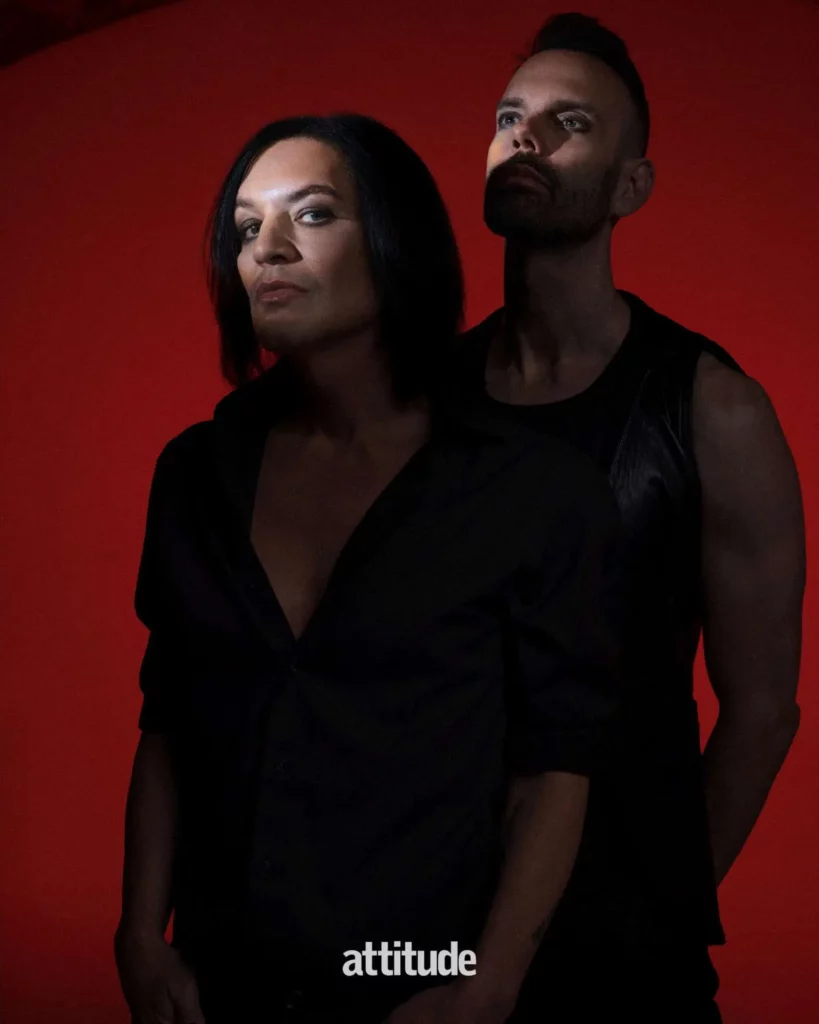
It remains the song most closely associated with Placebo and helped establish them as one of Britain’s most influential alternative bands, with a career spanning eight studio albums, 15 UK Top 40 singles, more than 14 million records sold worldwide – and now a Pride Icon Award at the PEUGEOT Attitude PRIDE Awards Europe, supported by British Airways.
Yet ‘Nancy Boy’ began life as something much simpler. It was a response to the casual homophobia and biphobia that surrounded Molko and Olsdal while they were still figuring themselves out. Their sexuality. Their identity. Their place in a Britain that often felt hostile to difference. Unlike most people – or other closeted artists – they chose to take that journey in public, in mid-1990s London.
Reclaiming an insult
“We’d go out to see bands or go to indie nights and total strangers would come up to us and start hurling abuse,” says Molko. “And we weren’t even really trying very hard. I was wearing black nail polish, a little bit of eyeliner and my hair was long. After it happened enough times, I started thinking, ‘If this is all it takes to upset a homophobe, then surely I can turn the volume up.’
“After maybe the fourth or fifth time a stranger called me a ‘Nancy boy’ in a pub, I thought, ‘Fuck it. I’m going to reclaim all these insults. I’m going to write a song about how a bisexual person can have so much more fun than you. Has so many more options than you. So much more freedom than you. Look at how much fun I can have. I’m taking your insult and making it mine.’”
Thirty years later, sitting around the kitchen table in Olsdal’s London home over coffee, they are quick to point out just how different Britain looked when Placebo emerged. Britpop was at its commercial peak. Football fever gripped the country ahead of Euro ’96. Lad culture dominated magazine covers – even Damon Albarn had been splashed across Attitude.
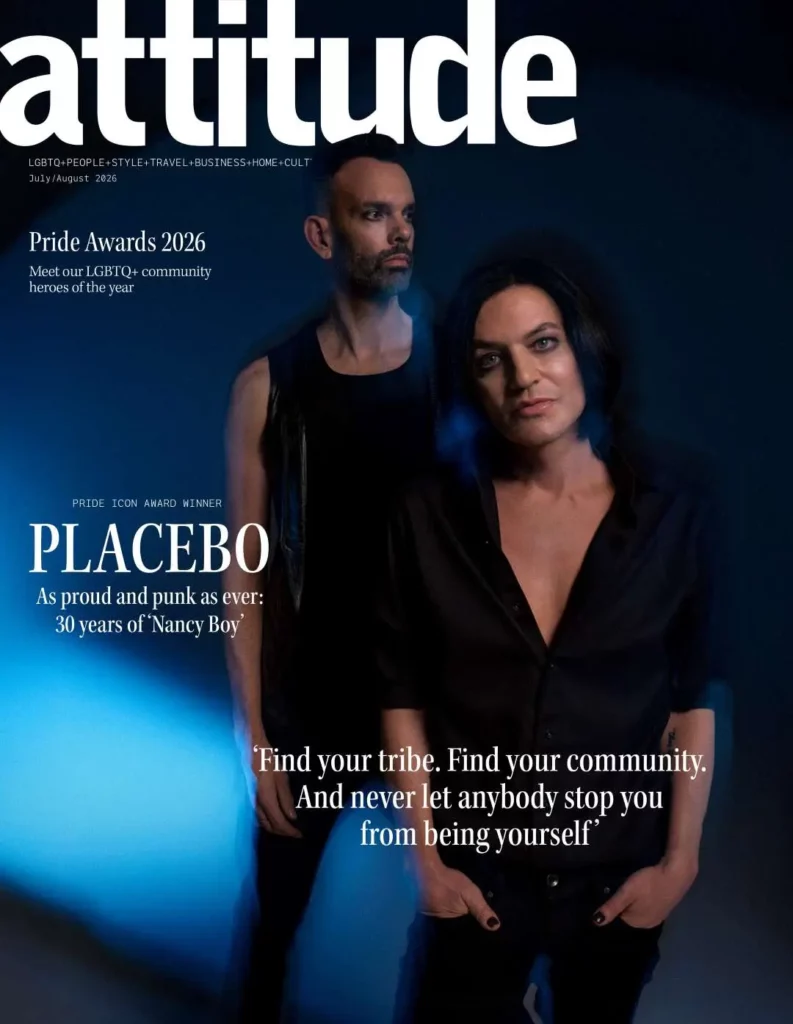
“We were also living in the time of AIDS and HIV as well, which was happening all around us” – Stefan Olsdal
“And we were cross-dressing, wearing makeup and playing punk music,” Molko says. “[Britpop] was quite macho, quite chauvinistic, and had that football terrace vibe. We stood out.”
But the band weren’t simply challenging musical conventions. They were emerging in a country where queer life was still heavily circumscribed by law, politics and public attitudes.
“I was in a relationship, and we were technically breaking the law because the age of consent wasn’t the same for straight and gay people,” Olsdal recalls. “We were going through our own sexual awakenings, but we were also living in the time of AIDS and HIV as well, which was happening all around us.”
For both men, this was not some abstract concept they were writing about – this was their actual life. And for Molko, Placebo’s formative years collided with his own search for identity.
Placebo’s full interview appears in issue 371 of Attitude magazine, on sale in print and digital now. Order Attitude magazine issue 371 in print now, or in digital on the links below on Apple News+ and the Attitude app.