
Meet Jola Lemin, aka Ula Lah: The drag queen determined to give his school pupils the support he never had (EXCLUSIVE)
Ula Lah isn’t your everyday drag queen. When the wigs and heels come off, Ula returns to reality as Jola Lemin, a primary school teacher whose work has included learning sign language to teach deaf kids and accidentally outing himself to a class when pupils used the word “gay” as an insult. “When you use those words, you’re referencing me,” Lemin recalls telling them. “You’re offending me”
By Aaron Sugg
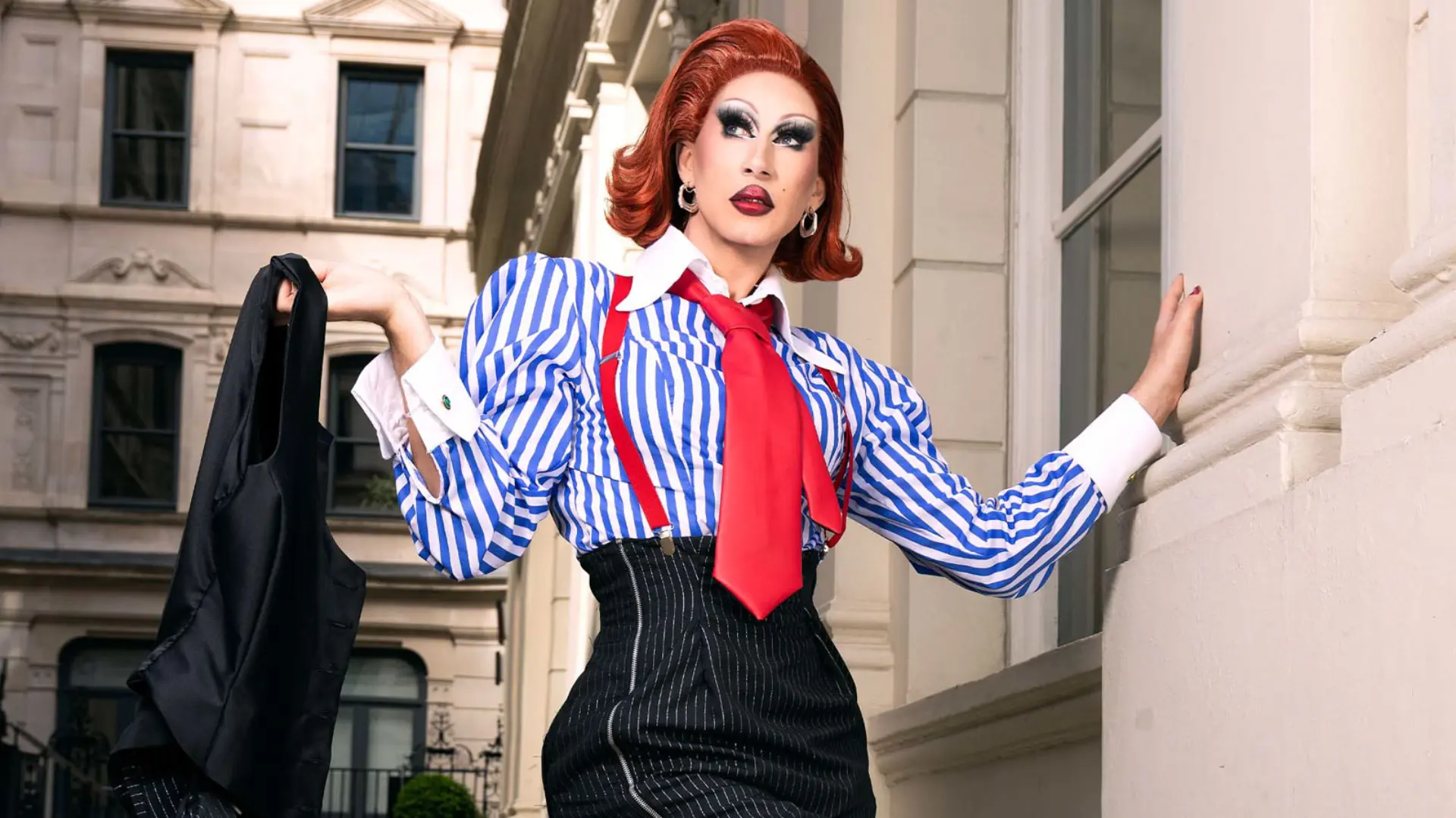
Although teacher Jola Lemin has not spoken openly about his drag persona with his class, he knows that some pupils and parents are aware of his drag alter ego Ula Lah after he performed at Croydon Pride 2025. At the beginning of his set, he spotted a familiar face in the crowd – one of his students. “I had to change my set very quickly when I saw them there,” he laughs. It became one of his more memorable performances. A large marabou feather fell from his outfit – “which makes it sound much more expensive than it was,” Lemin jokes – and he managed to throw it into the crowd, where his pupil proudly waved it above their head for the rest of the set.
He remembers his pupil’s response when he came off stage. “They were just really excited,” he says. “It was really lovely.” It is not the first time Lemin’s two worlds have collided. Another moment that still tickles him today was when a school parent spotted him performing in drag a few years prior. “‘Oh, look at Mr Lemin’s legs,’” says Lemin, recalling their reaction. “Please never say that ever again,” he remembers replying, modestly.
Growing up in Cornwall was no easy feat for Lemin, as a closeted, “androgynous”, theatre-loving teenager, he tells me. Slipping away to a gay bar in nearby Plymouth from a young age only fuelled his desire for something bigger. “I always wanted to be part of a much more vibrant queer scene,” he says, as a knowing smile spreads across his face. Today, Lemin balances life as a primary school teacher with performing in drag on the side. But at one time, stepping into the heels and donning the signature copper orange wig of Ula Lah felt “absolutely terrifying”.
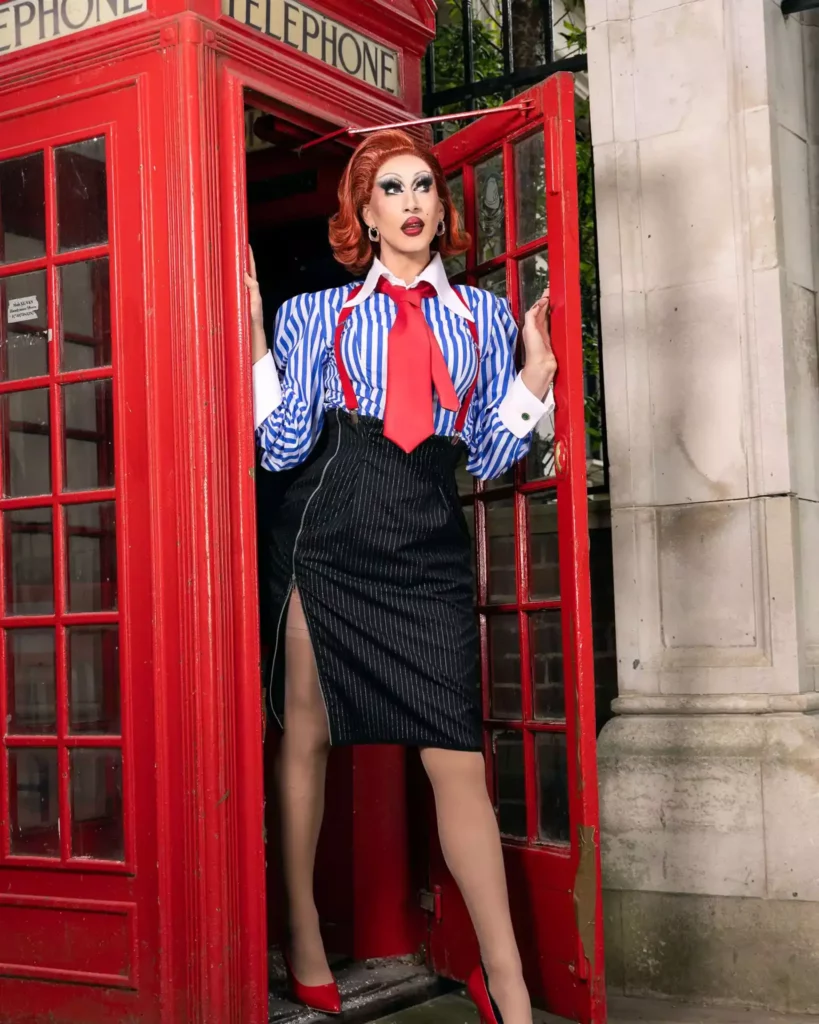
When he first saw a drag queen while studying education at Bath Spa University, he found the larger-than-life performer “intimidating”. Looking back, he admits candidly: “I think maybe it’s that kind of unexplored avenue that drag was presenting, you know, that supreme level of confidence and a mastery of yourself… I didn’t really have that at all.”
We are speaking as Lemin, 39, is enduring the June 2026 heatwave (out of drag). With schools closed due to soaring temperatures, Lemin seems far more relaxed than he might be when he has to manage a class of 30-plus sweaty Year 5 pupils in 32 degrees Celsius.
Lemin’s story begins at an all-boys secondary school in Plymouth, Devon, where he navigated his formative years under the lingering shadow of Section 28, a Thatcher-era law that prohibited local authorities from “promoting homosexuality” or teaching the acceptability of same-sex relationships. It remains one of the most controversial pieces of anti-gay legislation in modern British history. “I went to an all-boys secondary school, which sounds like it would have been great on paper, but it was actually horrendous,” Lemin says. “I think it probably set me back quite a lot.” He recalls a lack of visibility and support during that time. “I didn’t have any sort of gay or queer references, and nobody was talking about it,” he says. “I remember thinking for a really long time that I was the only one who felt or thought that way.”
Reflecting on his journey, Lemin describes our conversation as being almost like a “therapy session”, admitting that the years after primary school feel like something of a “grey area” in his timeline. “I was in fight or flight, and all my energy was going into kind of preserving myself and protecting myself,” he recalls.
From his perspective as a qualified teacher, Lemin often reflects on how adults responded when he sought support after being bullied for being gay. “It’s really interesting to think about the teachers I spoke to and the adults I spoke to, really explicitly, without using any particular words,” he says. “Looking back, it’s clear that nobody really helped me. Now, if something like that happened in my classroom, I’d get emails and calls from parents straight away asking what I was doing about it.”
Pushing through secondary school eventually led him to sixth form, where he came out as gay. At 17, Lemin found himself locked in a bedroom at a Halloween house party with a friend he had known for just five minutes, suddenly pouring out years of secrets and internalised homophobia. That was the first hurdle. “And then it slowly kind of trickled. I started telling more people. My family found it challenging,” Lemin says. “Where we grew up as well, there wasn’t that sort of representation.” He attributes this to a small-town mindset, seemingly closed off from the wider world and the booming queer cultural hub of central London. “I think they initially had a bit of a knee-jerk reaction, but now I can’t imagine… they’re incredible now,” Lemin says with pride, speaking warmly about how far they have come.

Lemin began his teaching career in Cardiff, working with children aged two to four in some of the city’s most deprived areas. It was there that his sense of vocation deepened.
After that, Lemin began working with deaf children in Plymouth. It was such a defining moment in his career that he visibly lights up when talking about it. He taught himself sign language so he could better communicate with the children he supported. “It was children who had different levels of hearing impairment – from those with partial hearing loss to those who were profoundly deaf or entirely deaf,” Lemin explains.
For him, teaching deaf children was about helping them discover their own ways of expressing themselves and ensuring they were truly seen and heard – something Lemin relates to following the silence he experienced from educators during his formative years. “There’s a parallel and a level of relatability in terms of supporting them in literally finding their voice,” he says. “But it’s also about dedicating so much time to them and to their families.” By doing so, Lemin was reclaiming his own story while creating a new legacy for those who come after him. “Yes, we want them to learn, and yes, we want them to fulfil their full potential,” he says. “But it’s also about understanding that you’re investing in a child’s life, and in the lives of the people who love and care for them.”
Lemin moved to London at the age of 27, where he has spent the past 11 years teaching at a primary school in Croydon. Despite the borough’s often thorny reputation, he speaks about the area with genuine affection, highlighting the diversity and sense of community. Lemin says his school is a melting pot of different cultures, backgrounds and experiences: “You can’t possibly go to a school like that and have prejudices, because you’re sharing a building space with everybody from everywhere.” He prides himself on the teaching body’s ever-growing diversification, where Lemin unapologetically represents the LGBTQ+ community. “I think in our school it’s glorious, like, you know, they can see those pockets of who they could feel they are.”

Lemin has seen first-hand how representation can reshape the way children understand the world around them. He recalls one moment in the classroom when pupils were using the word “gay” as an insult, prompting him to accidentally out himself to a group of 9–10-year-olds. “When you use those words, you’re referencing me,” Lemin recalls telling them. “You’re offending me.”
He watched as the meaning behind their words began to sink in. “You could see some of their faces just properly gawk at the idea that that kind of language they were hearing and using so freely – that they’d probably either heard or talked about – wasn’t OK,” he says. “And that a person that they’ve actually known for five or six years, that they respected, was impacted by it.”
The reaction was a reminder of why visibility matters. His colleague, whose class it was, encouraged him to continue having those conversations, recognising the importance of a perspective that a straight male teacher may not have been able to articulate in quite the same way. “It’s that level of visibility, I suppose, that we don’t have unless we communicate it.”
Homophobic bullying remains a particularly personal issue for Lemin, who understands its impact as a victim himself. He describes it as being rooted in “shame”, which makes it uniquely isolating compared with other forms of discrimination, where a child may be unable to conceal that part of who they are. “Unless you are told, you’re not going to know,” Lemin says. He again compares it to the lasting mental scar of growing up under Section 28, when queer identities were rarely visible or openly discussed. Looking back, he says, “It would have probably made a world of difference had I just known that somebody was there,” he admits, emotionally. “Without having to go into too much detail about it, to know that they exist.”
Full interview appears in the September/October 2026 issue of Attitude, available on digital platforms and in print now. Buy here