
Fruit Fly author Josh Silver in conversation with Juno Dawson about being LGBTQ+ in a difficult cultural climate (EXCLUSIVE)
This is an excerpt of a feature appearing in Attitude’s November/December 2026 issue
By Josh Silver
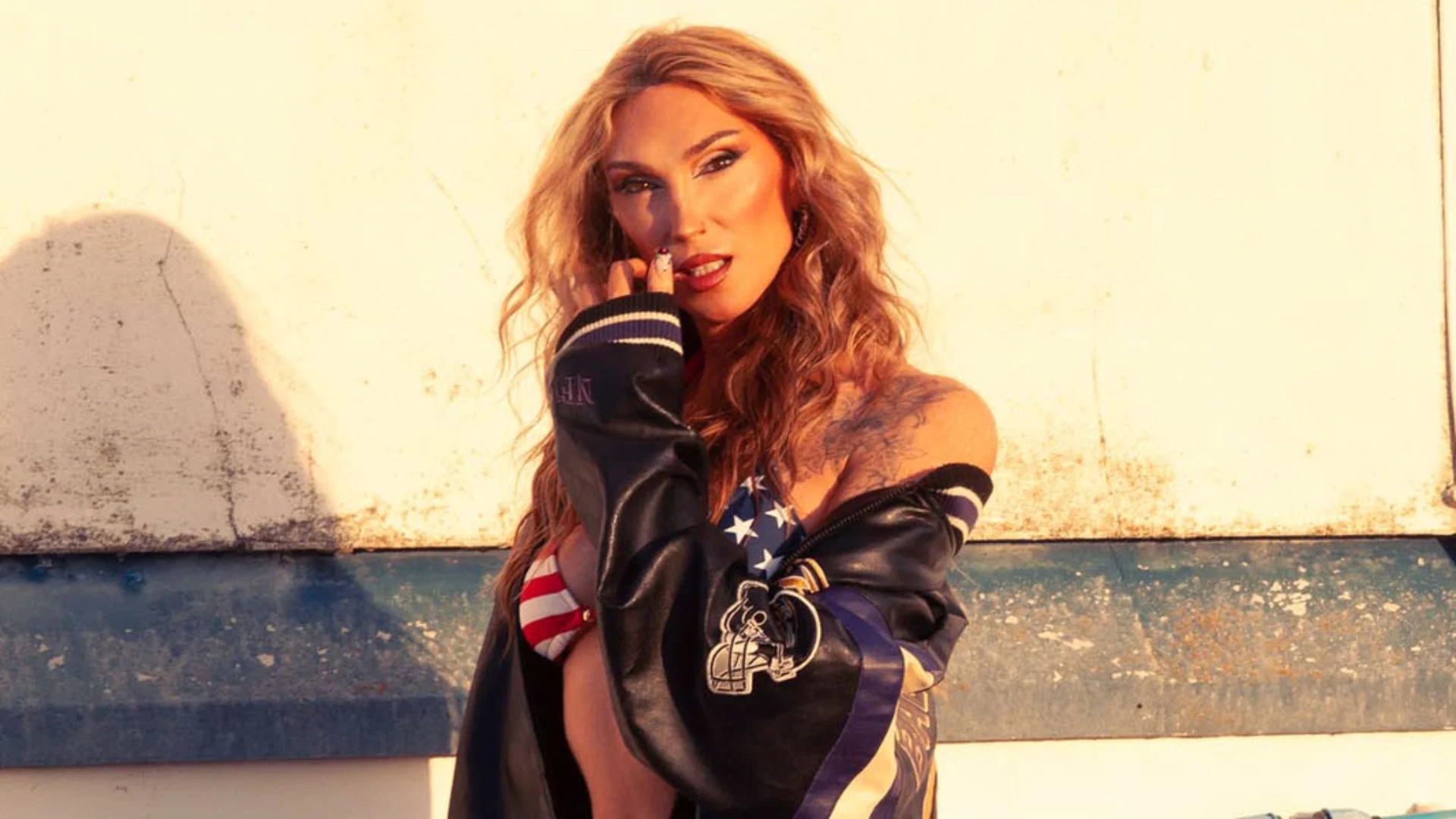
There are writers who reflect the culture around them, and there are writers who help change it. Juno Dawson has spent more than a decade doing the latter.
Across a career approaching one million book sales, Dawson has written fiction and non-fiction for young adults and adults, moved into podcasting and television, and written for Doctor Who. Her work has reached readers far beyond the traditional literary world, while her visibility as a trans woman has made her an important cultural figure at a time when trans lives have become the subject of relentless public and political scrutiny.
For queer readers in particular, Dawson’s significance is difficult to separate from the work itself. She has written openly about bodies, sexuality, identity and gender for young people long before many mainstream institutions knew how to talk about them. She has occupied spaces where queer and trans people have historically been absent – and written about them not quietly, but visibly, successfully and on her own terms.
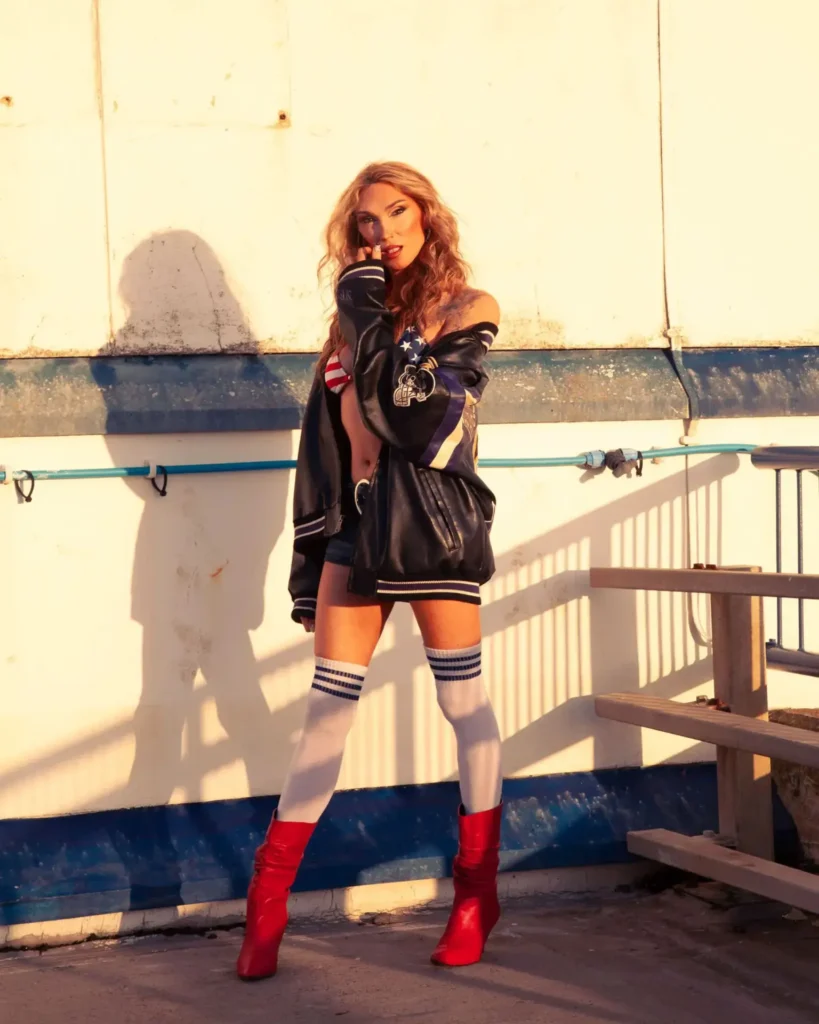
And, crucially, she has never allowed herself to become only one thing. Novelist. Non-fiction writer. Podcaster. Screenwriter. Former teacher. Public figure. Trans woman. Now, she adds winner of The Culture Award at the Virgin Atlantic Attitude Awards 2026, in partnership with M&S and electrified by Polestar, to the list.
And occasionally – as she puts it herself – she is also a gobshite. “I sometimes wonder if I’ve undermined my writing career by being a gobshite,” she says, laughing, “and by being a cabaret performer, or all these other things I’ve done on the side.”
For all the extraordinary things Juno Dawson has already done, what stays with me is how much possibility her career represents. For queer and working-class creatives, and anyone who has ever looked at an industry and wondered whether there is a place for them in it, Juno has done more than prove there is. She is still making that place bigger, proving she is a trailblazer and inspiration to so many.
It’s a good place to begin.
Josh Silver: What makes your career interesting is you’ve never really stayed in one lane. Do you think the literary world still wants writers to be easier to categorise than you are?
Juno Dawson: I think in the literary world we do want authors, especially female authors, to just be one thing. And there really aren’t very many trans novelists. There’s me and Nicola Dinan, Torrey Peters, who I think are incredible. What I love about Torrey is that she’s kind of taken herself to the woods. She lives in this cabin in the woods now, and we never see her unless she has a book out. Maybe I’ve put myself out there too much.
But, increasingly, writers are expected to do exactly that. It isn’t just: write the book, hand it in, disappear. You’re expected to have this whole public life around the work.
It feels like this new frontier where we’re slightly expected to almost be influencers. My brand deals have seemed to come on the back of the podcast more than anything else. And that’s really weird because, actually, I just want to write the books. But at the same time, as a queer person, you can’t pull apart your different identities. I didn’t come out as trans until I was 30, so I’m always going to feel like I missed out on a bunch of experiences I could have had if I’d transitioned younger. In a weird way, I’m kind of glad my success came a little bit later because I think I would have found it very hard to deal with if I’d had this attention in my early twenties. I got my first number one the year I turned 40.
Which I love.
But at the same time, I have this thing where I feel like time’s running out. As women enter middle age, the media just loses interest in us. I feel like I’ve got this last shot at being marketable before I become this sort of publicity spinster. But so many of my favourite female role models are women in their fifties. I want to wear what I want to wear. I want to look the way I want to look.
What I find interesting about your career is that you’ve shown people there are different ways of doing this. You can write novels, non-fiction, podcast, write television. You don’t have to conform to that slightly old-fashioned idea of the literary author who just appears every three years with another novel. And you didn’t come into publishing through that traditional literary route either.
No. I was a working-class person from Bradford. I didn’t realise that anyone could just email an agent. I thought you had to have gone to Oxford or something. A friend who worked at Bloomsbury said, “You do realise you can just get an agent? Agents are always looking for talent. You don’t need to have gone to Oxford to email an agent. You just need to be good. That’s all you need.” So I emailed an agent with my first manuscript.
Which wasn’t finished.
It wasn’t finished. I made mistakes! I sent the first three chapters, and she asked if she could read the rest, and I was basically like… sorry. She was very sweet. She said, “Well, just get back to me when you’ve finished it.”
So, I knew the first three chapters had to bang. I went back to the drawing board and finished the novel. That was Hollow Pike. I was taken on by my first agent and the rest is history. I did get published on my first attempt, which is rare.
That part of the story is important because people can look at somebody with your career now and assume there must have been some route in. But you were a teacher; you were working in the public sector; you were a working-class person from Bradford who sent an email.
Exactly. And I think that’s why I find it quite funny when people assume there’s been this plan. Neither of us are nepo babies. We’re northern, queer, public-sector workers who ended up writing books. I think sometimes people assume that if someone has a successful run, they must have had this huge industry machine behind them. And that isn’t necessarily what happened.
I think that makes what you’ve done even more significant. There are still people who look at publishing, or television, or any creative industry and think, ‘That world isn’t for someone like me.’
I absolutely thought that. That was why somebody literally had to tell me: you can email an agent. I didn’t know.
Which feels almost ridiculous now when you look at what happened afterwards: nearly one million books sold.
I think the thing people sometimes forget is that I had to pay rent.
This is an excerpt of a feature appearing in Attitude’s November/December 2026 issue.