
Kieron Moore on straight privilege, body dysmorphia and playing a gay sex worker in Blue Film: ‘The best acting experience I’ve ever had’
He plays a contrivedly cocksure cam boy tormented by toxic masculinity in controversial new movie Blue Film, but with a background in boxing and poetry, rising star Kieron Moore is a more complex soul than his character. Here, he talks hating “limitations”, the role of art in bringing the difficult subject of sexual abuse out of the shadows in which it thrives, his friendship with fellow Boots alum Max Parker, and living with a “deep sense of body dysmorphia”
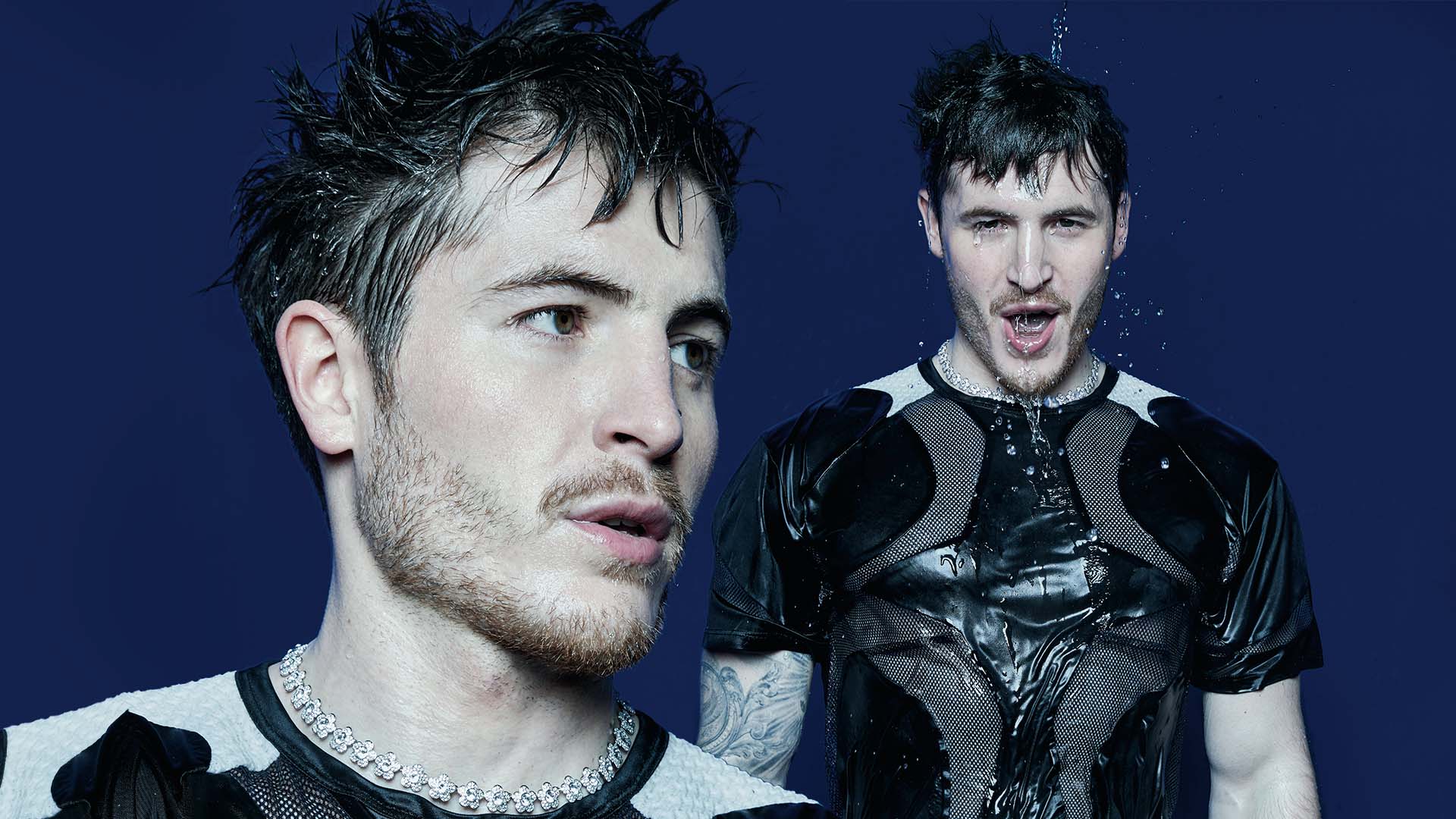
“I’d like to play Wolverine!” says Kieron Moore. He’s certainly got the physique, fuzz and impressively square jaw for it – all assets that came in handy playing charismatic gay camboy Aaron in upcoming US release Blue Film.
“‘Paypig’ was not a term I was unaware of,” he says of financial dominator Aaron’s underlings, adding, “I have friends who sell belongings…” The 29-year-old’s understanding of gay sexual mores is rooted in real-world insight, but not in the way you might think. “I get the most insane DMs you’ve ever seen – post-Boots, they went through the roof,” he explains of his breakthrough in last year’s hit Netflix military drama. “[By then], I’d already shot Aaron, so this world that might’ve been semi-alien to me, I was more aware of. I find it fascinating that there’s a market [for being] depreciated.”
In Boots, Moore played hypermasculine marine Slovacek, whose bullying of gay comrade Cameron strikes an uncomfortably homoerotic tone. “I think Slovacek would be fascinated about how Aaron makes money,” he laughs. “‘You use people online and get money for it?! I’m doing it for free!’”
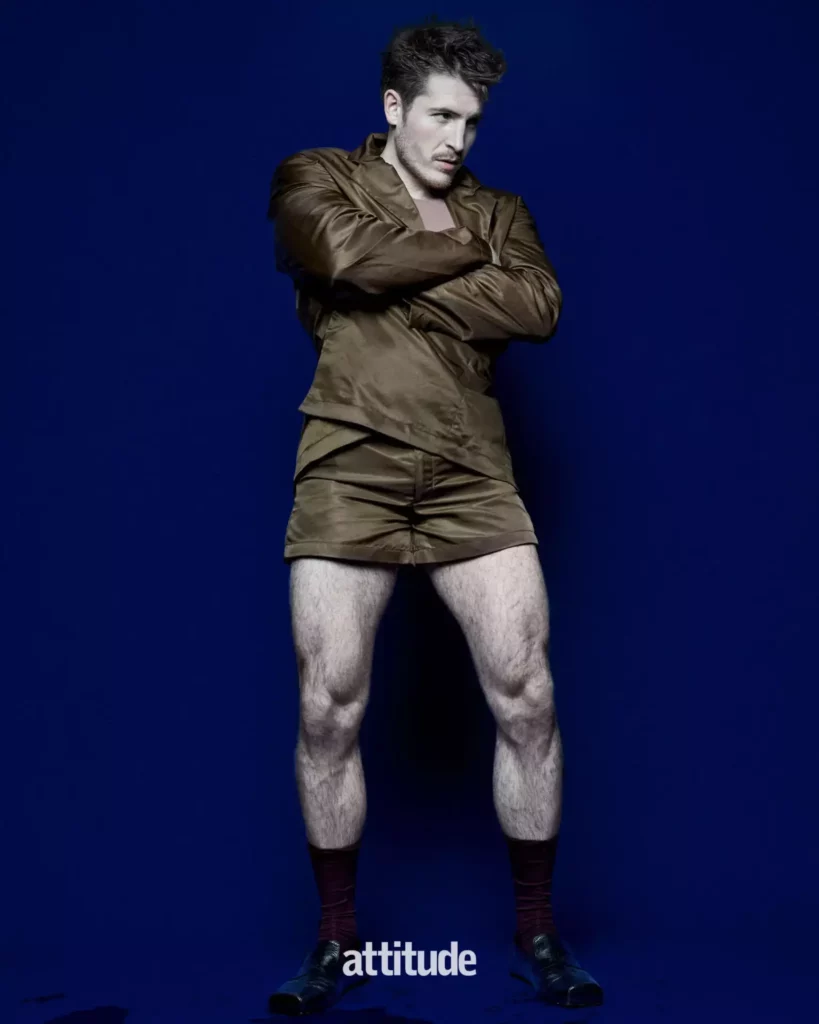
It was Slovacek’s cruelty, one imagines, that drove those DMs. “I understand it on an intrinsically human level,” says Moore. “Sometimes we want permission for the way we feel about ourselves. Rather than uplifting, some want to be diminished.” Moore’s grace on the matter – his recognition that pain may be driving such behaviour – speaks to a capacity for empathy that makes him one of our most exciting young actors.
Zooming in
It’s a sentiment shared by his collaborators on Blue Film, a movie that demands bravery of its stewards in covering harrowing subjects, including (trigger warning) violent sexual masochism and child sexual abuse. Suffice to say, Blue Film is an extremely challenging, even unpleasant, experience that some viewers – especially victims of sexual abuse – may want or need to avoid. We’ll go deeper into the film’s subject matter later in this article – but whatever your feelings about it, there’s no denying that the actors, and especially Moore, give virtuoso performances.
“Anyone who’s been following Kieron’s career would be foolish to think he’s not going to blow up,” says Elliott Tuttle, the film’s writer and director. “I feel very lucky to have bought Kieron stock early!”
Reed Birney, Moore’s co-star and Blue Film co-producer, concurs. “On Zoom, even before he started reading, he was so upbeat, available and excited about it in a not-cool way. A lot of these young guys are like [affects a deep, nonchalant voice], ‘Hey. How are you doing.’ He was so excited to read. He started and it was instantaneous. I knew he was the guy. I’ve had a little voice tell me something three times in my life. It said it one of those times.”
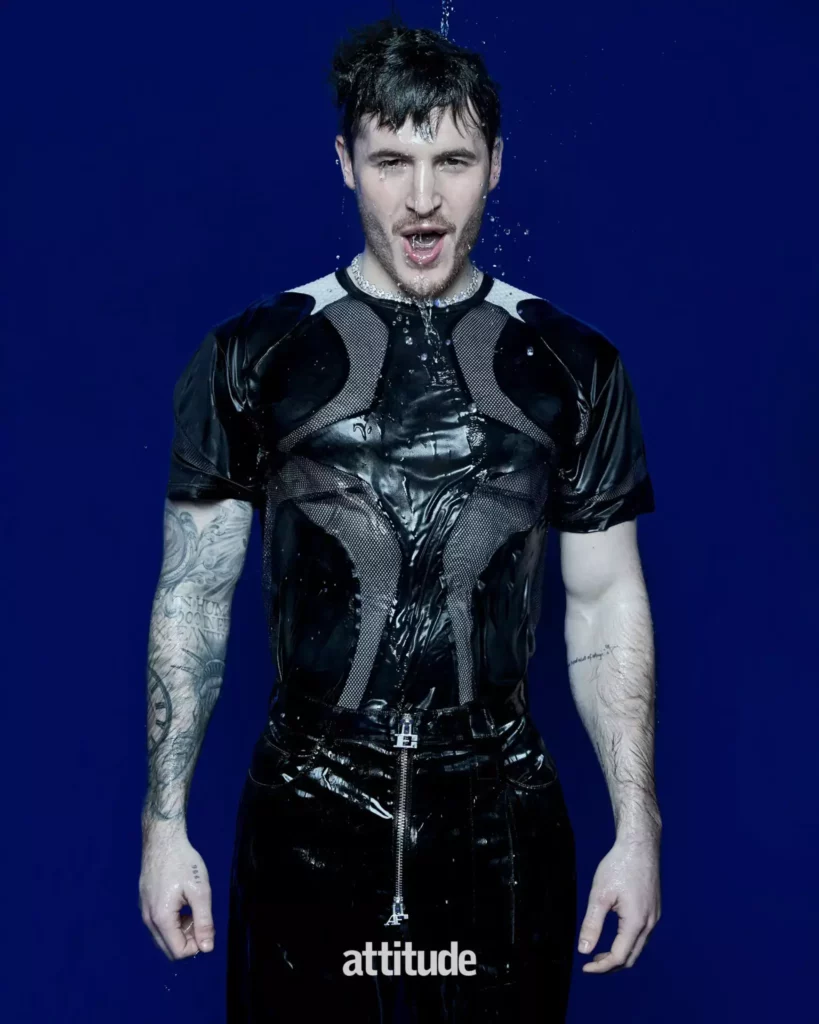
Moore is equally effusive about Birney, 71, known for The Menu, House of Cards, Gossip Girl and American Horror Story. Birney’s passion for his art has led him to play Hank, a convicted child sex offender, a role that would make most actors run for the hills. “He really vocalised his passion for me to be in the project. That was hugely validating. ‘Wow, this Tony Award-winner thinks I can do this.’”
Moore continues, “I’m not a crier. When it says ‘cry’ on the script, I’m like, ‘Oh, God. Here we go.’ But I was bawling my eyes out on Zoom with Reed. I called my team after, saying, ‘If I don’t get that job, it doesn’t matter, as that’s the best acting experience I’ve ever had.’ I’m so lucky I got to do it in real life.”
Northern star
Getting to this point hasn’t been easy. Like Attitude regulars Alexander Lincoln and Max Parker (the latter is Moore’s best friend), Manchester-based Moore started out humbly with a brief role on ITV soap Emmerdale. “An absolute buzz to watch my nana record it – it meant so much to her!” he laughs. “They were the first to take a chance on me. I was getting so close in auditions but didn’t have experience. Casting directors were like, ‘He’s really strong, but didn’t go to drama school, not got a single credit. How can we trust him?’ My agents said, ‘How can you ever trust him if you don’t give him experience?’”
Parts in Sex Education, The Sandman and the Steven Spielberg co-produced Masters of the Air followed (“I came within breathing space of Tom Hanks”), plus a starring role in fantasy horror Vampire Academy with Parker in 2022. The sensational Boots put him on the map, but like Vampire Academy, it was cancelled after one season.
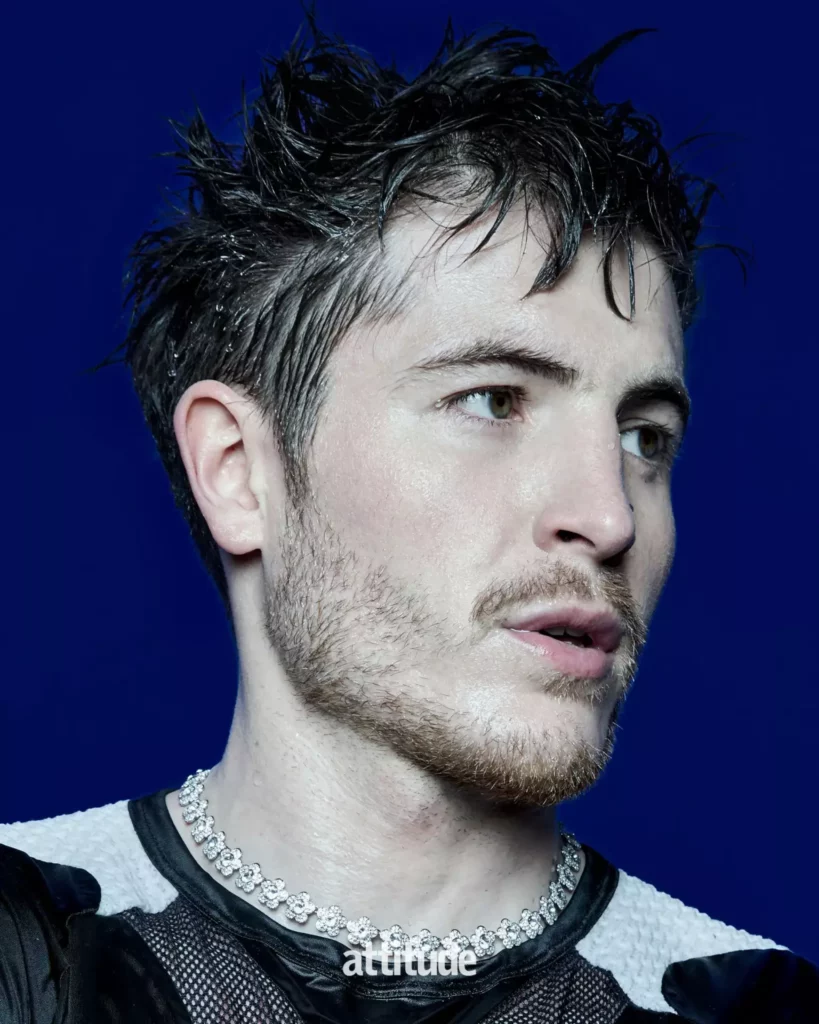
Based on Greg Cope White’s memoir The Pink Marine, Boots explores the harsh reality of a closeted gay cadet back when the US military excluded gay people from service. Despite huge viewing figures, the conservative backlash was fierce. The Pentagon labelled it “woke garbage”.
“I think there’s definitely more story to tell,” Moore offers. “Season two would’ve been very different. I don’t know if everyone’s massively aware of that. These boys would’ve gone to war. It would’ve been a very different test of personalities. But there’s something nice about ending on a high.”
Last year, Moore’s Boots co-star Miles Heizer told Attitude the show prompted a change in how he views straight men. “I grew up with this extreme fear of them, a lack of connection,” he said. “For us to come together and create these deep friendships was interesting.”
I still fear straight men, I tell Moore.
“It’s danger,” he says, with a sensitivity that’s rare. “There’s danger still out there. This is where my privilege comes in. I’m aware of it. There are many other things I’m underprivileged about. I’m aware of them too. I have the luxury of carrying myself a certain way – massively because I’m so confident in my own skin. I can defend myself. But I know I don’t walk down the street having a massive fear of being attacked for who I am. Everyone should have that [privilege]. The fact they don’t shows there’s still work to do.”
Pure poetry
The debate around whether straight guys should play gay roles continues and shifts according to the demands of the role. But there’s simply no question whether Moore, despite being straight, was the right person to play Aaron, who is, on the surface, a toxic brute plagued by pressures of manhood, while underneath, there’s a lonely, lost soul. One might look to Moore’s background as a boxer and work as a poet to explain his ability to convey opposing characteristics. “I hate limitations,” he says. “I’m not a massively [common] example of [a straight man] because I’m so entwined in so many different circles. It’s a sense of identity. People are self-limiting about identity – what it means, what it is.
“When you’re in a boxing ring or boxing gym, you’re constantly striving to be this version of you that doesn’t exist,” he explains. “I pretended I was a champion before I ever had a scent of becoming one. I still train as much as I can. My dad’s constantly like, ‘When are you going back to boxing?’”
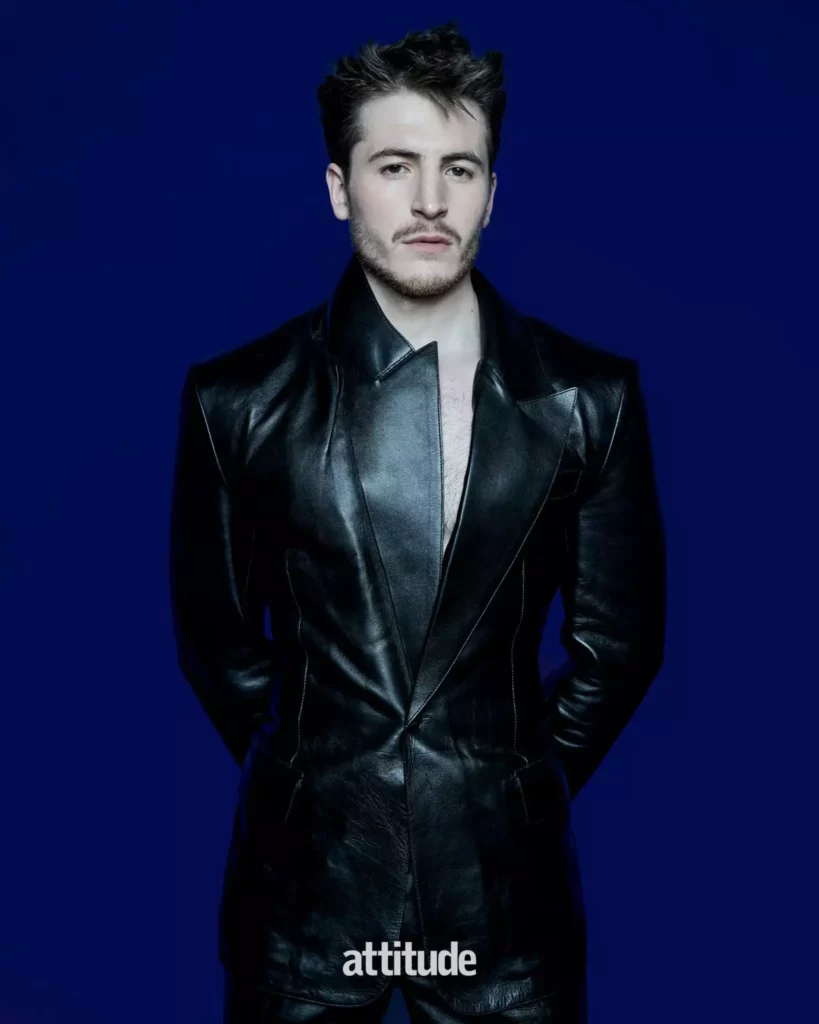
Moore veers from the physical to the cerebral. “I fucking love poetry,” he says, before adding that he did a reading at Parker’s wedding to Kris Mochrie last year. (“Two of the kindest people. They inspire me to believe true love exists. They’re made for each other – Yin and Yang, but also so similar. They heighten the best parts of each other. If everyone had a Kris and Max in their lives, the world would be a better place.”)
“But the way poetry can be slandered and interpreted,” he goes on, “even for being for higher-class people more than working class… ‘It’s too soft.’ God, give me more softness in the world. It’s hard enough.”
Into the blue
To return to Blue Film, it looks hardness and ugliness in the face like few films before it. Rejected by multiple film festivals, Sundance and SXSW among them, because of its extreme and controversial subject matter, it eventually premiered at Edinburgh Film Festival last year, receiving a slew of positive reviews and favourable press in the likes of i-D, Entertainment Weekly and Vanity Fair.
“I wrote it when I was 23, filmed it at 24, had a festival premiere at 25, and now we’re releasing it as I’m 26,” explains Tuttle. He describes the response as “validating”. “I made this film with so little money, little creative overhead. I just wanted to make exactly what I wanted to make. No one stepping in front of me creatively. With that comes the expectation of not having expectations.”
Moore describes the thrust of the plot as “Aaron expected to go there, fuck this man on camera, make some money and leave, as that’s what he does. But it instantly flips.”
Instead, he finds that the client in question is his former high-school teacher from years ago, who has been “in love” with him since Aaron was a child, and comes out of the woodwork with a camera, a pile of cash and an eye-watering proposal.
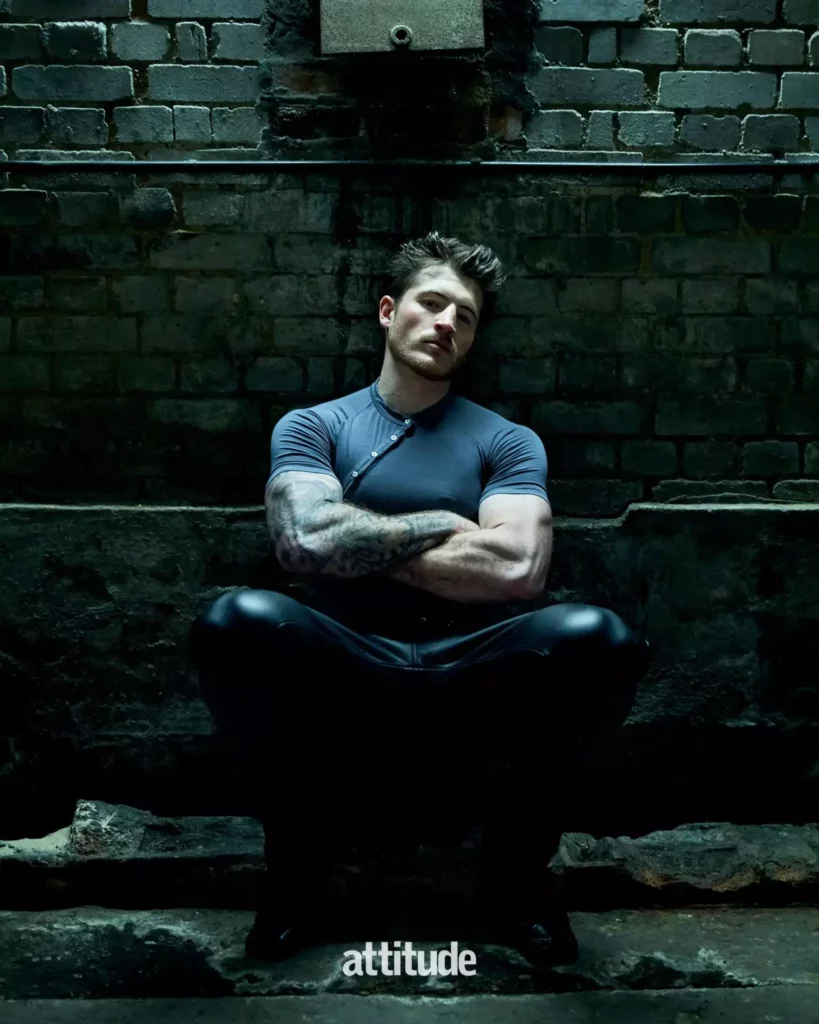
Birney describes the role of Hank as “one of the most exciting parts I’ve ever played. That’s all I was thinking about. People make so many independent movies that never see the light of day. But while we were making it, I had a feeling there was something very special about this.”
“This is an actor’s script,” adds Moore. “It’s human. There’s so much reality in him. It’s like I say to everyone: yeah, the topic is scary. People will turn their face before giving it a chance. But the truth is, I was scared to watch someone else do it because I knew there was so much in me I was willing to explore.”
In Blue Film, Hank and Aaron, two men of different generations, discuss, with jaw-dropping honesty, hair-raising themes, during what Tuttle calls a “long, dark night of the soul”.
Even as a fan of daring, esoteric filmmaking, I struggled to intellectualise the film’s discussions about the sometimes-cyclical nature of abuse. But a fear-induced refusal to discuss this scourge on society may not be the antidote to the enduring legacy that prejudicially conflates homosexuality with paedophilia (comments from certain trolls on Attitude’s Facebook page prove the stereotype persists in 2026).
In the current climate – especially in the current climate – in the shadow of harrowing allegations against several of the UK’s best-known public figures, engaging with art like Blue Film can be constructive. This is where the horrors of the world are addressed instead of being brushed under the carpet, where they thrive in silence and darkness. At least that’s how this writer feels, as someone who was subjected to sexual abuse as a child.
In his corner
All this headline-grabbing subject matter might be a Trojan horse anyway. The real meat of the story is Aaron, who’s in fact a sort of gay everyman. We’d call his all-too-common story essential viewing under ordinary circumstances. Heartbroken over the demise of a romantic relationship, he convinces himself that any desire for love or connection is weak, feminine or “faggy”. By tackling such themes, the film vibrates with truth.
“One of my friends, a gay man, said, ‘I need all of my gay friends to see this. There’s so much of my pain in him,’” recalls Moore. “There’s something extremely relevant about Aaron. It crosses boundaries of sexuality. It’s definitely a masculinity thing.”
Tuttle calls Aaron “an amalgamation of many porn stars I’ve watched over the years,” along with “my experience as a young gay man written in. Feelings I’ve had, instability I’ve felt.” Born in Maine, he moved to Los Angeles eight years ago at 18.
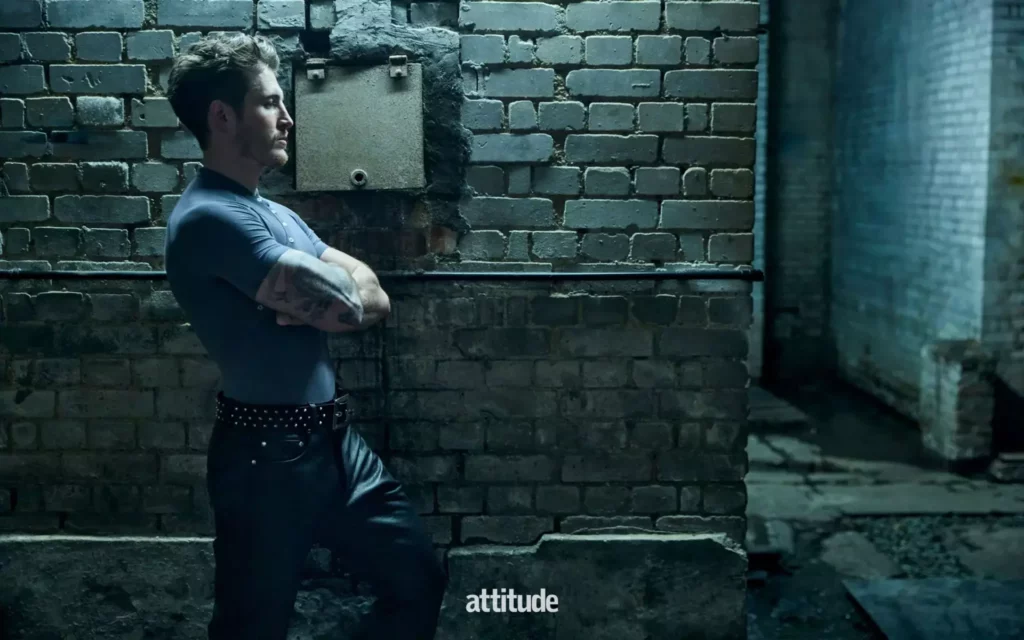
Moore “surrendered” himself to the part. “I’m deep on prep,” he says. “My favourite thing is to build character. The anxiety that comes with that – it’s a fascinating stage for me, before action. Everything before that moment where I’m deeply panicking is when I’m probably the most alive. Ideas fluid. I’m basically playing God, in a weird way.”
One thing he can’t relate to is Aaron’s body confidence. “I’ve got a deep sense of body dysmorphia,” he shares. “It goes way back – from boxing, masculinity, physicality. How I feel in comparison to how I look is definitely a choice. I’m a bit kinder to myself now, which is a huge win. But that’s the point of acting, one of the beautiful things I get to experience. That line, I was so worried to say that line, ‘If you looked like me, you’d probably be naked all the time too…’ I don’t… and that’s my body! How can I believe it? [But] acceptance is a huge thing. It’s something I’m coming to terms with.”
To wit: “It was liberating to do some of these things [in the film]. The opening sequence – I’d never dream of doing that! Lots of people think I’m [like that] because I do shoots and stuff. But it’s a character that comes out. I’m so scared of being scared to do things that I love beating myself. Little wins. ‘Oh, I did that today.’ It taught me a comfort in the resignation [to] this is who I am. This is my body. I really am in this thing. And no praise will ever change my opinion of myself, so why should any criticism?
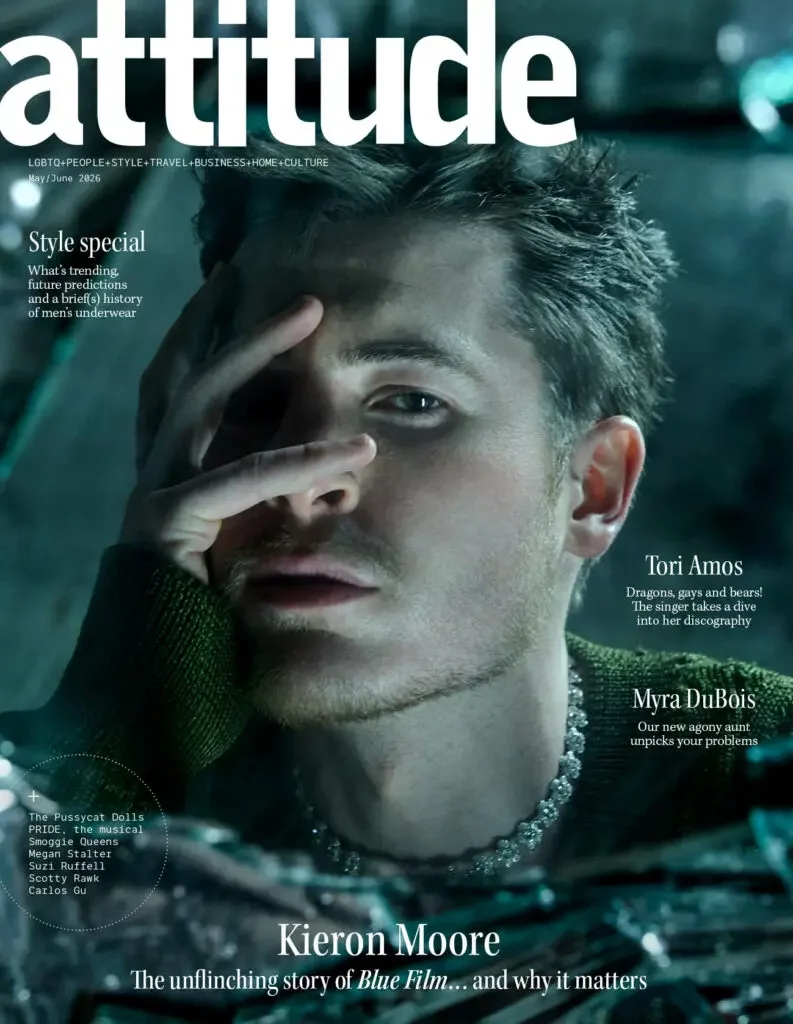
“It’s an awareness of what I do. I know when I do certain things that don’t make me feel good, I’m solely responsible for them. So, I can’t be too hard on myself. ‘Oh, I really enjoyed eating them 12 doughnuts…’ I really did! Whatever. It’s the exchange of it. My discipline is one of my favourite traits, but I also know it can be quite unhealthy.”
One day, he may channel that discipline into playing a boxer. “I wrote something. Only a first draft, but a different take on boxing. Not to discredit these stories, but it’s easy to write a ‘success’ boxing story. Boxing is ugly. It contaminated my life from the age of five. At 11 [years old], I was dieting and weighing my food, and running before school. It was such a massive part of my life. I’d like to tell the story of how boxing can have an effect on your relationships at home. That’s the story I’m interested in, one day. Maybe.”
In the meantime, he says, as he signs off, “I want to be a great actor. But more importantly, I want to be a good person.”
We’d call him a knockout.
Blue Film is in cinemas now.