
Meet the gay guy who landed a record deal immediately after a relationship breakup
What is it like to be 25 years old and suddenly sign a record deal after a chance conversation? Here, Catalan folk pop singer El Roig reflects on the burgeoning of his career, as well as overcoming school bullying for being gay and writing a song about Grindr
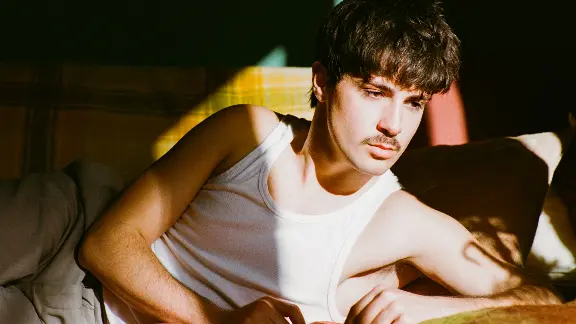
Attitude Uncut, an all-new digital magazine that will be published six times a year (between Attitude print issues) and available exclusively on Apple News+ and via the Attitude app. Below is an extract of an interview with rising singer-songwriter El Roig. Check out Attitude Uncut: Interviews to read in full.
“I got dumped in January – and it led to me getting a record deal. I’m not even joking!
“I went out with my best friends in London to commiserate – we got very drunk. At the end of the night, I left my friend at her bus stop, but her phone ran out of battery. She asked a random guy for directions. They got chatting. ‘What do you do?’ It turns out, he worked at a label. She works in sales – and always performs better than the men she works with!
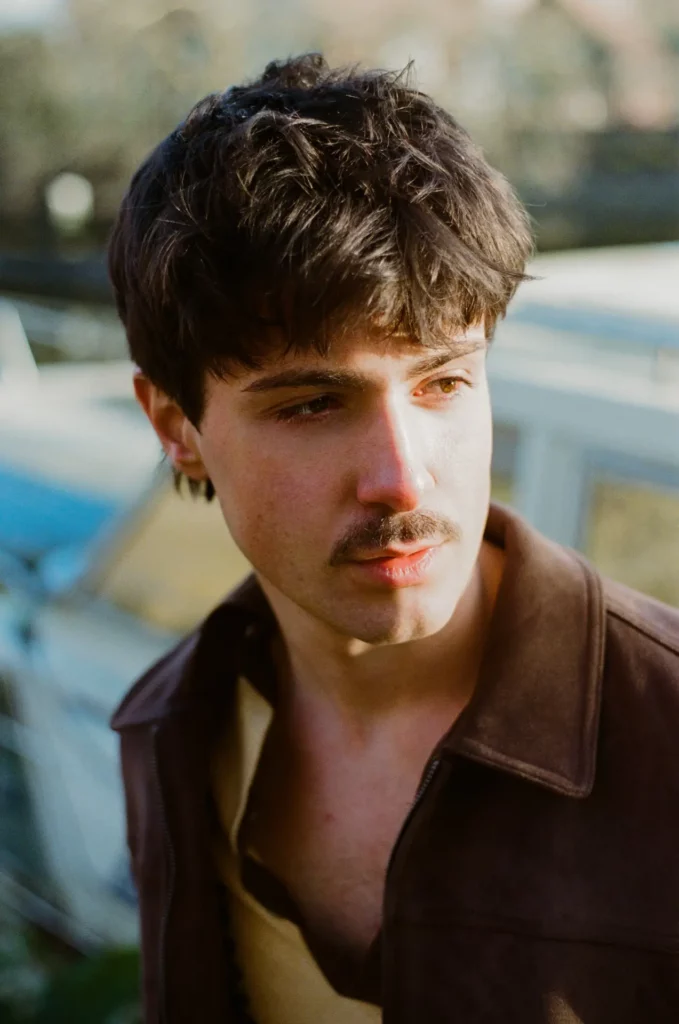
“She said: ‘Oh… have you heard of my friend El Roig? He’s an up-and-coming singer-songwriter based in London…’ She played him my music; he played it to the label; we had meetings. Before I knew it… I was signed!
“My ex knows about the deal. We had a re-encounter one cold night in February! He came back crawling, saying he’d made a mistake. He’s a nice person, and there’s no bad blood, but I am not interested in getting back together.
“I wrote my first song at eight years old, about a lost doll. It was horrible! I was playing with my best friend at her house, and she had this plastic guitar. It was so out of tune! I’d never played one before, and you could tell, but I began writing a riff. We forced her mum to record us!
“When I was 10, my parents gifted me a guitar. I began picking up translation dictionaries. My mum’s an English teacher. Most of the music I was drawn to on TV was in the English language.
“I decided I wanted to be a musician at 17 – by then, I’d discovered I could sing and had things to say. By 19, had moved to London for it.
“I grew up in a town 20km from Barcelona. I got bullied in school from a young age. My older sisters – who have always been so, so supportive, they’re strong, intelligent, artistic women; we’re still very close – were really into rock and emo. I wanted to be like them. I’d paint my nails black and get bullied about it.
“I was bullied for being in touch with my feelings, for writing songs and playing them. One of my best friends even started rumours that I was in love with him. They’d relate it to me being gay – it turns out they were right. But they’d say it as an insult.
“It made me tougher. I’m feisty – they’d make fun of me, but then, I’d make fun of them.
“But at 12 or 13, as I began puberty, I’d cry myself to sleep. I’m not religious, not even baptised, but I would pray to something for me to wake up and be different. I’m sure that’s quite a universal thing. By 14, I’d accepted it. I told my family at 16.
“It was a really hard time. There was so much homophobia around me. I’d escape to Barcelona at weekends and made a group of friends there – we’d hit the gay bars when I was 17, 18, 19. I had some very messy nights, but it felt very free!
“I watched an interview with George Michael recently, and he was saying gay men are some of the most fascinating people, because they’ve had to evaluate themselves and the world earlier than anyone else. The second you realise people are looking at you like there’s something wrong with you, even if it’s not true, you start contemplating everything else.
“I’m more or less completely comfortable with myself now, but I’m sure I still carry shame. I overanalyse everything. If I have a partner and we’re holding hands in the street, I’m like: Are they looking at us? Is it novelty? Curiosity? Hostility? There’s still work to do.
“Moving to London at 19 to pursue music – I studied songwriting at the British and Irish Modern Music Institute for three years – was a way of rejecting the homophobic culture of where I grew up.
“I said to myself: ‘I’m going to make a life for myself. Fuck these people. I’m moving to the big city, where the sky’s the limit. I’ll choose my own people, my own path.’ I’m hopeful that it’s changed, but in the 2010s, there was still so much horrible homophobia. At least that was my experience.
“At university, I made amazing friends who I still play music with. My songs are my observations of the world, my relationships, the people around me, in a melancholic, cinematic light. I have written many songs across my life. They help me process things.
“I’m inspired by ‘60s, ‘70s songwriters: Leonard Cohen, Joan Baez, Bon Dylen, Bob Dylan, Joni Mitchell, Scott Walker. These people are truthful and authentic in their stories. No façades. I aim to be like that, to make people think.”
To read this interview in full, check out Attitude Uncut, available to read now on Apple News+ and the Attitude app.