
Harry Styles’s Meltdown singer Beverly Glenn-Copeland is delighted young queer fans are connecting with his music (EXCLUSIVE)
The pioneering trans artist and his wife Elizabeth speak to Attitude about community, ageing, dementia and why LGBTQ+ people should "find your allies"
By Callum Wells
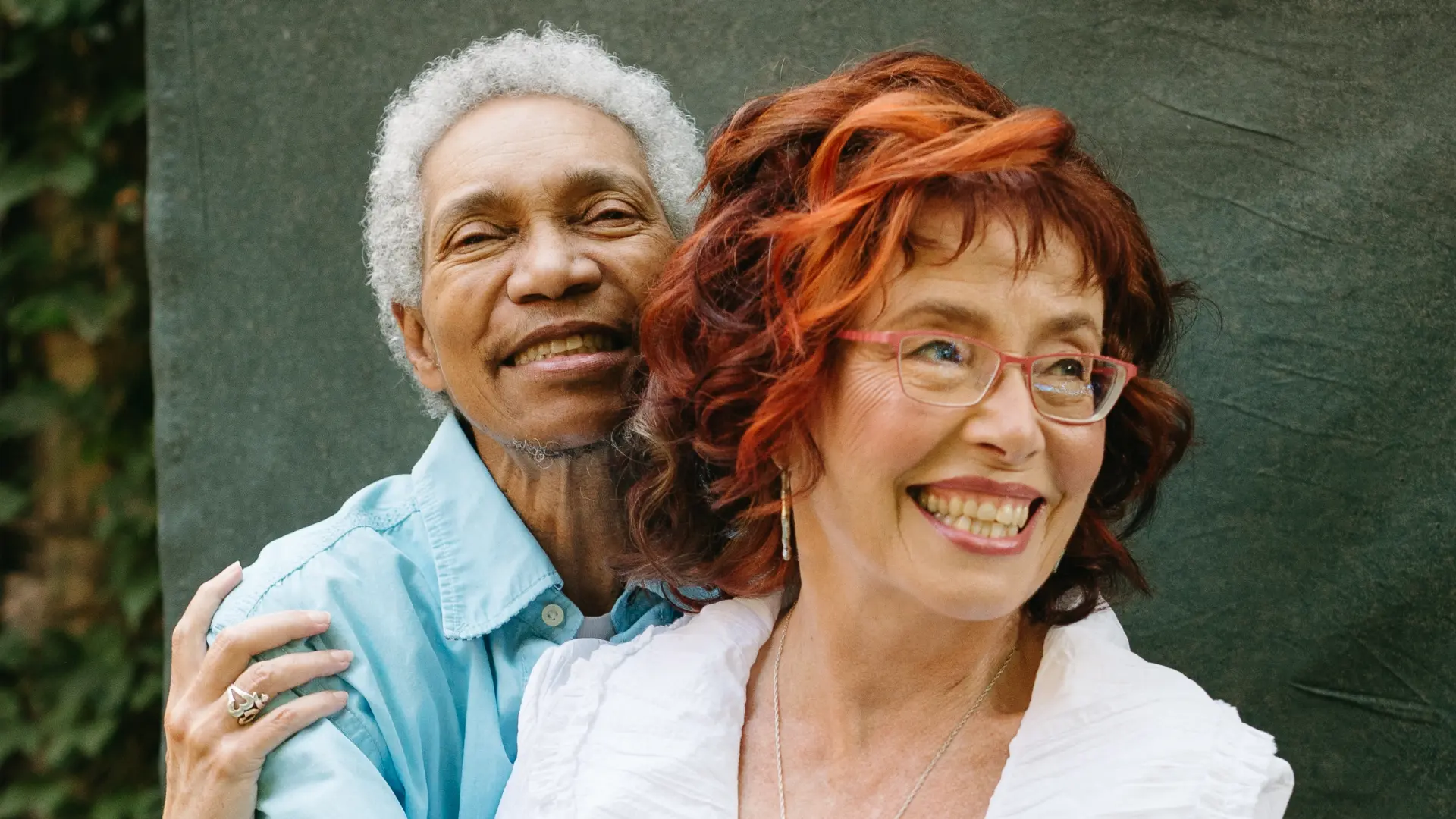
There is a remarkable serenity about Beverly – known personally as Glenn – and Elizabeth Glenn-Copeland.
When Attitude speaks to the couple ahead of their performance at Harry Styles‘s Meltdown festival, the conversation drifts effortlessly between music, ageing, community, spirituality and love. Their answers are thoughtful, generous and often profound – the product of lives lived with hard-won wisdom.
For Glenn, one of the first transgender musicians to achieve international recognition, and who lives with dementia, the opportunity to perform for a new generation of fans in the later years of his life feels especially meaningful.
“Sometimes we think that when we get old that we no longer have anything to share. But the truth is that a vast majority of people really have quite a lot to share,” he says.
Long overlooked by the mainstream, his pioneering blend of folk, electronic and spiritual music found a devoted audience decades after it was first recorded. The cult rediscovery of his 1986 album Keyboard Fantasies transformed him into a revered figure among younger listeners, many of them queer and trans people drawn to a story defined by authenticity, perseverance and self-discovery.
Alongside Elizabeth, his wife and creative collaborator of more than 50 years, Glenn has become an elder statesman of LGBTQ+ culture – a role the pair embrace with warmth, humility and an unwavering belief in the power of community.
Their latest album, Laughter in Summer, feels like a continuation of that mission. Created together and performed on stages around the world, it serves as both a reflection on lives richly lived and a reminder that it is never too late to find the audience you were always meant to reach.
Attitude: As one of the first openly transgender musicians, what does it mean to you both to be performing at Harry Styles’ Meltdown festival at this point in your lives?
Elizabeth: It’s huge. It means so much that at the end of our lives we’re doing what we came here to do.
Glenn: Yeah, it’s so that at the end of life, our mission gets really clarified.
Elizabeth: After years of being kind of on the outside in the shadows. Yeah, whenever we see young people reconnecting both with their inner selves and with each other, it just makes us so very happy. And we are here with a message of hope, and it’s not like Pollyanna hope. And so we’re really excited about it.
Glenn: Yes, I am too. I have to say it’s, in the last parts of my life, it’s very important.
Elizabeth: It’s almost like every concert we’re doing right now feels just like a little bit more of who we are.
Your music has found a whole new audience decades after it was originally made. What do you both think younger LGBTQ+ people are connecting with in the work?
Elizabeth: I think that for young queer people to see this incredible human being in full form near the end of his life as he’s managing a major cognitive impairment is a tangible message of hope.
Glenn: There always been ups. There have always been ups and we’ve gone through times when it was OK and then we went through times when it was, you know, you were killed for it, etcetera, etcetera, etcetera.
But what I really believe is that the us that is non-heteronormative, that we can put our heads up and really move forward and just if you’re starting to feel fear, figure out how you can overcome that fear.
Elizabeth: And figure out who your people are, right? So our shows are all about helping all of us reconnect with our sense of community, which is one thing dominant culture wants us to forget.
So when in concerts we see thousands of young people holding space with each other and weeping with each other and laughing – yeah, this is the way forward, right?
The answer to the times that we’re in, it has not been created, and we believe that art is where those answers are going to come from.
Glenn: And remember there are people who are non, you know, they are whatever sex they were born with and they feel that that’s what it is. There are a lot of them, many, many, many, many, many of them who are also wanting to protect us, right?
So look for our allies, exactly allies, right? And don’t just look for them among like minds in terms of heteronormative or non-heteronormative or whatever. Just look for people who are sensitive and who are willing to be with us.
Elizabeth: And I want to just talk for a New York second about time signatures because both Glenn and I – Ever New has been Glenn’s most popular, for lack of a better word, song. Glenn writes a lot in increments of 3/4 and 12/8 and 6/8, and those time signatures are very calming to the human body.
Not a lot of people are writing in those time signatures. Have a little look into what that feels like. We think sometimes that’s what actually grounds the music so deeply.
Glenn: It can, it’s something that you could use as a lullaby for a child, right?
Elizabeth: Many young people come to us with tears in their eyes and speak to what it is for them to see us as an elder couple, right?
Particularly, we don’t have a lot of queer elders, we don’t have a lot of trans elders. So many people were lost in the AIDS crisis, which is when I came up, where my younger years were. So many people who would be our queer elders died early deaths or were hunted back into the shadows or took their own lives.
So there’s not a lot of queer elders. So I think that’s part of it.
We hear what it means for young people to see our love expressed on stage with each other. And for people to know that it’s really for Glenn and I where we get to most profoundly connect.
With what’s happening with Glenn, it’s where music is the last part of the brain to go. So yeah, that’s just my little addendum.
You came out as trans in your 50s. Looking back, what would you say to your younger self – and what advice would you both give to queer and trans people today who are still finding their way?
Glenn: Trust your life. Trust the moments. Trust how you’re going to develop. And the people that you’re going to meet. And what’s going to happen.
Elizabeth: You also sometimes speak about the importance of finding your community, right? So find your allies, find the people who will support you.
Glenn: Like, we have the same virtues and desires, and have enough different capabilities in that group.
Elizabeth: We’re at this time where so many of the advances are being clawed back, particularly in the United States. So as these rights, as these laws are being pulled back, we need even more for young trans people particularly to find your community, find the places where you can be safe and where you can feel seen and heard and supported and loved and honoured because this is the diversity of humanity, right? The rainbow is the diversity of humanity.
It’s really only fairly recently, like post-war in some ways, maybe post-Renaissance in other ways, but just those really strong dividers of this is what a man is and this is what a woman is, and none of that is true, and all of it is limiting. All of it crushes our humanity.
How has your artistic and life partnership shaped your music and your journey together, especially on Laughter in Summer?
Elizabeth: Well, just that we went into the studio to just make an archival recording with our beloved Alex who had put together a little choir and our beloved Naomi who was part of it. We thought, “We’re just gonna sing each song once and make a little something so we can listen to it later,” and then it was, “Yeah, this song was fabulous.”
So many of those songs come from different parts of our lives. Like ‘Ever New’ is the song that people seem to most connect with. And then ‘Middle Island Lament’ came from the musical that we made with a group of theatre kids out on the Acadian coast in Miramichi. It’s part of a play that we wrote.
The album was created in the context of Glenn’s dementia diagnosis. How have you both approached this chapter together, and what message do you want to share about living with dementia?
Elizabeth: Gratitude. Find your community. Find your allies. Find your friends. Trust your lives.
Look for what life is wanting to share through us. Doing these concerts and all of these choirs – I know both Glenn and I feel like our life has felt so harried with all of the moves and all of just not having a home.
But when we step into this music, it’s like stepping into a river of grace. It just flows. And it’s pure love. Purity love, as Glenn would say.
Glenn: Sometimes we think that when we get old that we no longer have anything to share. But the truth is that a vast majority of people really have quite a lot to share. It would be about many different kinds of things, right? But it’s a combination of all of us together that have something to share that is going to be a complete offering for young people.
I just think that’s really what old folks are supposed to do. Because you’ve lived a life, you know where some of the sinkholes are, right? And you have other friends who’ve lived a life and they have different places where there are different sinkholes. You put all those things together and you have something that is very important for young people to understand.
This is how life goes. This is where you can fall apart. And if you can find a way with friends who can help you through those things, find them, right?
Elizabeth: One of our Buddhist teachers says that life is really a series of, we fall apart, we come back together, we fall apart, we come back together.
Dominant culture would have us believe that when we’re old we’re no longer useful, but Indigenous cultures remind us this is when we have the most to give. These are our sage years.
Glenn: That’s why you have elders in the first place. They’re there to encourage young people so that they don’t lose their way.
Elizabeth: It’s been hard for Glenn and I, in some ways, dealing with the diagnosis. But we’ve led with the question: “Where is the life in this?” Yes, it is hard, and yes, sometimes it feels like death by paper cuts. Yes, there’s loss, yes there’s pain, but that’s part of life. But where is the life? There’s always life in everything.
Glenn: That’s all there is. And then there’s the life that gets passed on from whatever it is that you shared. Because there’s been many, many, many wonderful beings from long ago who have left messages that we’re still reading about. About life.
Elizabeth: Glenn’s music is so chock full of teachings and healings and medicine. So I know we feel so blessed to be part of this transmission. We get to be part of your transmission, sweetheart. Blessings and thanks and gratitude.
Harry Styles brings his iconic self-expression and creative curiosity to Meltdown between Thursday 11th and Sunday 21 Jun 2026 at the Southbank Centre.
Buy tickets for Beverly Glenn-Copeland & Elizabeth Copeland here.