
I was targeted by a homophobic smear campaign as my father ran for president in Bolivia
"At one point, the president was shown one of my TikToks live on national television. I was wearing bunny-ear filters and hearts around my face," Doria Medina writes for Attitude
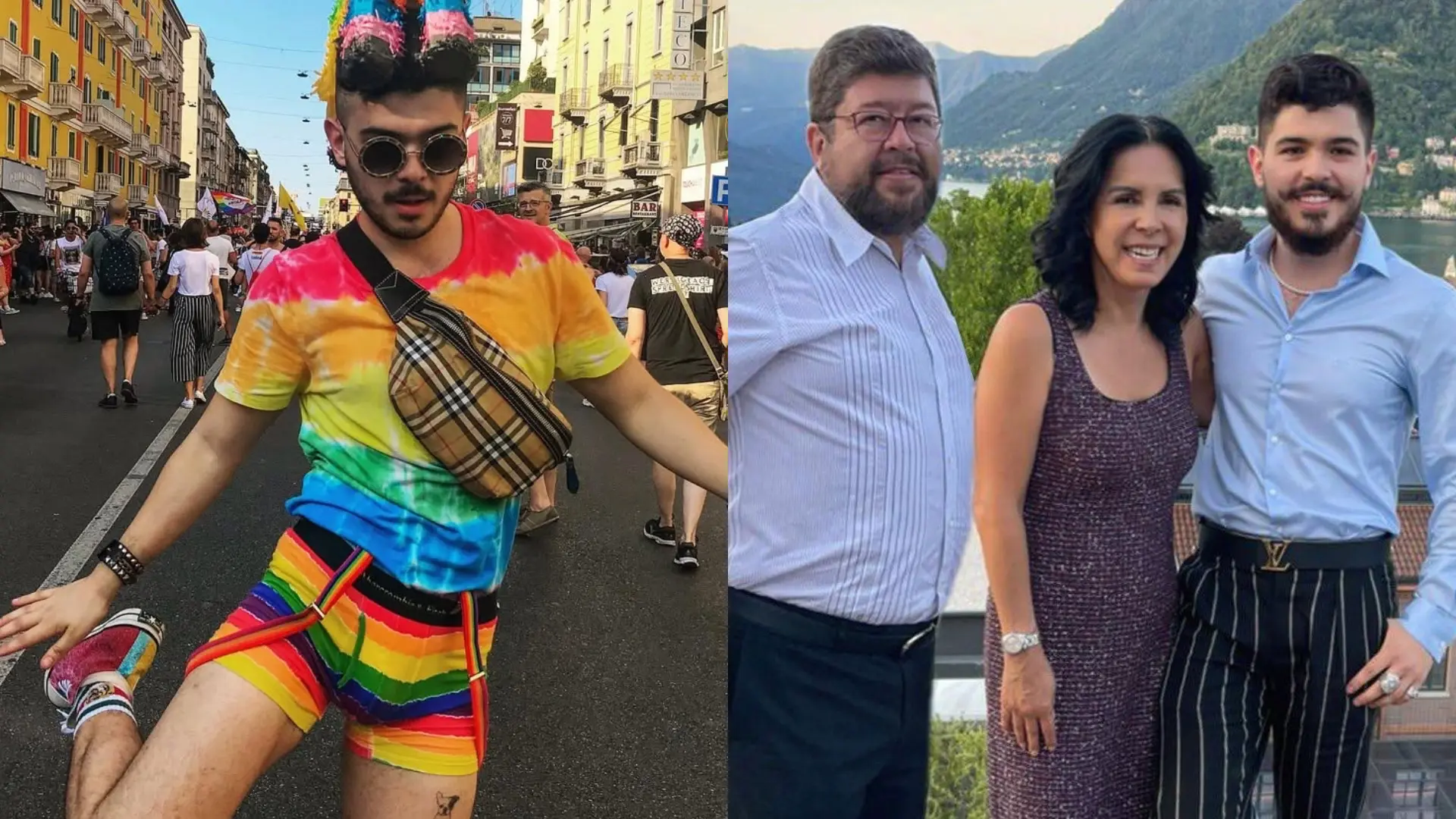
As the son of Bolivian presidential candidate Samuel Doria Medina, Ezequiel never imagined his TikToks would become national political ammunition. But during the country’s 2025 election, a wave of AI-generated misinformation, homophobic conspiracy theories and viral attacks turned the Paris-based designer into the unlikely centre of a culture war – simply for existing online as himself.
Growing up in one of Bolivia’s most prominent political families meant visibility always came with risk. My father – a businessman, economist and longtime presidential candidate – spent decades in the public eye, and that scrutiny naturally extended to the rest of us. There was an unspoken understanding in our family that we should stay careful, stay private and avoid giving people more reasons to talk.
That expectation never quite suited me.
By the time I came out at 18, just before moving to New York for university, I already knew I wanted a different kind of life. Distance gave me space to explore who I was away from the pressure of Bolivian politics. Eventually, I settled in Paris, where I now run my jewellery and design business. Most of my life happens there now. I only go back to Bolivia every now and then to see family and manage some business projects remotely.
Coming out while growing up in Bolivia’s political spotlight
But even while living in Europe, Bolivia never fully lets you go.
When I first started posting on social media, it wasn’t political at all. I just wanted to express myself. I’d post photos from Pride, silly TikTok dances, choreographies, trends – the same things millions of people post every day. I wanted to feel visible as a gay man. Sometimes my family worried it was “too much”, mostly because of my father’s political profile, but eventually they accepted that this was simply how I chose to exist online.
Ironically, my dad also became huge on TikTok doing trends and goofy dances. He built a massive following by being unserious. But when I did the same thing, it became something else entirely.
Everything changed during Bolivia’s 2025 presidential election.
@shoniskk El hijo de Samuel Doria Medina habla con Camacho. #bolivia🇧🇴 #SamuelDoriaMedina #luisfernandocamacho #camacho #lgbt🌈 #santacruz #lapaz_bolivia🇧🇴 #100diascarajo #alianzaunidad ♬ Abracadabra – Lady Gaga
The first attack came in the form of what we believe was an AI-generated audio clip. One of my father’s conservative allies appeared in a recording supposedly saying he needed to distance himself because my dad “has a gay son”. The voice sounded fake, warped somehow, but it spread rapidly online anyway.
How TikTok and AI fuelled a homophobic smear campaign in Bolivia
From there, a coordinated homophobic smear campaign exploded across TikTok, Facebook, television and WhatsApp. Suddenly, my TikToks were everywhere. Strangers dissected every video I’d ever posted. Fake stories claimed I was secretly meeting “LGBT extremists” from Argentina to rewrite Bolivia’s constitution using gender-neutral language.
The reality? I was literally lying in bed in Paris.
One viral video claimed I’d already been promised a government position and was planning to create a “Ministry of Gender” to indoctrinate children. Another insisted I was holding secret hotel meetings in Santa Cruz with left-wing activists. People I had never heard of were suddenly being linked to me as co-conspirators in some bizarre queer political takeover.
It would’ve been funny if it hadn’t spiralled so quickly.
New media personalities appeared out of nowhere – basically Bolivia’s answer to Fox News – talking about me constantly. They replayed old clips of my father supporting same-sex marriage and framed it as proof Bolivia was about to collapse into “Sodom and Gomorrah”.
Church groups condemned my family publicly. Politicians reposted my TikToks to mock me. Hundreds of hateful comments flooded my page every day.
What it feels like to become the target of online homophobia
Oddly, I discovered something about myself during that period: hate from strangers doesn’t hurt me as much as I thought it would. At first, I read the comments. Eventually there were too many. The human brain isn’t built to absorb thousands of people calling you disgusting, a disgrace, or saying your parents should’ve “hit you harder” as a child so you wouldn’t end up gay.
@elvigilantte el hijo de doria quiere modificar la constitución en favor delos LGBT #cochabamba_bolivia🇧🇴 #santacruzdelasierra🇳🇬 #bolivia🇧🇴 #lapaz_bolivia🇧🇴 #fypシ゚ ♬ sonido original – boliviano
So I stopped reading.
What shocked me more was seeing how high the hysteria reached. At one point, the president of Bolivia was shown one of my TikToks live on national television. I was wearing bunny-ear filters and hearts around my face while explaining how ridiculous it was that people were attacking a politician simply because he had a gay son. Watching the president stare blankly at my filtered face on live TV was honestly surreal. Part of me found it hilarious.
Through all of this, my relationship with my father never changed. We barely discussed it. He’s not someone who speaks emotionally about these things. My mother worried constantly about whether I was hurting, but my dad stayed focused on the election. In many ways, that silence told me everything I needed to know. He wasn’t ashamed of me.
What happened exposed something deeper about Bolivia. The country is contradictory when it comes to LGBTQ+ rights. Legally, protections exist that surprise many Europeans. Hate crimes against LGBTQ+ people have been recognised for years. Same-sex couples are slowly finding legal routes to marry. Yet socially, there’s still enormous stigma, especially outside major cities.
Many people still genuinely cannot imagine someone simply being gay.
The reality of LGBTQ+ rights and visibility in Bolivia today
But things are changing. There are openly gay podcasters reclaiming slurs and discussing HIV publicly. One of Bolivia’s biggest TikTok journalists is a trans woman. Younger generations are becoming more visible and impossible to ignore.
That visibility matters. Because when people only hear about LGBTQ+ lives through scandal, fear and misinformation, they never see our humanity.
I never wanted to become part of Bolivia’s political conversation. I’m not interested in politics. I’m a creative person. I like fashion, jewellery, social media and making stupid TikToks.
But somehow, my existence became political anyway.
Ezequiel Doria Medina is a Bolivian fashion designer and founder of the label Kielle, based in Paris. He is the son of Samuel Doria Medina, a prominent Bolivian politician and businessman. Medina’s work focuses on luxury apparel and custom pieces, having achieved international recognition through features in publications such as Forbes.