
The drug-related deaths our community can’t let itself feel
Founder of You Are Loved Marc Svensson on how the gay scene is fuelling both connection and harm
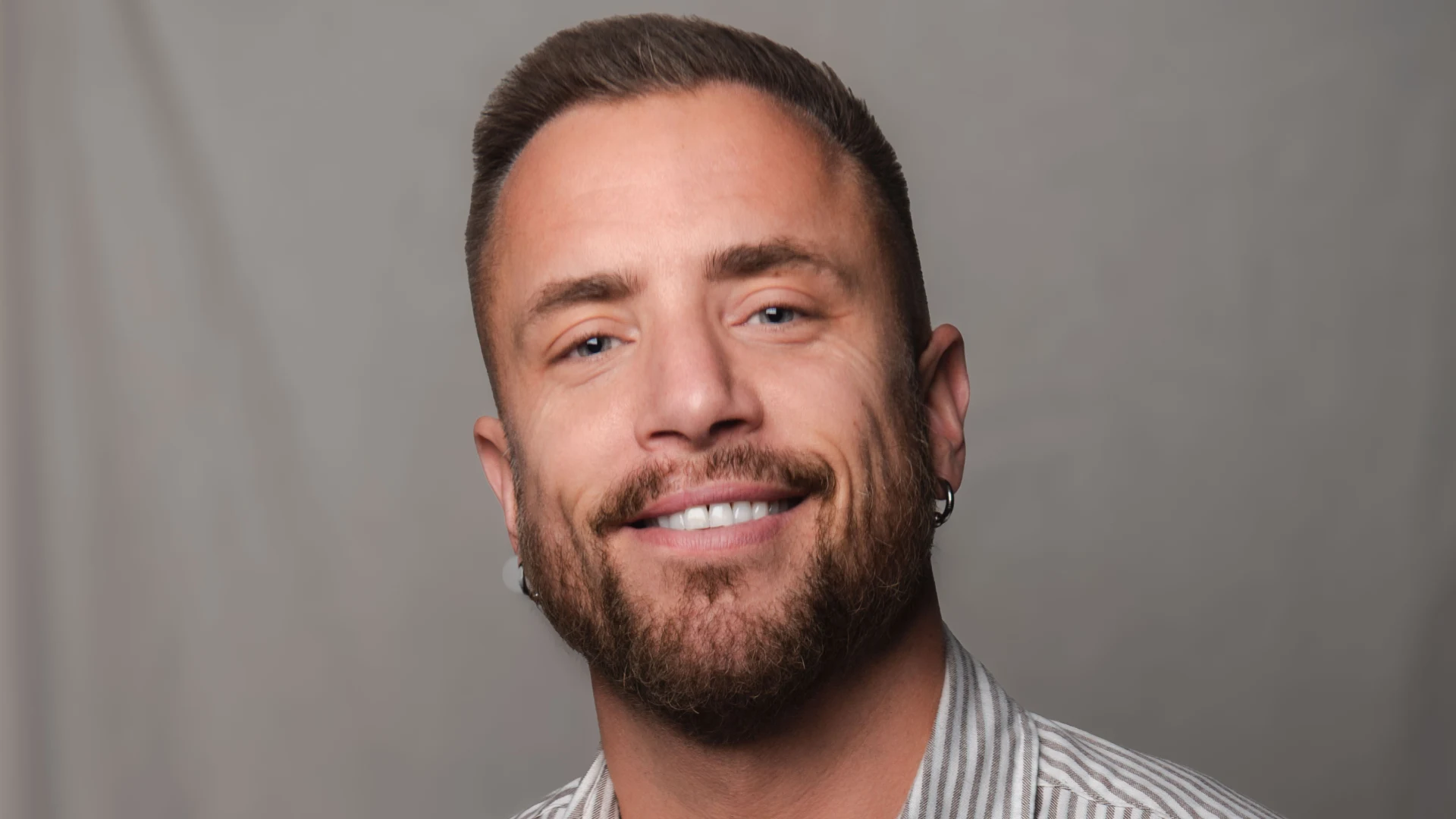
Another summer of Pride events is ending, and last week I found myself at the funeral of another friend lost to a sudden and unexpected drug-related death. He isn’t the first. For many of us, this has become a regular occurrence. A survey my organisation You Are Loved ran recently found nearly a third of us have lost a loved one the same way. Why then, when faced with preventable deaths at this scale, do we just continue like nothing happened? I believe the detachment many of us feel is a form of self-preservation.
The gay scene
Nightlife, clubs, bars and partying (“the gay scene”) have always played a significant role in our experience of community. It was, and still is, essential for us to create spaces where we can come together, connect and be our authentic selves without fear of stigma or discrimination. These spaces matter because we are a minority naturally scattered across the population. We were not, for the most part, born into families who shared our sexual or gender identity. We had to seek each other out – often in bars, clubs and venues – where we could feel safe and be accepted for who we are. Many of us associate the gay scene with intense feelings of joy, connection and escape. Within these spaces, the sought-after pursuit of feeling good is often further fuelled with alcohol and recreational drugs. Queer people use recreational drugs at up to four times the rate of our straight peers and, perhaps not surprisingly, the Office for National Statistics’ first ever breakdown in January found that we also die from drug-related causes at nearly three times the rate. The same spaces that hold a lot of our joy also come with high risks. Why do we keep using recreational drugs at such a high rate, despite the devastating consequences?
The pursuit of feeling seen and good
Let me introduce an idea I’m still in the early stages of developing – my own attempt to understand something I keep seeing. I call it The Seen and Good Theory. Its principle is simple: at the heart of every human being are two fundamental needs – to feel seen, and to feel good. These aren’t abstractions. They are visceral, and I believe they quietly shape everything we do: the relationships we seek, the risks we take, the choices we make without always understanding why. I offer it not as an established science but as a lens for understanding the self-harming, risk-taking behaviours often behind these deaths.
Feeling good, in this sense, is not happiness in a shallow way. It’s the state of not being under threat, the absence of anxiety, and the exhausting weight of hypervigilance. It’s what the nervous system, on some level, is always trying to return to. Feeling seen almost always produces it, but feeling good can also be achieved without any social component. And when the world we grow up in denies us the first route, we are bound to look for the second. Recreational drugs are one of the most reliable shortcuts we have to feeling good on demand.
To be seen in this context means a sense of belonging, connection and acceptance. Baumeister and Leary’s landmark review established belonging as a fundamental human need. Not a preference but a requirement, on par with food and safety, that damages us when it goes unmet. Being seen isn’t a metaphor. It’s a fundamental human need.
The cause we rarely name out loud
Understanding a behaviour requires us to look at the cause of that behaviour. Rejecting, or being rejected by, the heteronormative script can come at a price; shame and a lost sense of purpose, which pushes us towards the direct routes of feeling good (partying, drinking, drugs, etc.) when the deeper routes (feeling seen, loved, accepted, etc.) are denied us. A study from 2009 found that queer young adults whose family rejected them were more than eight times as likely to attempt suicide, and more than three times as likely to misuse substances, than those whose families accepted them. Spending our formative years concealing precisely the thing that most needs to be seen often results in deep-rooted shame about who we are that we subsequently carry with us into adulthood. Shame is one of the most consistently documented drivers of poor mental health amongst queer people, and shadows how many of us use alcohol and recreational drugs.
Furthermore, for much of human history, the question about the purpose of life came pre-answered. You would partner, you would have children, and in doing so you would follow the heteronormative expectations set by your family, your faith, or the community you grew up in. Most cultures and nearly every religion are in a sense a machine for supplying this answer; handing each person a ready-made sense of purpose so they don’t have to create one from scratch. By rejecting, or being rejected by, the heteronormative script and the religious frameworks that often carry it, we lose not only their constraint but also their scaffolding. Some would argue this is precisely the point: to have the freedom to build a life on our own terms is one of the great gifts of a queer existence. But for others that same freedom can become a burden. Without the scaffolding as guidance, some of us find ourselves feeling lost, unsure where to turn to feel seen, or good, or simply to make meaning of our lives. Which can become particularly tough when we reach our midlife, with both suicide and drug-related death rates peaking in the 40s.
The new scaffolding
For many of us, the values and behaviours of the gay/bi world we adopt become our new scaffolding, some of which evolved partly to counteract the shame that came from abandoning heteronormativity. The partying, escapism and celebration of the gay scene, and an unconventional approach to relationships, sex, and intimacy can be seen as ways in which our community has taken ownership of, and pride in, the ‘otherness’ that was forced upon us by mainstream society. It’s therefore not surprising that we find ourselves defending it fiercely when it comes under attack. The gay scene has become too precious to question, as a vehicle for feeling both seen and good, so we go blind to what it costs us.
The story we protect
It pains me to admit that when I was told about my friend’s death, before I gave myself a chance to feel anything at all, my defence walls immediately went up. Quietly but steadily, a reasoning voice in my head emerged, one I recognise because I have heard it many times before. A voice seeking to convince me that he was not like me. That he did it more often, or differently. That he was less careful or more reckless than me. That whatever happened to him belongs to a category I have somehow exempted myself from. My mind seems to be doing this internal reasoning on its own, automatically and subconsciously, because the alternative is just too unbearable to deal with. The stark truth that he made similar choices to those I have been making myself for years, and that what happened to him could have equally happened to me. That is the honest reality the othering and distancing exist to keep out. Closeness is a threat to our self-preservation, so we push the people we lose away and quietly file them under not us, and in doing so we protect the story we need to keep living the way we live. I want to be clear that this is not a judgment of him; it’s a confession about me, and about a mechanism I suspect many of us share but few of us name. He did not have himself to blame. What I am describing is not the truth about how he died. It is the thing my mind reached for so that I would not have to feel how close it was.
Is it just me, or is it us?
What I notice in myself, I think I also recognise in others. The same reflex that let me file one person under not us operates quietly and at scale, across our community. Because the thing it protects is not just any one person’s self-story but a shared way of life that also gives us a great deal. Our spaces, our club nights, the freedoms we built precisely because the straight world had no place for us, these are sources of real joy and real belonging, and that is precisely why we find it so hard to look directly at their costs: to ask openly what our relationship to substances is, or how much of our togetherness is organised around escape from heteronormative everyday life, or why certain patterns keep killing so many of us prematurely.
To ask any of this honestly is to risk something we can’t easily afford to lose. So, mostly, we don’t ask. Not because we are careless with each other, but because the questioning threatens the very thing that holds us together. And there is a further layer, perhaps even harder to admit: the same protectiveness that stops us looking inward can make us defensive when the looking comes from someone else. When one of our own raises a concern – or worse yet, someone from outside the community does – it’s easy to give them a label that allows us to dismiss their observation. They’re labelled “narrow-minded, moralists, or judgemental”. Sometimes that’s true. But sometimes it’s just the group doing what I have done many times in my head; protecting the story so the story can continue.
Fuelling connection and harm
You Are Loved recently ran a survey asking over a thousand queer people, the vast majority (87 per cent) of whom identified as gay men, in the Greater London area about their drug use, chemsex, and support. The data collected allowed me to understand whether the thing I felt was mine alone, or ours as a community.
The data suggests it is ours as a community. On the one hand, people reported using recreational drugs primarily to have fun, better sex, and to be more social. The intention behind their drug use was not only to feel good, but also to enhance connection, to feel seen. On the other hand, whilst the potential harm was acknowledged, it was often downplayed. In the places where recreational drug use was most intense – where people used the most and took several drugs simultaneously the most – they were no more likely than anyone else to describe their drug use as a problem. More recreational drugs, more harm, but the same detachment from the increased risk. That is desensitisation in action, revealing a community that has learned not to register the danger it is living inside.
And the danger is not abstract. Two in three of the people who use or had used GHB/GBL told us they had passed out on it, an accidental overdose, in plain terms, and yet it is often shrugged off as an ordinary hazard of a good night out. People also sought support late. Participants reported reaching out for help only once they referred to their use as a ‘big problem’, rarely before.
Perhaps most devastating of all, nearly a third had lost a loved one to a drug-related death in the last five years alone. Many had lost more than one. A third of a community carrying the same type of loss, and still the alarm bells are not ringing louder. That’s what I experienced when my friend died, but it didn’t belong just to me. It was a numbness we have built together, because to feel it fully would force us to ask what we are all still doing.
To hold both truths at once
We must do better at holding ourselves and our community accountable to the risks the lifestyle so many of us fiercely defend comes with. It’s not only possible to hold both truths at once, but frankly the only responsible position to hold; to continue defending our way of life, to feel seen and good on our conditions, whilst simultaneously recognising the risks, and ultimately the high price, some of the scaffolding we have built comes with. By blindly protecting ourselves and the story we have built as a community, we fail to protect each other from harm.
I don’t know if any of this would have kept my friend alive, and I will never know. But I know that the numbness I felt when he died was not respect, and it was not peace. It was a door I had learned to keep shut – but one that I would like to try to keep open now, even though it hurts more that way. That, in the end, is the only thing I have to offer him: for me to feel the loss. To let his death be one too many, rather than one more.
Marc Svensson is a social psychologist and expert in LGBTQ+ mental health and drug misuse. He is the founder of You Are Loved, whose mission is to reduce deaths from suicide and drugs in the LGBTQ+ community.
The full survey report of ‘Drug Use, Chemsex, and Harm in London’s LGBTQ+ Community’ published by You Are Loved CIC 2026 can be accessed and downloaded here.
If you’ve been affected by anything in this article, support is available:
- London Friend’s Antidote is the UK’s LGBTQ+-run drug and alcohol service. Call 020 7833 1674 (Mon–Fri, 10am–6pm) or email antidote@londonfriend.org.uk.
- Controlling Chemsex provides free, confidential chemsex support — including one-to-one sessions and advice for those worried about a loved one — at controllingchemsex.com.
- Samaritans offer confidential, round-the-clock support for anyone struggling to cope. Call 116 123 free, day or night.