‘Do you still have an eating disorder?’: Attitude’s Aaron Sugg attempts to answer the impossible question alongside seven images
Growing up gay, bullied and body-conscious, our newswriter reveals how he sought control through hunger, and why his recovery still feels uncertain today
By Aaron Sugg
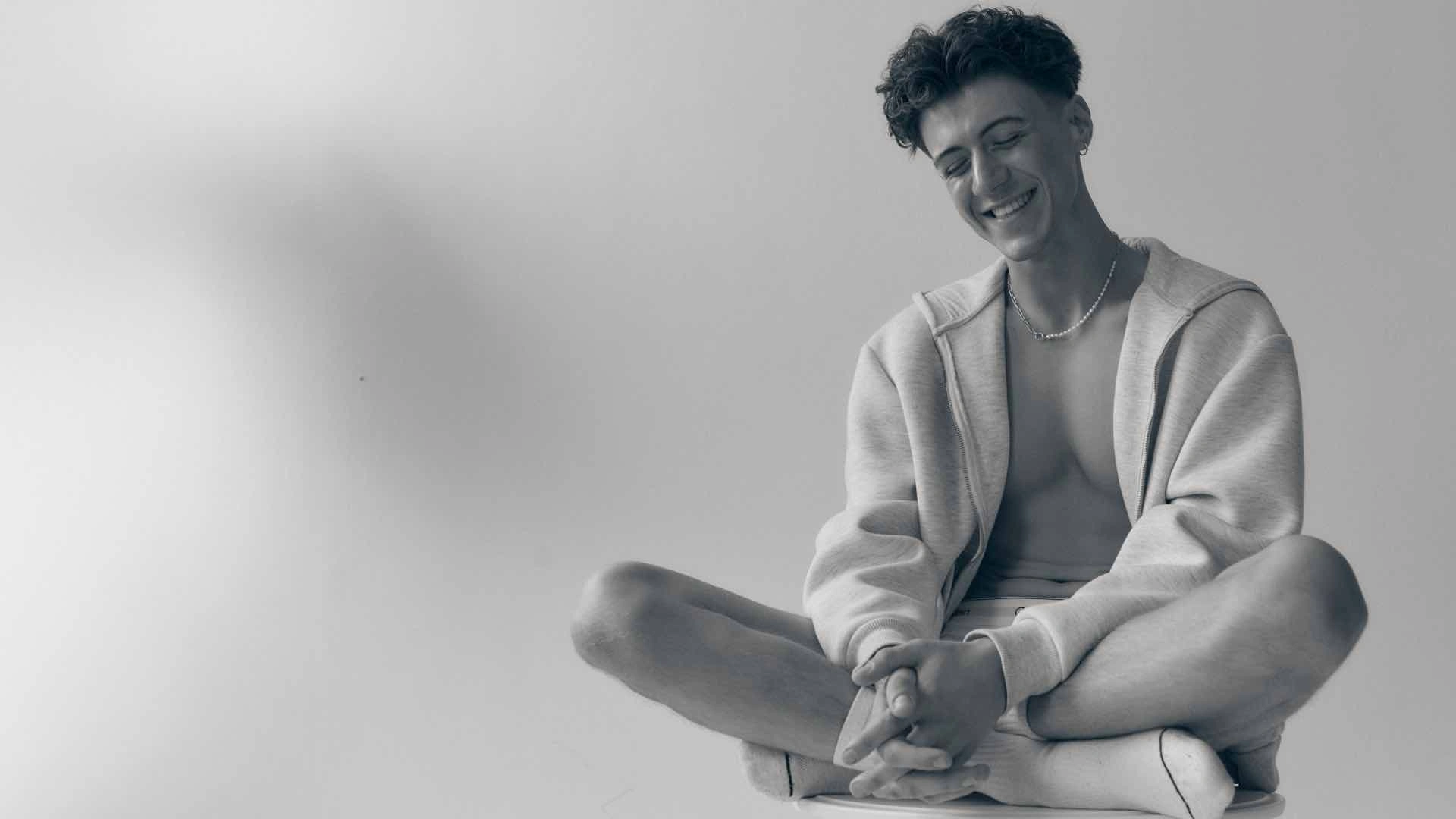
“Do you still have an eating disorder?” The question came from a work colleague, and before him, it was a topic I had not discussed with anyone outside my inner circle. Not since I self-diagnosed myself six years ago. The truth is, I don’t know. Do I feel like my relationship with food is healthy? No. Do I feel as if I’ve made progress? Yes. It comes in waves. One day it sits quietly at the back of my mind; the next, disgust over my perceived gluttony eats away at me. I thrive off being hungry, as if it’s a reward. But when did it all begin?
The COVID-19 pandemic brought my final months at secondary school in Surrey to an abrupt end. It was a pivotal moment in my journey of self-discovery. A closeted gay teen, isolated at home and educated through a screen, I could feel my childhood being taken away from me. With too much free time on my hands, unmotivated and unhappy, doomscrolling became a habit. I found myself speaking to men online – men with bodies I could only have dreamed of. Exploring my sexuality through an iPhone, exchanging pictures and consuming different body types, I quickly felt inferior to these experienced, idealised men that I wanted to become. I realised that I fitted into the “twink” category, but to me, that identity felt impossible without getting skinnier… I had to fit in.
“Growing up, I was a larger, prepubescent teen with ‘moobs’, as I was quite often told”
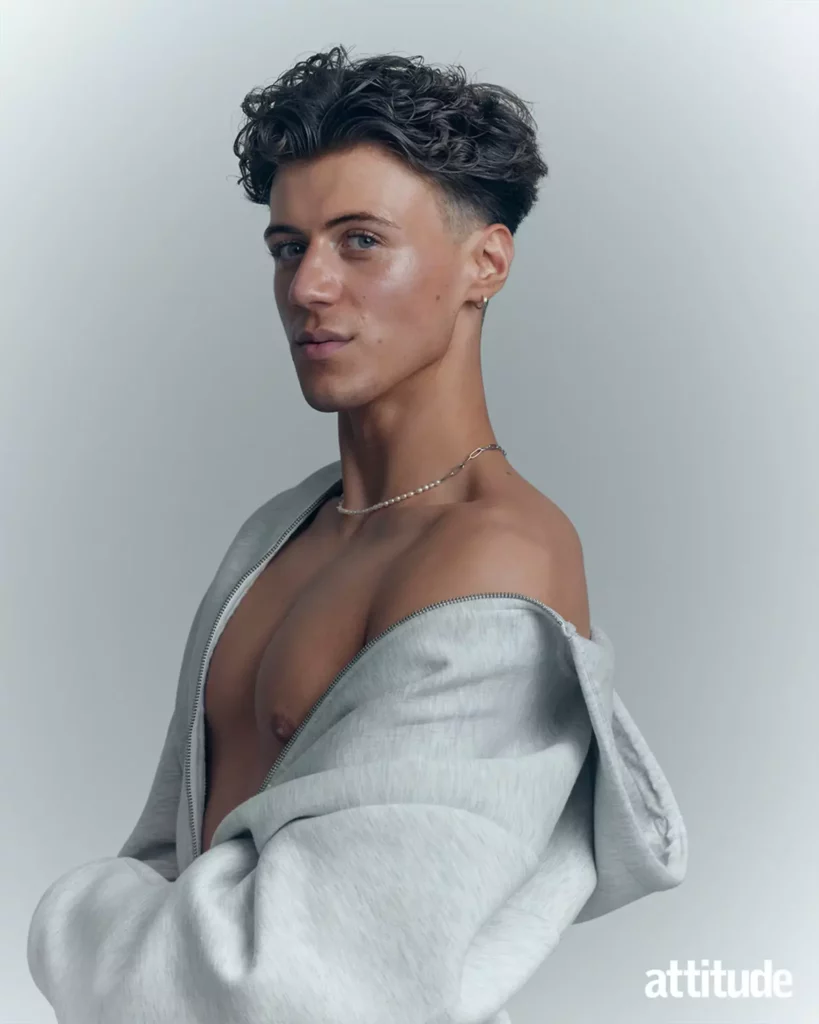
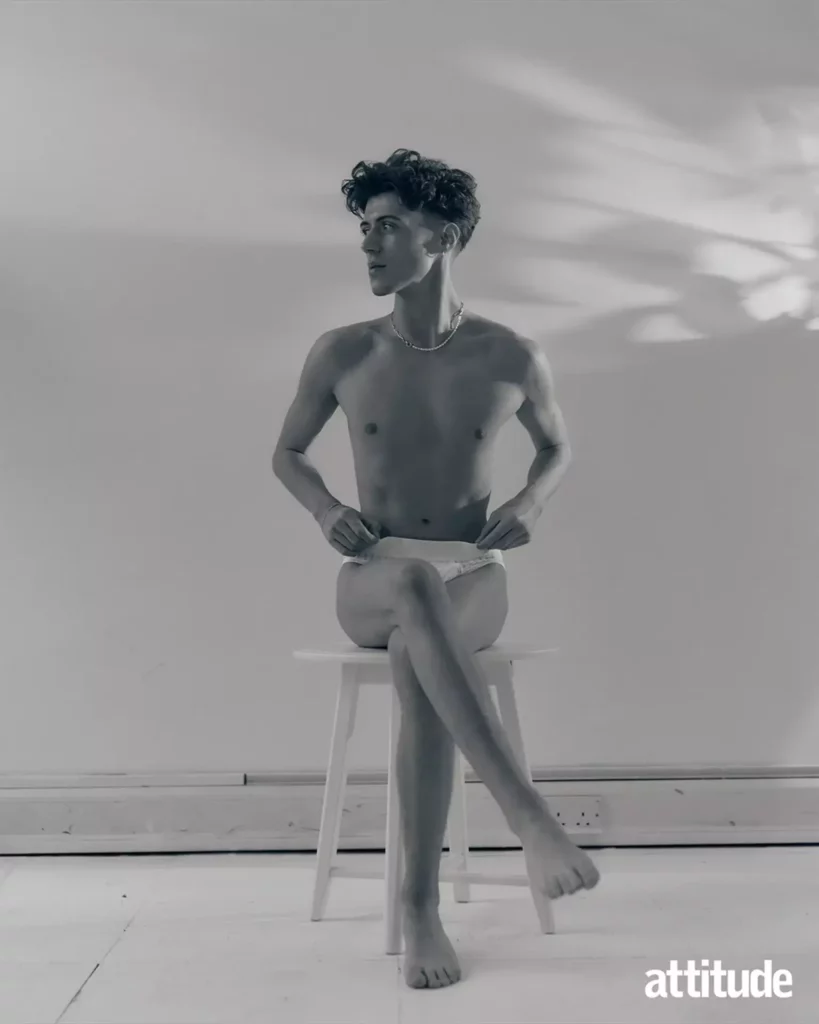
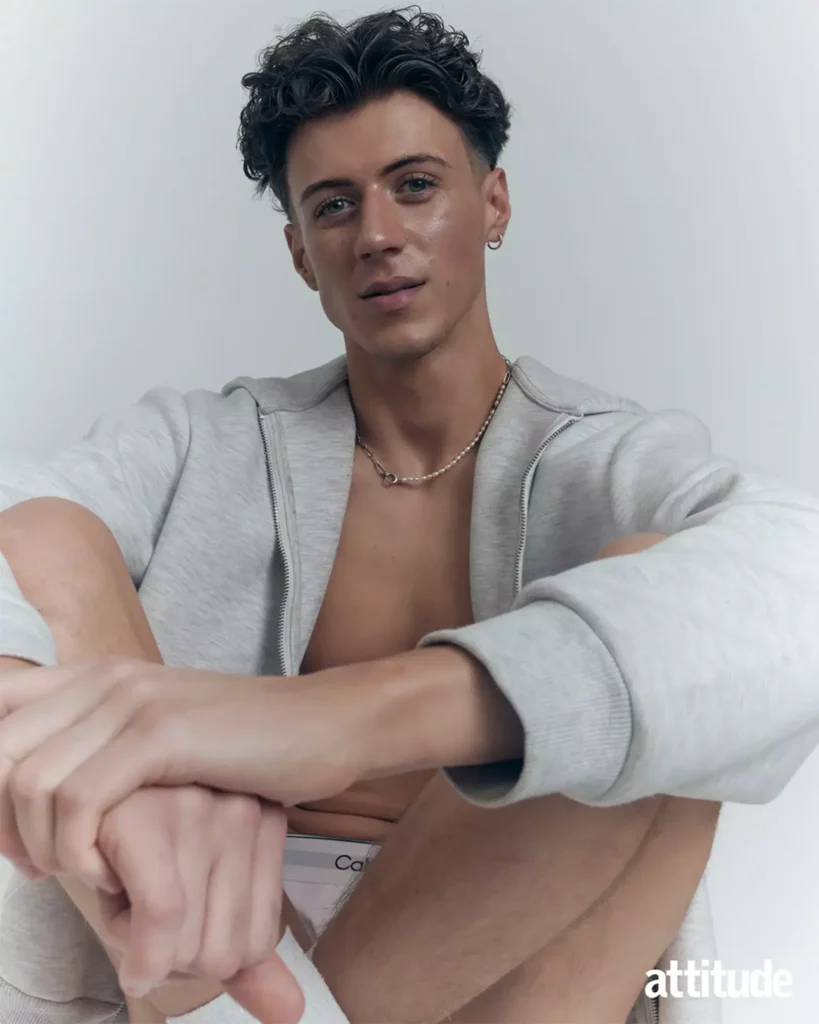
Body image has always been something I’ve struggled with; my self-confidence never had a chance to fully form. Growing up, I was a larger, prepubescent teen with “moobs”, as I was quite often told at school. I despised that word; it referred to something so overtly effeminate at a time when all I was trying to do was fit in. With a womanly chest, wide hips and a limp wrist, I was immediately a target in the playground.
Beyond my physical appearance, I was also bullied for my sexuality – as many gay men find, my peers seemed to know it before I did. It meant that between primary and secondary school, I deliberately muted myself. I changed from being a popular, loud, unapologetically camp child into someone that I now, as a 22-year-old, barely recognise. Hiding under the radar, keeping my head down, I became a shell of my former self.
“Unlike before, I would no longer have control”
I was a miserable teen, as most are, but my unhappiness was driven by an incessant sense of internalised homophobia and a deep hatred of my own body. I despised myself, inside and out. By the time secondary school ended, I had inadvertently lost weight – but not to the extent it would later reach. My “moobs”, which I had spent years trying to shrink, tone and transform into muscle with every home workout imaginable, had finally reduced to a size I was content with – but I was still unhappy. Little did I know that, years later, my relationship with my body would bring me further misery, and unlike before, I would no longer have control.
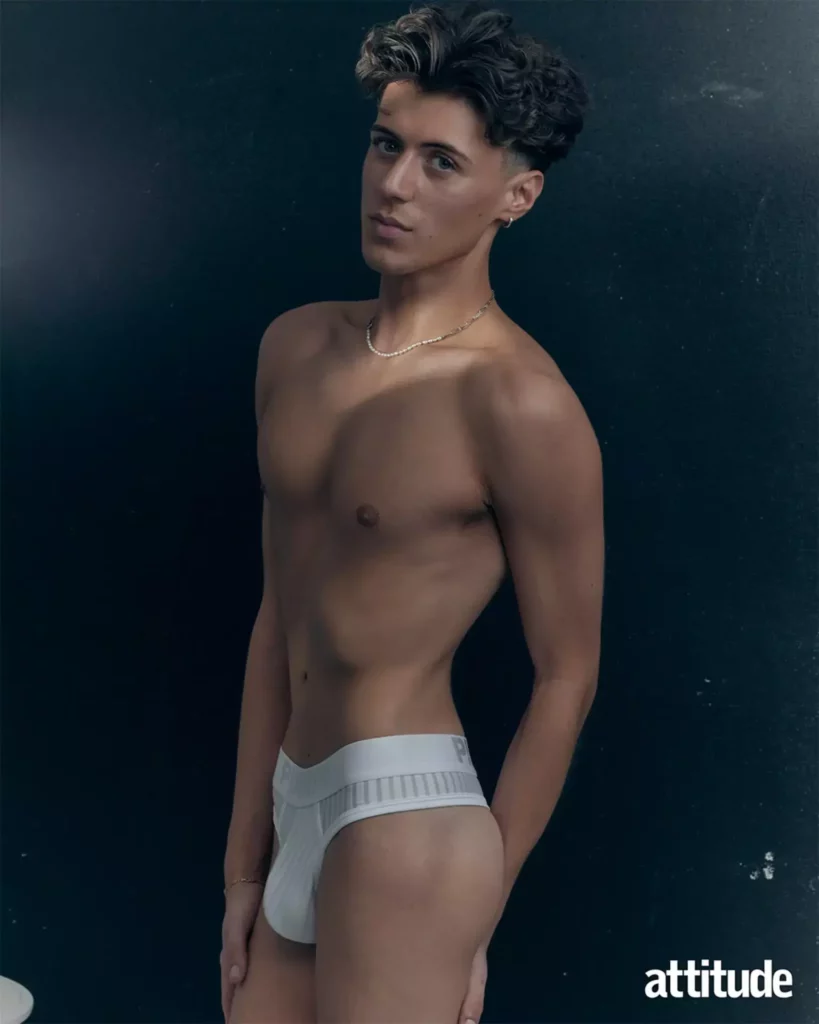
My sexuality remained a deep, dark secret. As RuPaul says, “If you can’t love yourself, how in the hell are you gonna love somebody else?” Comparison had always been my downfall, through education, sexuality and, inevitably, body image. Looking back, I already possessed it: the skinny waist, the petite build… but I wanted more.
“My stomach eating away at itself felt like ecstasy”
I struggled with eating for a year before admitting to myself, and eventually to my best friend, my mother, that I thought I had an eating disorder. I would starve myself until dinner; my stomach eating away at itself felt like ecstasy – I knew I was getting thinner, and I loved it. Then came the day when an overwhelming feeling, depression, I think, consumed me entirely.
It was my mother’s birthday. Because it was during the pandemic, it wasn’t an extravagant affair, just a wholesome celebration with my sister, my father and me. But I wasn’t celebrating. I told myself I didn’t want any cake. I did. I really fucking did. Instead, I hid in my room, crying, torn apart by the fact that I couldn’t be present and enjoy her day, because all I could think about was how hungry I was. Eventually, I went to the person who means everything to me. “Mum, I’m so unhappy,” I sobbed.
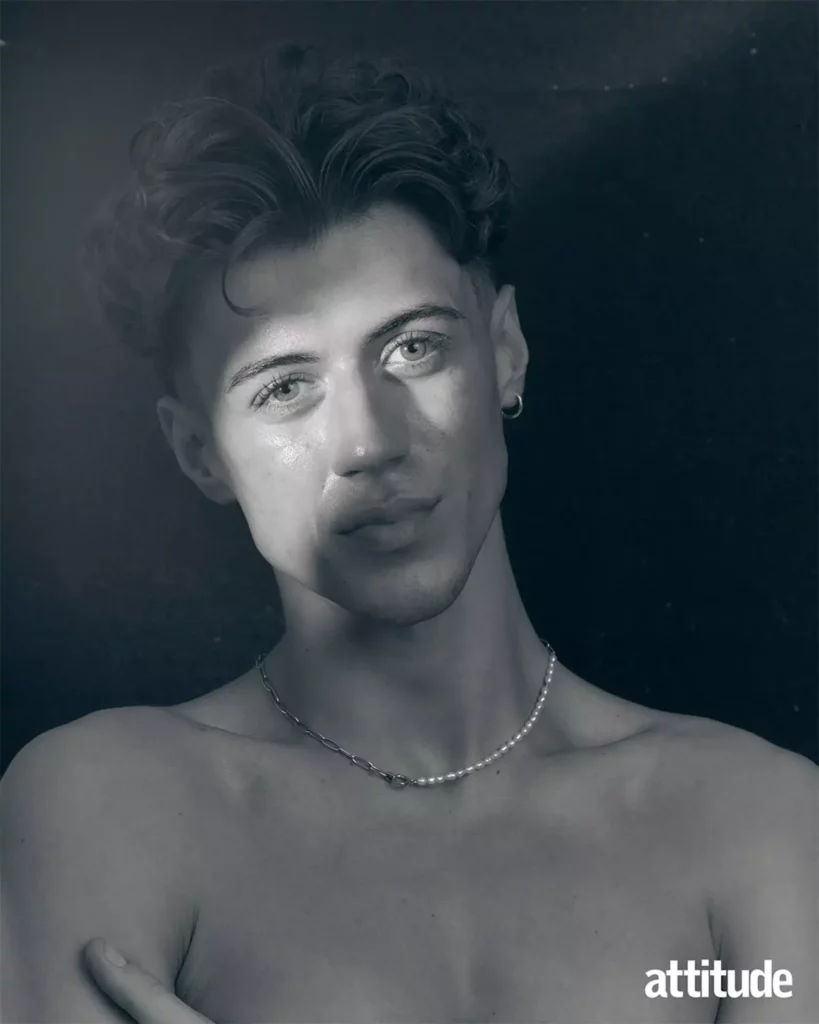
She put her arms around me. She knew what was wrong, as all mothers do, but she didn’t yet know how to name it, or how to face it. “I don’t know why, Mum,” I said, lying, because I couldn’t admit it. As she cradled me, she asked if it had anything to do with food, gently putting into words everything I already knew but couldn’t say. I was too emotionally, and probably physically, exhausted to think, let alone respond. Together, we agreed we would fight the self-loathing monster that was quietly eating away at me from within.
“But as with any addiction, fighting off that ‘thing’ is an internal war”
With encouragement, I got better. I felt lighter, happier. I came out as gay to a supportive circle of family and friends and even had my very first boyfriend. But as with any addiction, fighting off that “thing” is an internal war. I relapsed, addicted to the hunger. My relatives barely recognised me when we reunited after Covid. I remember an extended family member who had been familiar with my previous, bigger build mistook me for my cousin’s boyfriend. Since then, I haven’t eaten properly. I’ve skipped meals, exercised obsessively and, sometimes, after a heavy night out, felt relief after being sick, knowing that my stomach would shrink.
University didn’t help. I joined my first gym, and saving money became my excuse to skip food shopping. If I didn’t have it, I couldn’t eat it. While my housemates shopped weekly, I survived on borderline rations – entirely my own doing. When I came home, it was probably my parents’ worst nightmare. Being told I’d lost weight only fed the disorder. Seeing my ribs and collarbones, feeling the hunger flare again, it was relentless. And yet, despite my entire university career being tainted by body dysmorphia and the slow self-harm of starvation, I came out on top: a first-class degree, a diploma, and a clearer sense of who I am. Through friendships, break-ups and hard-won self-development, I finally understood at the age of 21 who Aaron was for the first time in my life.
“Wrapping my hands around my waist in the hope that the tips of my fingers will meet”
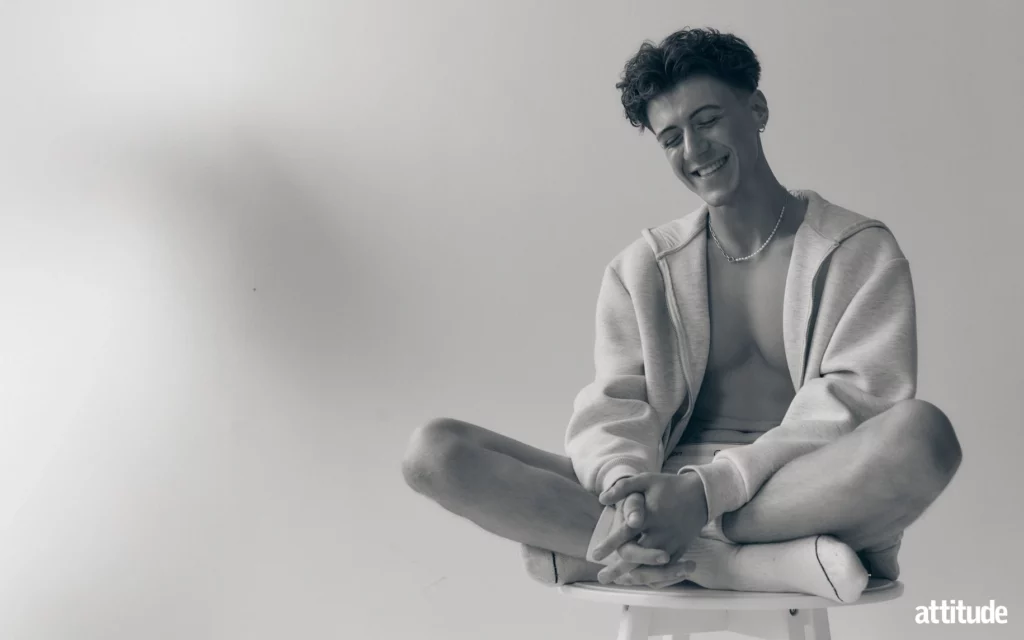
It’s only now, as I reflect, that the weight of it all truly hits me: how exhausting my relationship with my body and food has been – and still is – and how much of my life it has quietly consumed. Even today, it lives with me. Calories taste like guilt; I work them off out of obligation. I stand in front of the mirror, wrapping my hands around my waist in the hope that the tips of my fingers will meet. The self-criticism is automatic, something that has plagued me for so long that I barely notice it happening anymore.
To return to that question, “Do you still have an eating disorder?” it came from Attitude’s editor-in-chief, Cliff Joannou. I had first opened up to him after he noticed I hadn’t eaten lunch once in the five months since I joined the company. That initial conversation unexpectedly opened the door to a chat about how I was doing in the present. Working at Attitude magazine has opened my eyes to many things, but that question stopped me in my loafers. I usually have an answer for everything, but this time was different. It was disarming. Frightening even. I was overwhelmed by emotion, and even more surprised by my response. “I don’t know,” I said honestly. The words took me straight back to my mum’s bedroom, to the night of her birthday, when I’d said the exact same thing.
“That acknowledgement doesn’t answer the question neatly, I know, but it feels like an answer of its own”
I have thought about that question ever since, turning it over in my mind again and again – but my answer has not changed. I still don’t know. But what I do know, what I hold onto today, is that I am the happiest I have ever been. Happy in the way I now approach food, in learning to see it not as an enemy but as fuel. Happy in my life, in the connections I’ve built, in the people who see me and stay. And finally – and I’m welling up as I write this – I am happy with myself. With who I am, inside and out. With the body I live in, and the way I look when I catch my reflection, which is, unapologetically, quite often! That acknowledgement doesn’t answer the question neatly, I know, but it feels like an answer of its own, and I feel, for the first time, at peace.
Some people have asked whether I’ve ever sought professional help for my “self-diagnosed” eating disorder. The truth is, there are days when I feel like it might already be too late for me. After years of living inside this cycle of self-sabotage, it can feel as though it has consumed me entirely, like something beyond cure. I know that voice isn’t the truth. It’s the disorder talking. But it’s loud. One day, I would like to sit in front of a professional and tell them my story and to learn how to turn that voice down, or maybe even off.
Food may still bring guilt, and perhaps it always will in some way. But I understand its purpose now. I know what happens when I punish myself without it. I know who I become, and the deep, dark places my mind retreats to. So, I eat, not perfectly, not without fear, but with intention and hope that one day I won’t have to second-guess it.
For support with eating disorders, consider reaching out to organisations like Beat, First Steps ED, or Caroline through their official websites.
This is a feature appearing in Attitude’s March/April 2026 issue.
Get more Attitude