
Attitude takes a road trip to visit Ian ‘H’ Watkins in his Wales art studio
We take the all-electric Peugeot E-3008 on a south Wales odyssey, dropping in on Steps’ Ian “H” Watkins and next year’s EuroGames host city, Cardiff
By Dale Fox
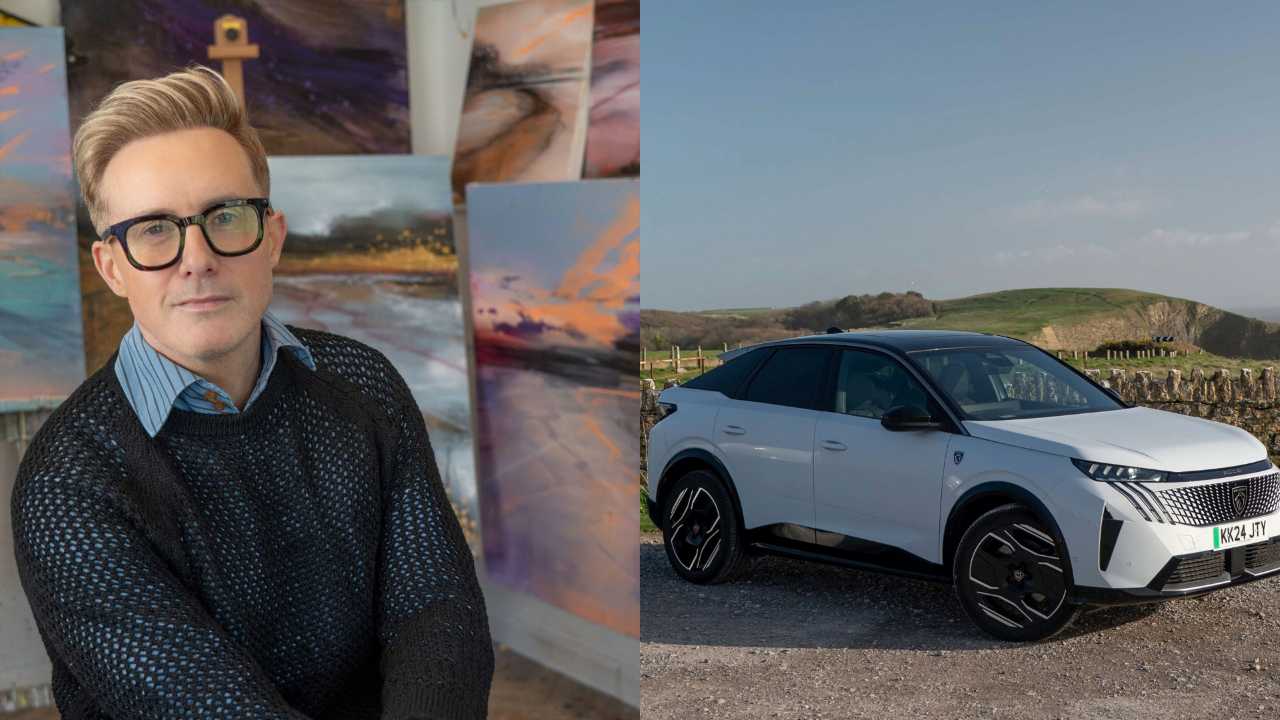
When the assignment comes in – drive to Wales, spend a couple of days, visit “H” from Steps – there’s only one answer.
Attitude’s travel editor Markus Bidaux and I are on the road on a glorious Wednesday, as the sun shines for the first time in weeks, with Steps on the radio, and the Vale of Glamorgan waiting at the other end.
Even better, I’m driving the all-electric Peugeot E-3008, which has a range of up to 326 miles (or up to 435 in its long-range configuration) and an interior so comfortable that I find myself subconsciously lingering behind lorries just to extend my time behind the wheel.
Its elevated driving position gives a clear view of the road ahead as we bop to the music – useful on motorways, pleasing once the landscape opens up. The cabin is built around a 21-inch panoramic “i-Cockpit” screen that curves across the full width of the dash, housing instruments and infotainment in a single floating panel. Below it, a smaller touchscreen strip lets you pin shortcuts for the gadgets you use the most: for me, that’s the remarkably clear 360-degree surround camera. Markus loves to rib me about my parking. On a previous assignment in a camera-less car, we ended up switching seats after he watched my failed attempt to park in a space that could have housed a small ferry. This trip, every time I pull in, the camera does the work. There’s also an optional self-parking feature, but I’d never dream of giving him the satisfaction of seeing me use it.
The centre console wraps around the driver and passenger in what Attitude’s publisher Darren Styles, in his review of the E-3008, described as feeling “a bit like motoring from the comfort of your own lounge” – and on a 3.5-hour journey, with heated and cooled seats that will also massage you if you feel inclined, I can see his point.
Adaptive cruise control with lane-keeping assist means while crossing the Severn I can look (responsibly) at the water rather than just the car in front. Steering wheel-mounted paddles control the level of regenerative braking – if you slow down, the kinetic energy is converted to electricity and returned to the battery. This is useful for when the motorway speed limit drops, more so on country lanes where lifting off the accelerator on corners does most of the work for you, recharging the battery at the same time.
The voice assistant adjusts the climate settings while the Vale of Glamorgan unfurls around us, sunlight coming through the panoramic sunroof. A stretch of farmland and coast between Cardiff and the Bristol Channel, the Vale softens as you head west – hedgerows thickening, road narrowing. Driving from south-west London to south-east Wales, I’m surprised to arrive with far more range remaining than I’d expected.
Cowbridge sits at the Vale’s centre and looks exactly like the sort of place you end up on an aimless Sunday drive if you’re lucky. The High Street (once shortlisted for Britain’s coolest road) is wide, lined with Georgian and Victorian buildings in pale stone and render, with pretty hanging baskets out front. At the far end, you can see a medieval church tower with green hills rising behind it. It’s bustling in the way market towns aren’t usually these days: an independent butcher’s, a deli, fashion boutiques, a weekly farmers’ market, and a Waitrose whose size and central position say a lot about the town’s affluent demographic. Indeed, in 2017, the Sunday Times named Cowbridge the best place to live in Wales.
It’s also, for the past few years, the adopted home of Ian “H” Watkins, one fifth of Steps, the pop group that put out 14 consecutive top-five singles across the late 1990s and early 2000s and sold north of 20 million records. That version of him – bouncing around the stage of CD:UK in something sleeveless – isn’t entirely irrelevant to the story of how he ended up here.
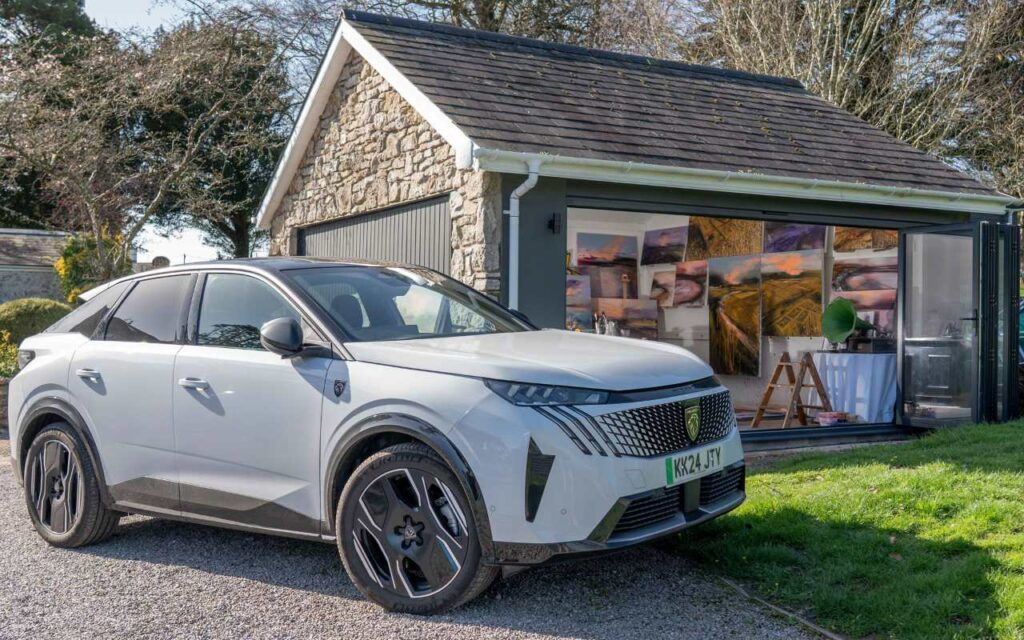
He lives with his partner, Tom Hope, and his twin boys, along with their Maine Coons, Iolo and Llio, and pyredoodle, Lwna, a few minutes outside the town centre, up a hill in a substantial stone-built house that looks like it’s been there longer than anyone can remember. A huge daffodil-filled garden rolls down the hillside – there’s an imposing tree with swings attached to its boughs, a playhouse for the kids, and at the centre of it all is Watkins’ art studio. It has views over the town below through tri-fold glass doors, which we open to take advantage of the unusually sunny spring weather.
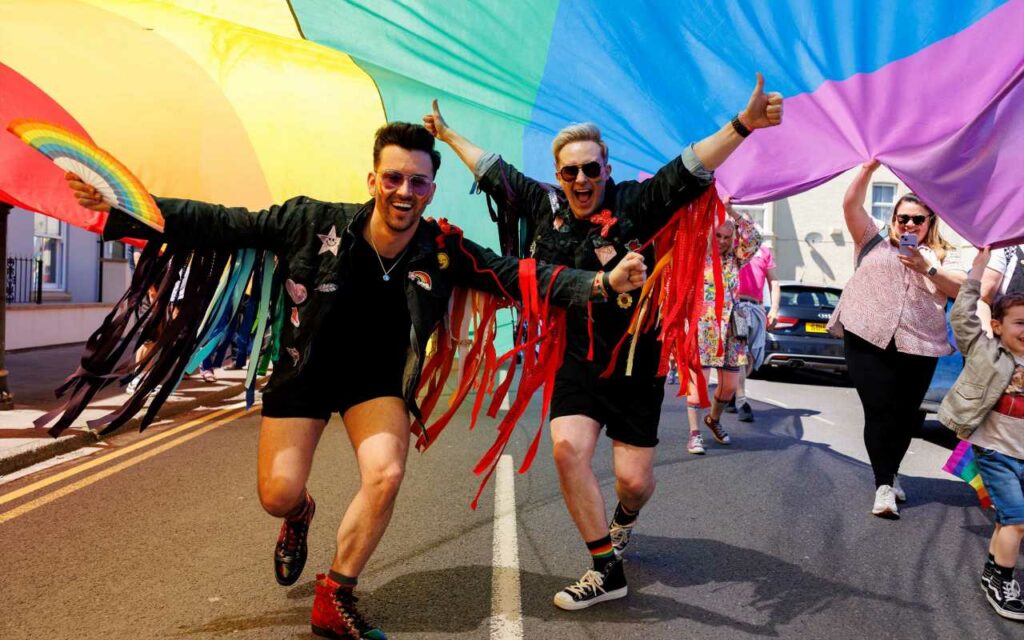
Watkins grew up a little way north from here, in the Rhondda Valley with, as he puts it, nobody he could relate to, and has spent the past few years putting down roots in Cowbridge in ways that go well beyond simply buying a house there. Some people, he tells us, could choose to live “in their castle on the hill” and keep their distance. That’s not the choice he and Hope have made. They founded Cowbridge Pride in 2022 – with the Welsh government’s support – and the town now turns itself rainbow each June. Watkins sat on the local town council as an independent for a year and was elected in 2023. He’s raised tens of thousands for local schools through the Pride events, covering LGBTQ+ resources and training for pupils, staff and parents. He and Hope have put on a panto in the town hall every year since 2023. They also started a summer music festival that was called Cowchella until (hilariously) Coachella’s lawyers intervened; it’s now Moo-La-La.
The studio is where art and life have finally converged for Watkins – a thread that runs back to his childhood. Art has been a constant since the age of eight or nine, when his grandmother gave him a watercolour set. He still has a painting he made for her that used to hang on her kitchen wall. “I had nobody that I could relate to growing up,” he says of his childhood in the Rhondda, “so the art room was my safe space.” He accepted a place at art college on leaving school but deferred when an audition for Steps came up. “I thought I’d always go back to it at some point,” he says, “but my life took me in a different direction. Pop took a hold of me.” Still, during the band’s early years, he always had a pad on the road with him – there’s a sketch he made on the set of the ‘It’s the Way You Make Me Feel’ video at Brockett Hall in 2000 that he’s kept.
The work itself would surprise anyone whose mental image of “H” involves a cowboy hat and dry ice. His paintings are rooted in the Welsh landscape – the mountains, valleys and coastline on his doorstep – worked in acrylic, layered with pastel, charcoal and gold leaf, and influenced by Klimt, Constable and Turner. He often paints on location, gathering sand or soil to grind into the surface of the canvas. “The work becomes part of the landscape, and the landscape becomes part of my work,” he says. He’s also a printmaker – lithography, screen printing, etching, dry point – and is represented by Clarendon Fine Art. He’s served as a selector for both the ING Discerning Eye and the Welsh Contemporary Art Exhibition, and is the art correspondent for the BBC’s The One Show. Despite all his credentials, Watkins admits to having “imposter syndrome” being in a gallery with the likes of Warhol, Chagall and Picasso.
His first collection with Clarendon was called “Coming Home”, which is about as literal as a title gets. “There’s this word, this phrase, that’s called ‘hiraeth’ in Welsh,” he says, “and it’s a longing, a belonging. And I always knew I would come back.” He grew up in Wales, left at 18, and the collection was his way of marking that return. It was also the point at which painting became something more than a side pursuit. His twin boys Macsen and Cybi were born in 2016, and fatherhood, he says, has a way of making you lose sight of yourself. “I [needed] to do something for me,” he says. “And that’s why I picked my paintbrushes up again.” He paints with his children now, teaching them to paint what they feel rather than what they see.
The contrast with his other life isn’t lost on him. “If you know me from Steps, you would think of something bright and colourful, maybe pop art or urban art,” he says. “But I feel there’s a darkness to my work. It’s very earthy, it’s very rich, and there are lots of my Welsh roots and heritage in it.” His pop persona, he says, is just that. “Yes, there’s a lot of me in “H”, but this is the real me. This is what I love.” When he’s not on the road with Steps, he takes the kids to school, then picks up his easel and heads to the beach. It’s a solitary way to spend a day, but he loves it. “When I’m on stage, I have four other people with me. We have dancers, we have pyrotechnics, and we have 20,000 people [watching us],” he says. “But when I’m painting, it’s like I am giving away a little piece of my soul and lots of little pieces of me are on people’s walls. And that feels amazing.”
After our chat, Watkins and Hope insist on showing Markus and me the town, and we saunter through Cowbridge like we’ve known each other for years.
First stop is Happy Days Vintage Homestore. Just off the High Street, it’s a warren of vintage furniture and enough mismatched crockery to stock a small hotel. Watkins disappears into it almost immediately, stopping to chat with half the staff before trying to convince me to buy an antique baby bath for my chihuahuas. I resist.
We head on to the nearby Bear Hotel for tea and cake. The staff knows them both by name. An elderly man stops at our table – we assume he’s a fan, but it turns out he used to live in the house Watkins bought for his parents. The two of them reminisce about the old days. It’s that kind of town.
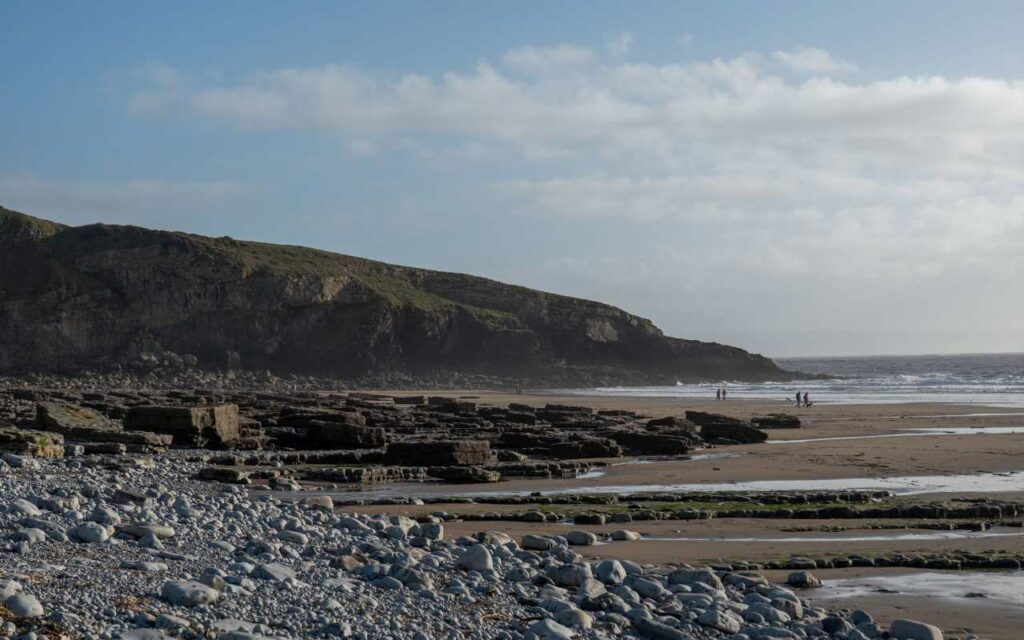
Before we leave Watkins and head towards Cardiff, he points us towards Southerndown Beach, about 20 minutes’ drive west through the Vale. It would have been a mistake to skip it. Officially Dunraven Bay, Southerndown sits at the foot of dramatic sandstone cliffs on the Glamorgan Heritage Coast, west-facing and open to the Bristol Channel. At low tide, the beach is long and sandy, pale horizontal strata of sedimentary rock running through the shore, the cliffs rising steeply on either side. There are rock pools, castle ruins up on the headland, and cliff walks in both directions. Watkins and Hope also recommend The Fox in St Brides Major, owned and run by their friend, former professional rugby player Gavin Henson (yes: Charlotte Church’s ex).
The E-3008’s hands-free boot makes loading our camera equipment straightforward – a kick under the bumper and you’re done. The drive to Cardiff takes 40 minutes, Cardiff Bay announcing itself on the approach, the Millennium Centre’s steel lettering visible before we’ve even found the hotel.
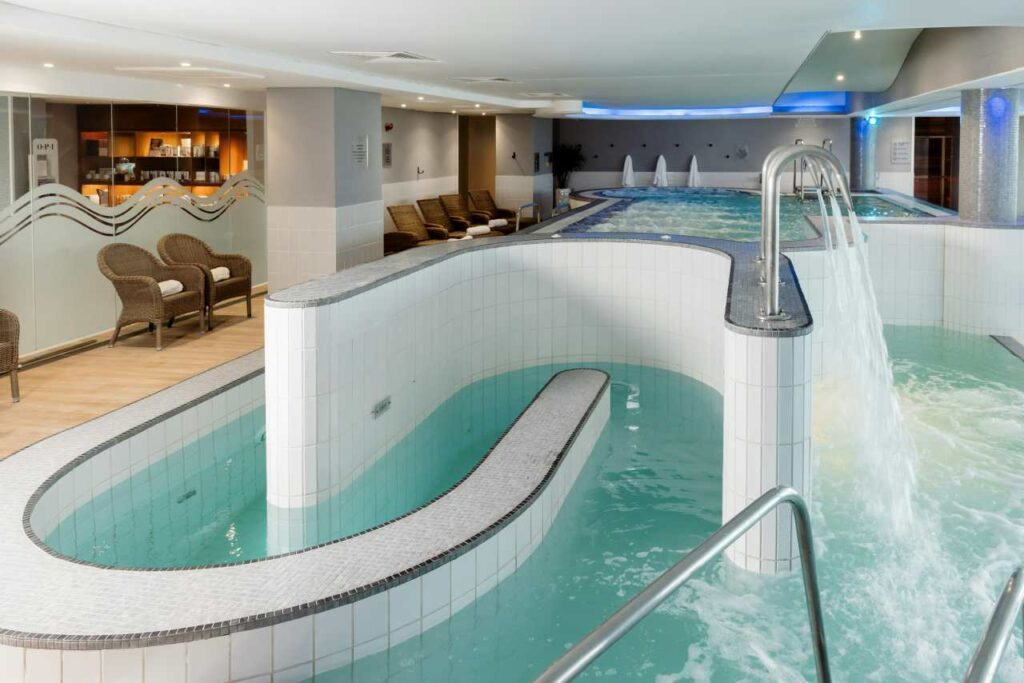
The stunning voco St David’s Cardiff, part of IHG Hotels & Resorts, is the only AA five-star property in the city. The building sits directly on the bay, and the Tiger Bay floor – named for the historic docklands quarter that was once Wales’s first multicultural community – is where we’re staying. The Tiger Bay Premium Room is large, modern and light-flooded, with a large balcony looking straight out over the water, very much giving cruise ship vibes. Its restaurant, Tir a Môr – land and sea in Welsh – uses Welsh produce, and the car park has EV charging points, naturally. Markus heads for the pool and reports that it’s among the best he’s used in any hotel anywhere. The large hot tub, sauna and decking looking out onto Cardiff Bay get equal praise.
Cardiff Bay is worth a night in its own right before you head into the city. Mermaid Quay sits right on the water – bars, restaurants and independent traders spilling out along the waterfront, alongside the usual chain suspects for those who enjoy them – and the wider bay has the Wales Millennium Centre, the Senedd and the Pierhead building within easy walking distance of each other. Tiger Yard, a street food court built into a cluster of rainbow-coloured shipping containers near the old Doctor Who museum site, is worth a look when it’s open.
We opt to take the 40-minute walk from the bay into the city centre along the bay path – the water on one side, Cardiff’s skyline resolving itself gradually ahead. It’s a pleasant urban walk, and the city at the end of it is one of the UK’s most underrated food destinations. The restaurant that best illustrates why is Gorse, run by chef Tom Waters, which picked up Cardiff’s first ever Michelin star in February 2025, just eight months after opening. The menu is seasonal and Welsh to its roots – seaweed, salt marsh lamb, Welsh truffles.
Another foodie favourite is The Potted Pig, in the High Street Arcade. Occupying the vaulted basement of a former bank built in 1855, it’s all arched brickwork, low light, a serious gin list and a menu built around slow-braised meats and classic British cooking.
Cardiff’s queer scene is smaller than you’d expect from a capital city but still covers most bases. The Golden Cross on Hayes Bridge Road is the place to start for a drink – Grade II listed and built in 1903, its interior is covered in extraordinary Craven Dunnill ceramic tilework and it is one of the oldest LGBTQ+ venues in Wales. Mary’s on St Mary Street is an entirely different night out – drag queen karaoke, sticky floors and very loud music, sitting incongruously among a Walkabout and other chain bars on the city’s mainstream strip. In 2027, Cardiff is set to host the EuroGames, the first time Europe’s largest LGBTQ+ multi-sport event has come to the UK, which will bring around 10,000 athletes and visitors to the city.
As we leave Cardiff the following morning, Watkins’ words about hiraeth – that longing, that sense of belonging – begin to make sense. Wales has a way of staying with you and, receiving a hearty massage in the E-3008 as the motorway unspools, we’re longing to return before we’ve even crossed the border.