
Say ‘I do’ in Aruba: an LGBTQ+ wedding and honeymoon guide
In partnership with Aruba Tourism Authority
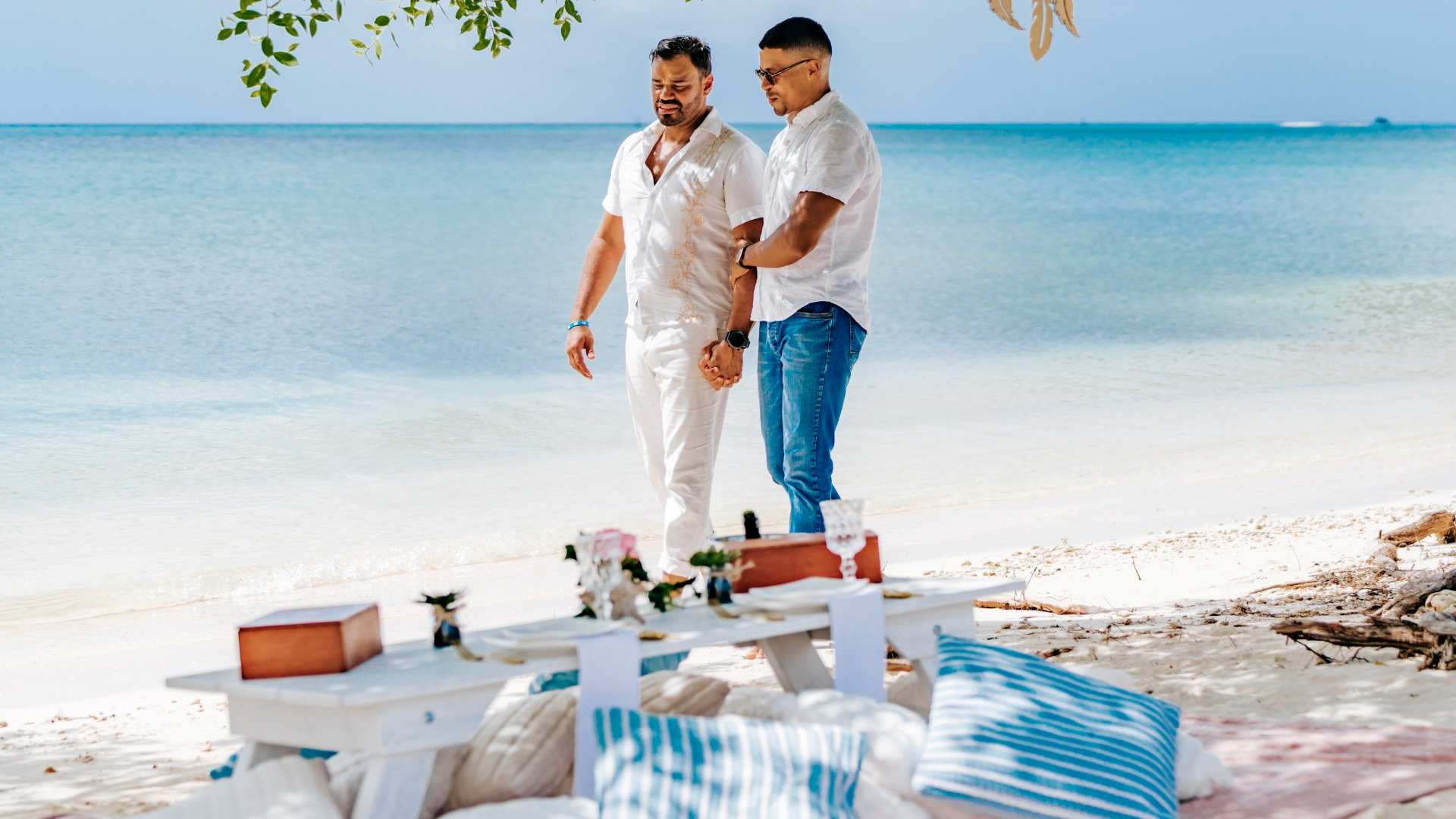
For LGBTQ+ couples planning a wedding or a honeymoon, Aruba offers something much of the Caribbean still can’t: the freedom to marry who choose, no matter their gender.
Same-sex marriage has been legal in Aruba since the Dutch Supreme Court ruling of July 2024, and the island tops the Caribbean Safety Index, so two grooms, two brides, or any variation thereof can explorer the island freely, without a second thought.
Aruba’s nickname “One Happy Island” tends to make sense almost immediately. The welcome is genuine and whether you are spending the week at your resort or standing on the beach saying your vows, the island has a way of delivering on exactly what it promises.
Sitting outside the hurricane belt, Aruba delivers reliable sunshine year-round with no shoulder season, no weather gambles. The water is calm and clear, the beaches consistently rank among the world’s best, and the island is compact enough to feel like both the wedding and the honeymoon in a single trip.
Legal ceremonies and symbolic beach celebrations are both well catered for, with a destination wedding industry that makes the practical side considerably easier than most couples expect.
Here’s everything you need to know about planning a wedding or honeymoon in Aruba as an LGBTQ+ couple.
Getting married in Aruba as a same-sex couple

Same-sex couples can marry legally in Aruba, which sets it apart from most of the region. Getting married in Aruba involves a legal civil ceremony at the historical City Hall in the capital Oranjestad. There’s no residency requirement, though your documents, passports, birth certificates, a certificate of no impediment and a declaration of marriage intent, need to reach the civil registry about a month before the date.
A local or resort wedding planner handles the paperwork, so most couples hand that side over beforehand and arrive to enjoy the day with the stressful stuff already taken care of.
Otherwise, plenty of couples marry back home and hold a symbolic ceremony or a blessing on the island instead, which needs no paperwork and can happen wherever you like – on the sand, in a garden or even on the water on a private catamaran.
Beach ceremonies are kept low impact, with only biodegradable decorations allowed and no sky lanterns or bonfires, so the celebration leaves the island exactly as you found it. Whichever way you choose, Aruba has a setting for it.
Where to stay
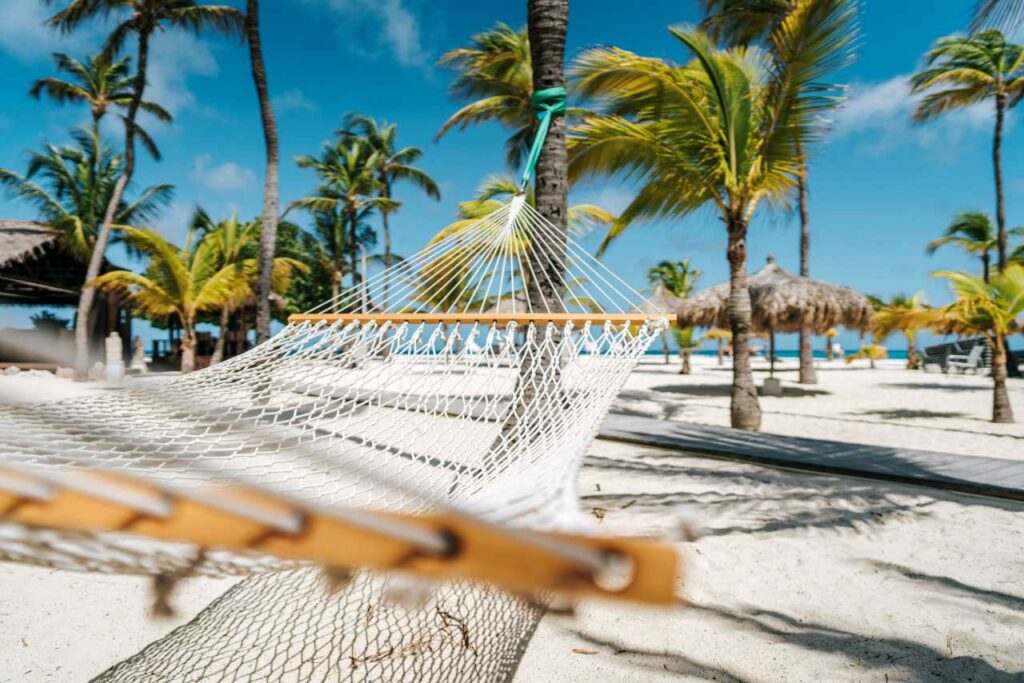
For a honeymoon or a smaller wedding, Eagle Beach is the more secluded side to base yourselves. Bucuti & Tara Beach Resort is an adults-only property and the Caribbean’s first certified carbon-neutral hotel. A few minutes along the same sand, Manchebo Beach Resort & Spa is an eco-certified wellness resort with a spa and daily yoga, and hosts smaller weddings on the beach or beneath its beachfront pavilion, which suits couples who want a calmer pace at the centre of the trip.
On Palm Beach, the Ritz-Carlton, Aruba suits a larger celebration, with beach, garden and ballroom settings. The Hyatt Regency Aruba Resort Spa & Casino, one of the island’s EarthCheck-certified hotels, sits on the sand with private cabanas for the days either side of the ceremony.
Honeymooning in Aruba
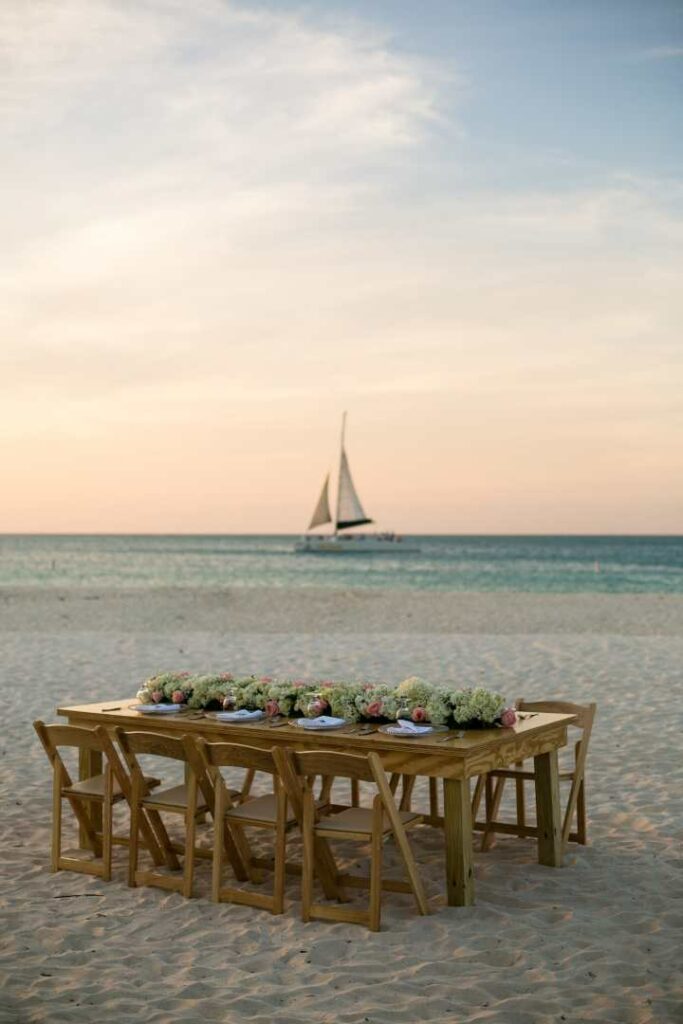
The days between your ceremony are easy to fill as a couple. A sunset sailing trip along the calm west coast is a classic way to celebrate your love, with dinner and drinks as the sky changes over the water. Several restaurants and resorts set up dinner for two on the beach, with a table on the sand and the water a few feet away.
For a day away from the sun loungers, Arikok National Park covers close to 20 percent of the island, a protected stretch of desert terrain and coast, with the sheltered Natural Pool reached by jeep or guided tour. Oranjestad is worth a slow morning on foot, with its Dutch-inspired streets and waterfront easy to wander, while the food is a reason to linger: keshi yena, the national dish, is a hollowed wheel of Gouda filled with meat, vegetables and spices, and fresh snapper and pastechi turn up everywhere, best washed down with a local Balashi lager.
When to go
Aruba’s weather barely changes, which takes a lot of the worry out of settling on a date. It sits outside the hurricane belt, so it stays warm and dry across the year. January to April is the driest stretch, April to August stays hot with fewer people around, and September to November is the quietest time, with any rain brief and usually in the evenings.
To discover more about Aruba, visit the official Aruba Tourism Authority website.