
Attitude’s LGBTQ+ travel guide to Aruba, the Caribbean’s ‘One Happy Island’
In partnership with Aruba Tourism Authority

For LGBTQ+ travellers, the appeal of Aruba starts with something a lot of destinations still can’t offer: you can let your guard down.
Indeed, the island tops the Caribbean Safety Index, with crime reported under one percent, with that reassurance carrying throughout a trip here, from late nights out to holding hands on the street without giving it a second thought.
The legal record backs it up. Same-sex marriage has been legal since the Dutch Supreme Court ruling of July 2024, registered partnerships since 2021, and Aruba is one of only a small number of Caribbean islands where same-sex couples can marry.
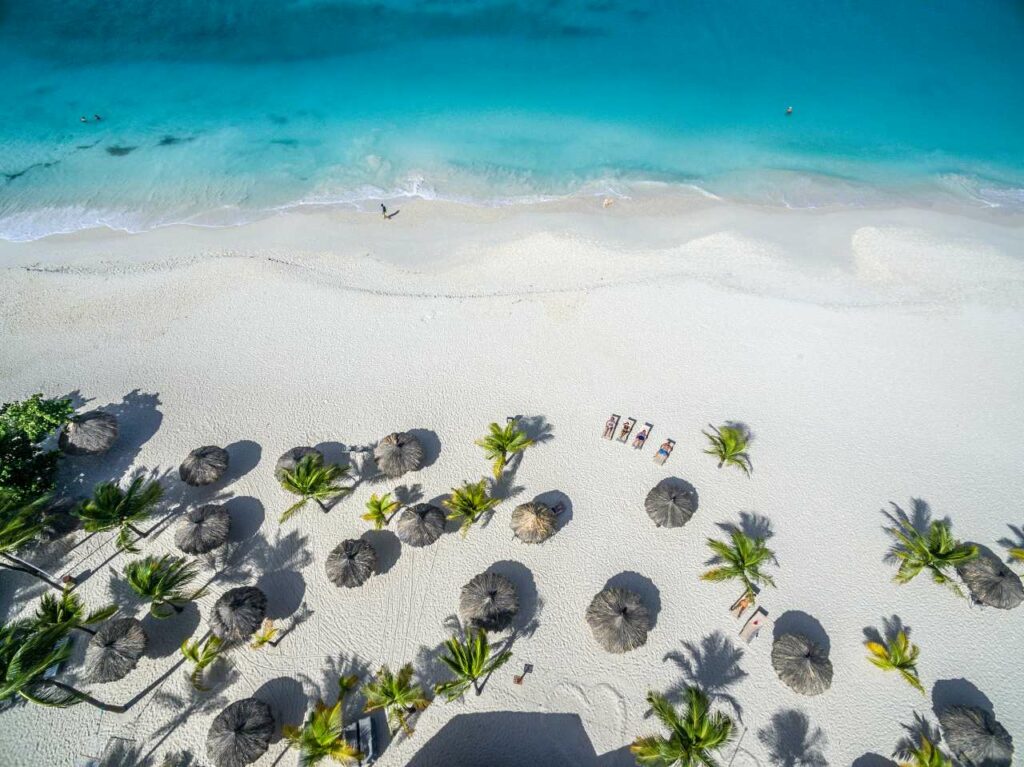
All of that comes with sun every day of the year, water clear and calm enough to see your feet on the seabed, and a coastline that turns up near the top of best-beach lists.
Aruba sits outside the hurricane belt, which keeps the weather steady, and it has banned single-use plastics and reef-damaging sunscreens to keep its stunning reefs and beaches healthy. Aruba is also referred to as “One Happy Island”, and for LGBTQ+ visitors the welcome behind the phrase is obvious everywhere from its streets to the hotels and beach bars.
Here’s everything you need to know about planning a trip to Aruba.
Where to stay
Most of Aruba’s hotels sit along the calm western coastline, with Eagle Beach and the livelier Palm Beach strip as the two main bases. Eagle Beach draws those after a quieter stay – the sand is wider, the water calmer, and the pace more relaxed than the stretch to the north.
Aruba’s push for sustainability is built into the island’s infrastructure. The local government is steering towards a low-carbon economy, currently generating nearly 20 percent of its energy from clean power. The hotel sector shares this focus, with 10 percent of all Caribbean properties holding an EarthCheck sustainability seal located in Aruba.
For something boutique and sustainability-focused, Bucuti & Tara Beach Resort on Eagle Beach is an adults-only property and the Caribbean’s first certified carbon-neutral hotel, with an oceanfront restaurant and twice-weekly movie nights on the sand. Also on Eagle Beach, Manchebo Beach Resort & Spa is a welcoming option with a Caribbean-Balinese spa, daily yoga and Pilates, and a strong wellness focus.
For a more central base, Renaissance Wind Creek Aruba Resort sits in the heart of Oranjestad – the island’s capital – with a 40-acre private island accessible by water taxi. Those after something on the Palm Beach strip will find the Hyatt Regency Aruba Resort Spa & Casino directly on the beach, with an adults-only pool with private cabanas, and two restaurants on site.
Many hotels across the island hold TAG (Travel Alternative Group) certification, a standard that requires properties to implement non-discrimination policies, maintain a diverse workforce and train staff in inclusion.
What to do
Eagle Beach is a regular on the world’s best-beach lists, a wide sweep of white sand backed by the two wind-bent fofoti trees that count among the island’s most photographed sights, their branches combed sideways by the trade winds and best caught at sunrise or last light. It’s an idyllic spot for swimming, with easy snorkelling straight off the sand.
Arikok National Park covers close to a fifth of the island, a protected run of desert terrain and rugged coast. A guided tour gets you out to the Natural Pool, a sheltered circle of seawater ringed by volcanic rock on the windward shore.
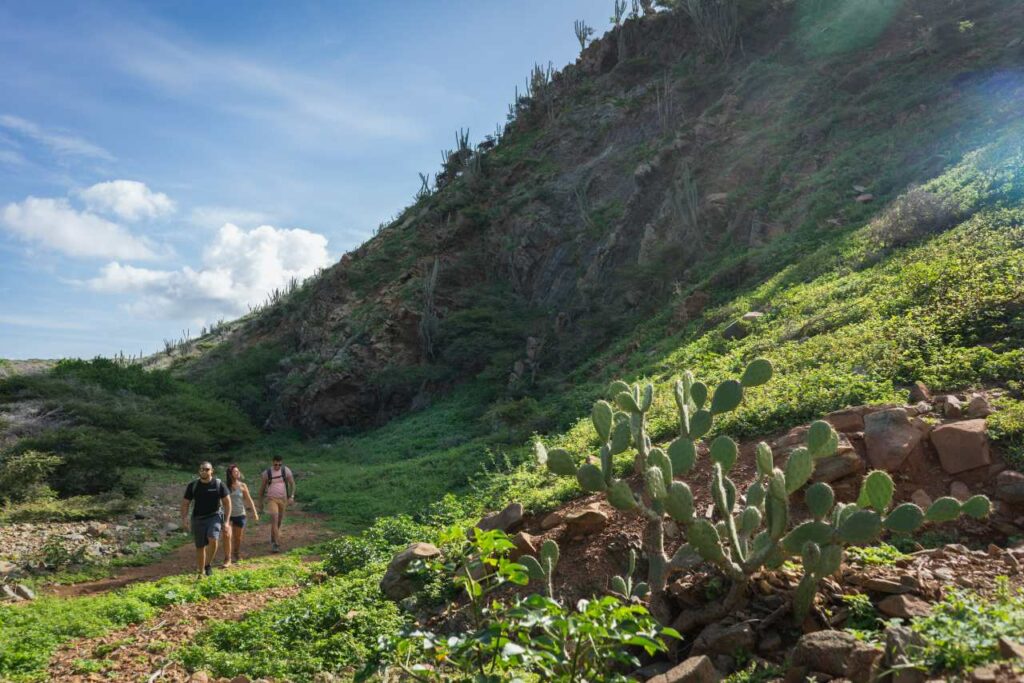
The Ayo Rock Formations, inland to the north, are ancient monolithic boulders held sacred by Aruba’s original Arawak inhabitants and still marked with petroglyphs thousands of years old.
San Nicolas, the island’s second city, has filled its walls with large-scale street murals through the Aruba Art Fair, a non-profit held each September where the proceeds go straight to the artists. Locals call it Sunrise City, with guided tours running year-round.
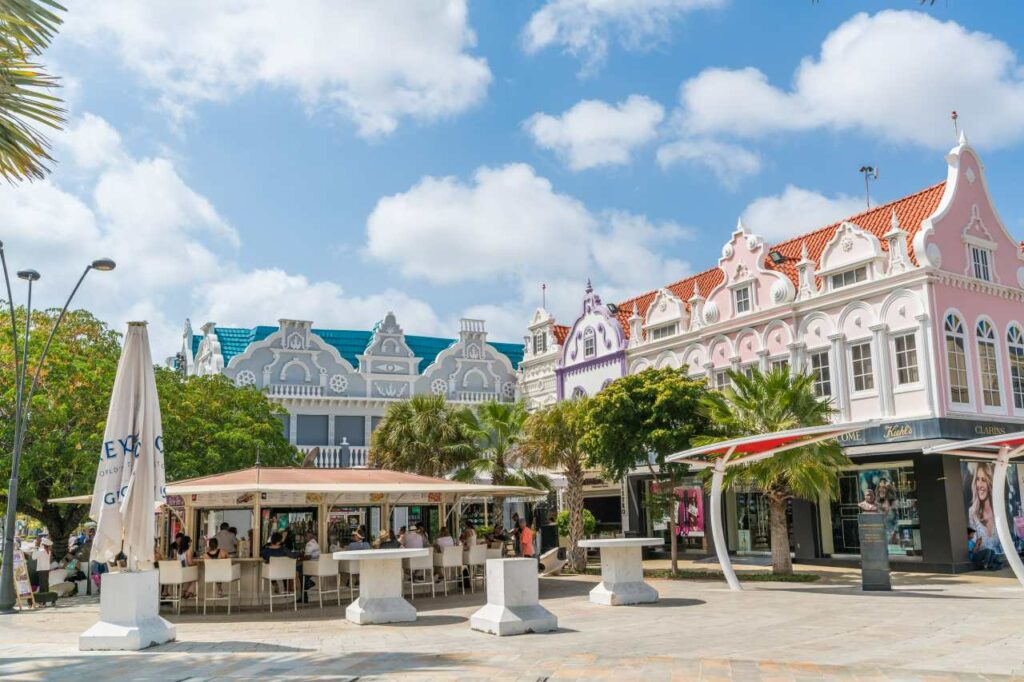
Oranjestad is worth a morning or afternoon spent on foot. The Dutch architecture is well preserved, the waterfront is easy to navigate, and the food scene draws on multicultural influences.
What to eat
Aruban food carries the island’s mixed heritage, with Dutch, Spanish, Latin American and Caribbean influences in almost every dish.
Keshi yena, the national dish, is a hollowed wheel of Gouda packed with spiced meat, olives and raisins and baked until the cheese runs. Stoba, a slow-cooked goat or beef stew, comes with funchi, the local take on polenta.
Fresh fish is everywhere, with wahoo, red snapper and mahi-mahi appearing on menus across the island, and pastechi – deep-fried pastry pockets filled with cheese or meat – are the snack of choice at any time of day. Wash it down with a Balashi, the local lager, or a refreshing rum punch.
Nightlife
Cage Nightclub in Oranjestad is the island’s dedicated LGBTQ+ venue, open between Thursday and Saturday with drag performances, themed nights and, of course, a dance floor. Most other bars and clubs across the island are mixed and easy-going, and the Palm Beach strip is compact enough to move between them on foot.
When to go
January to mid-February is Aruba Carnival time. For six weeks the island fills with soca and tumba, with costumed parades and street parties running into the night, before the Grand Parade through Oranjestad and the burning of King Momo bring the season to a close.
April to August stays hot with fewer people about, and September to November is quieter still, with any rain brief and usually saved for the evenings.
To discover more about Aruba, visit the official Aruba Tourism Authority website.