
Rufus Wainwright: from Judy Garland tribute to new pop album, why 2026 is his comeback year (EXCLUSIVE)
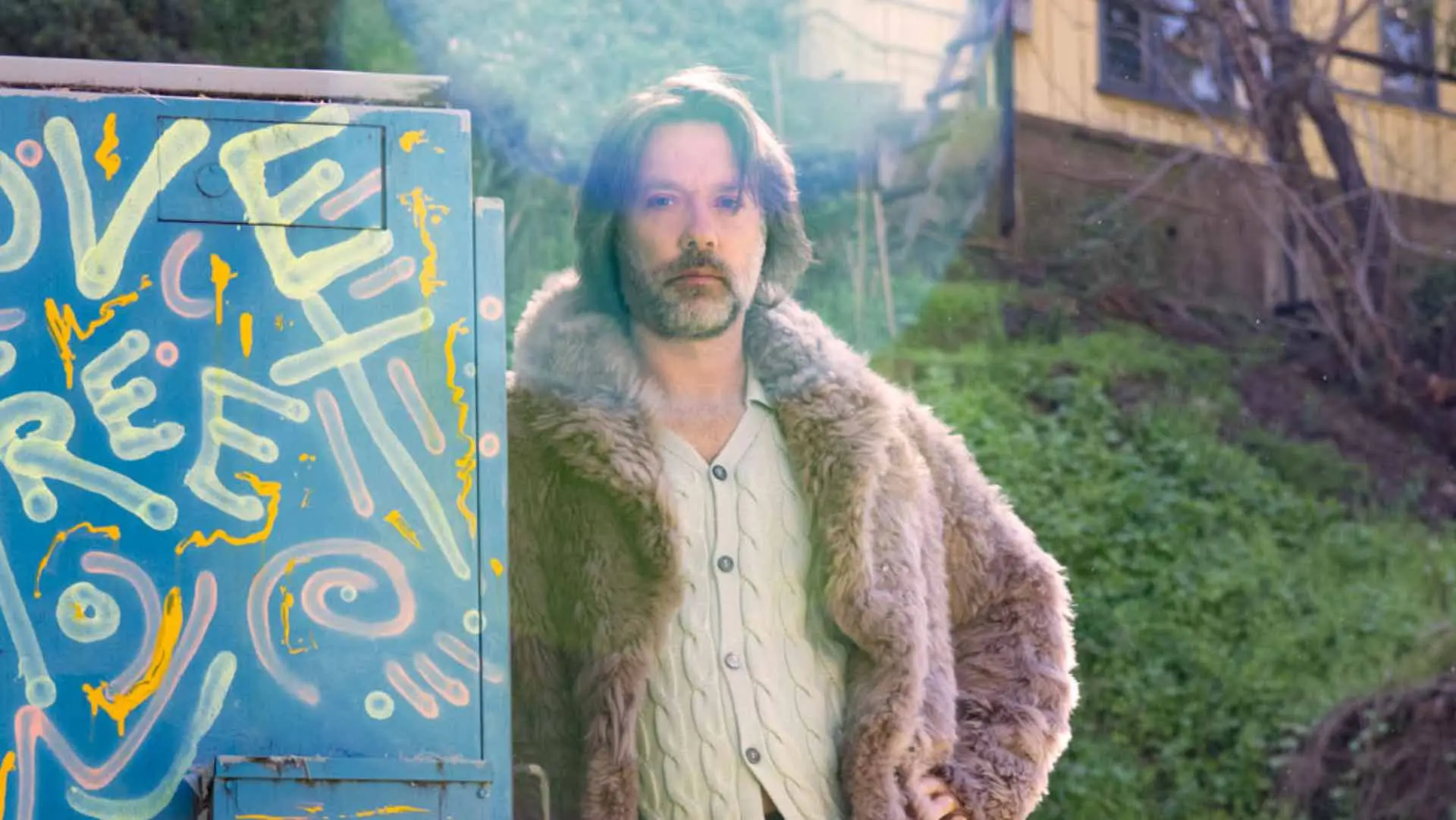
Over Zoom from his LA home on a sunny morning, he speaks to Attitude before his piano alongside some very tasteful taxidermy
This June, a very strange thing will happen in London: for one night only, Judy Garland will be back from the dead and performing in two different venues at the same time. One half of this spectral phenomenon will be via Jinkx Monsoon at the Soho Theatre Walthamstow, while the other will see Rufus Wainwright reviving his acclaimed Judy Garland tribute at the Royal Albert Hall.
Wainwright’s return is, in his own words, “a bit of a comeback”, a chance for a long-deserved London victory lap after a challenging few years. He is, it seems, back to reclaim his fundamentally theatrical brand of music.
Rufus Wainwright brings queer representation to theatrical music
Wainwright has been known for a lot of different things in his career: his famous and dysfunctional family, as the son of singers Loudon Wainwright III and Kate McGarrigle. There’s also his journey with addiction, but beyond that, he’s been a prominent gay figure in music for a quarter of a century. But Wainwright is less frequently celebrated for what truly sets him apart: he is a prism that refracts all music into its purest, queerest form. Through Wainwright, classical art is transmuted into not just a life-raft for precocious queers, but into an actual vessel for conveying the queer experience. This he can do just by touching a classic song in a cover (like his ‘Hallelujah’), by turning Shakespeare’s sonnets into the most beautiful, mournful songs for avant garde director Robert Wilson to stage in Berlin back in 2009, or in re-performing the work of a gay icon who was never one of us (like his Garland interpretations). Most recently, Wainwright has returned to this third form by revisiting the Gebrauchsmusik (socially conscious music) of Kurt Weill, the Hans Zimmer to Bertolt Brecht’s Christopher Nolan, in his latest album, I’m a Stranger Here Myself: Wainwright Does Weill.
When Wainwright discovered Kurt Weill
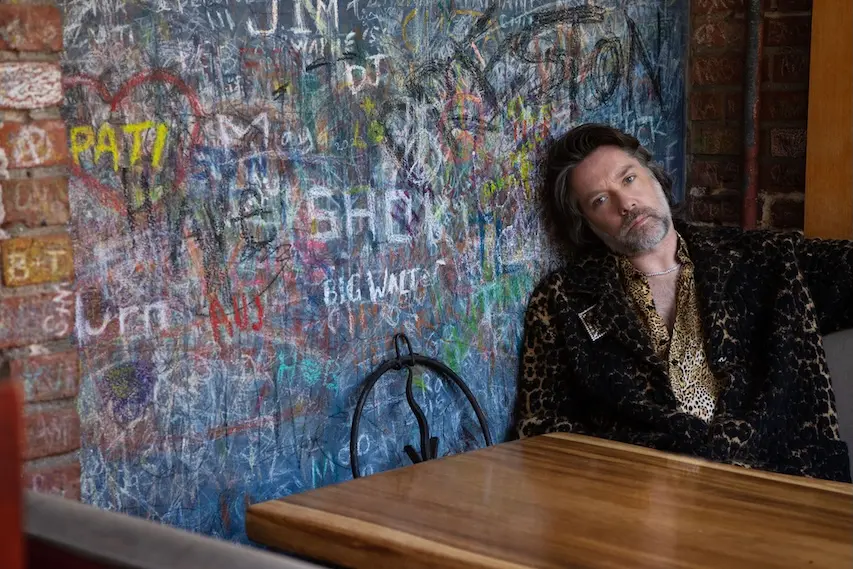
It was during the run-up to the release of the record in late 2025 that I sat down with Wainwright. Over Zoom from his LA home on a sunny morning before a workout, he sat before his piano alongside some very tasteful taxidermy. He first heard Weill’s music in his teens. “I discovered this album of Lotte Lenya singing Kurt Weill – I had no idea who that was; I was just obsessed with the cover of her smoking a cigarette,” he says, adding how the aesthetic and sound of Lenya and, more importantly, Weill, have “affected my songwriting deeply and my performance, in terms of making me more theatrical on many fronts”. Weill’s music, after all, was as agitprop as the Brecht plays he soundtracked: stories of creeping fascism, seedy ne’er-do-wells, and the consequences of apathy in the face of evil.
Reviving Weill for a new audience
So, when Wainwright had a residency at the Carlyle in New York in May 2023, he wanted to make sure it stood out. A tribute to Weill immediately came to mind, even if “most people thought it was the other Kurt Vile,” aka the modern American singer and songwriter who used to front The War on Drugs. Although Wainwright was amazed that Weill – the writer of ‘Mack the Knife’ and ‘Alabama Song’ – wasn’t more of a household name to others, the joy of introducing audiences to his work “felt like I was doing a great service”.
Some of the songs Wainwright explores are given definitive English versions for the first time in mainstream circulation. Take, for instance, Weill’s ‘Die Muschel von Margate’ (‘The Shell of Margate’). The song’s refrain of “shell” turns from a merchant advertising his conches to the name of the oil company that starts fracking the town into oblivion, before a Bolshevik uprising and bloody massacre. Subtle this isn’t, but these images of mass-extermination have never felt more relevant. “Weill’s work seems to pop up every few years, especially when there’s strife politically,” explains Wainwright. “It really speaks to the apocalyptic period we’re in at the moment.”
Wainwright’s music career
After the residency at the Carlyle, the Pacific Jazz Orchestra expressed interest in working with Wainwright. In March 2024, completely drained from a cataclysmic premiere for his new musical Opening Night in London (more on that later), and flying between London and LA, “totally exhausted and totally overworked”, he performed the songs with the orchestra after just one rehearsal. The show took place at the United Artists Theatre, “a gothic, beautiful theatre started by old Hollywood film stars”, Wainwright explains. “I could see Norma Desmond playing castanets in my imagination.” The product, which they recorded, amazed even Wainwright. “With that chaos and brutality, the recording ended up being emotional and raw. So it made sense we should release the recording.”
The music of Weill is more than just political; it also manages to capture a lot of the themes that run through much of Wainwright’s own career. In the song ‘It Never Was You’, Weill writes matter-of-factly and painfully of how he searched for traces of a lost loved one in the world, only to realise “it never was, anywhere, you.” For Wainwright, it perfectly summarised how he felt after losing his mother: “I think it was only after losing a parent that I could really understand that song so intensely – the sense of looking for someone who’s passed and not finding them.” ‘Youkali’, a French song by Weill, felt to Wainwright like it spoke to addiction perfectly. ‘Surabaya Johnny’ might be a heterosexual love story originally, but Wainwright found its story of “the destructive power of beauty” a perfect allegory for something “gay men are just as prone to. It gets me every time.” And then there’s Wainwright singing ‘Mack the Knife’ partially in its original German, which one can’t help but feel is a nod not just to Weill, but perhaps to Wainwright’s husband Jörn Weisbrodt too.
This is an excerpt from a feature appearing in Attitude’s March/April 2026 issue.
Get more Attitude