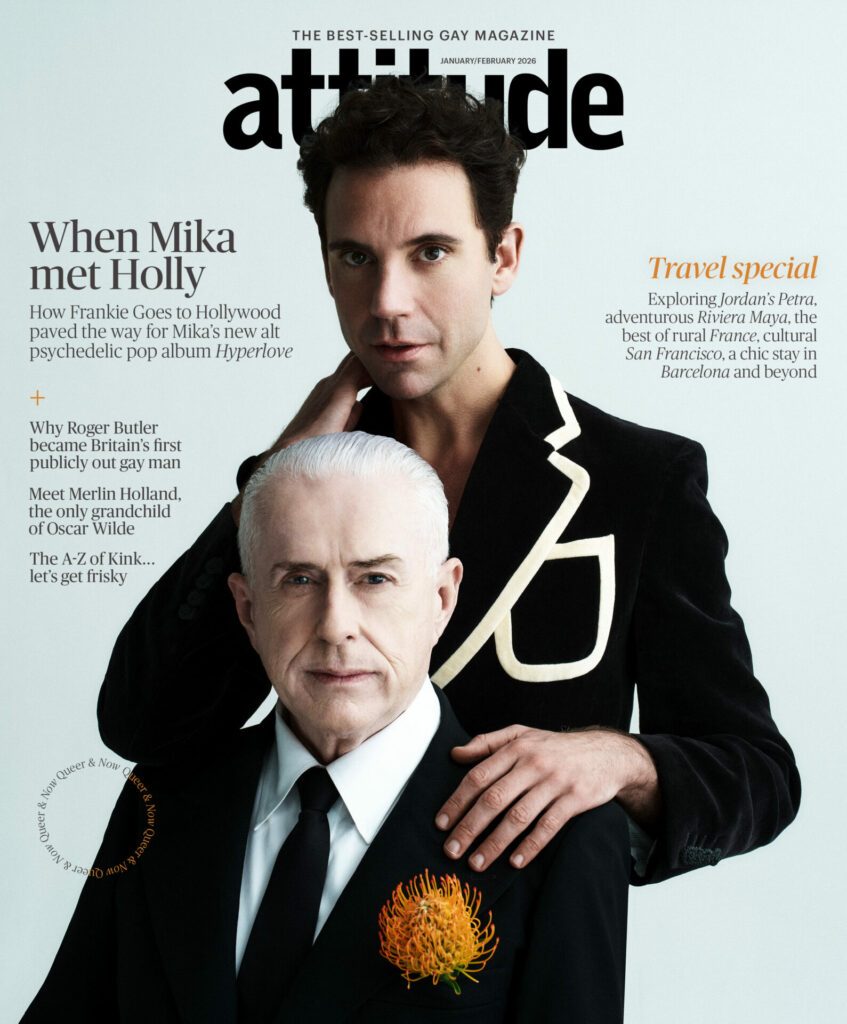
Damian Barr on his novel The Two Roberts: ‘Gay, Scottish, working class, it’s a full house – I’m in’ (EXCLUSIVE)
In association with Audible
By James Hodge

Damian Barr has been a darling of the writing scene since launching his Literary Salon in 2008, which revitalised the tradition of live events where readers can interact with authors. Not just a talented broadcaster and journalist – hosting The Big Scottish Book Club and writing for everyone from the Times to the Big Issue – Barr is a much-celebrated novelist. His memoir, Maggie and Me, won multiple awards, including Stonewall’s Writer of the Year, and his debut novel, You Will Be Safe Here, was critically acclaimed.
Now, Barr returns with a fictional retelling of the lives of The Two Roberts – two gay artists turned celebrities that time forgot. Starting from their humble beginnings, Barr tells a love story for the ages – from their rise to fame to their fall from fortune, the Roberts were always together.
Here, Attitude talks to Barr about the importance of queer storytelling, being a Scottish writer, and the power of art.
We also share our picks of the best recent reads, as well as our current favourite audiobook available on Audible.
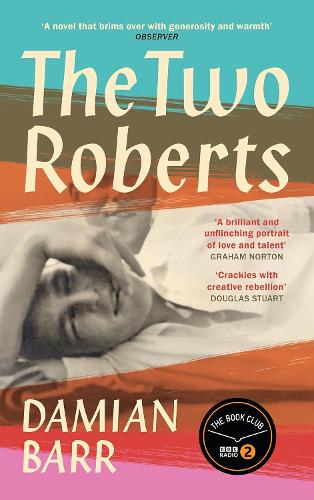
How did you discover the Two Roberts?
While online during the pandemic, I saw a painting called Two Women Sewing. I presumed it was a masterpiece by one of the European greats of art, but it turned out it was by a man called MacBryde. Immediately, the Scottish antenna went up – and as soon as you research Bobby McBride, you find Robert Colquhoun – euphemistically described as a friend who shared his studio.
My gaydar was going [off], so I had to research further, only to discover that they were working class. Gay, Scottish, working class, it’s a full house – I’m in. I wanted to learn everything about their lives.
Have you always been interested in art?
As a child, I loved looking at pictures. Pictures are full of stories – and as I began to speak their language and decode these stories. I felt like I was being let in on a secret.
What were your first impressions of the Roberts?
I wish I’d had a night out with them in Soho. They’d drink me under the table and then dance on the table top! They were wealthy but generous, bohemian – and devastatingly handsome.
Your previous work, Maggie and Me, was a memoir retelling your own story of queerness. This time, you’ve written a fictional account of the lives of two real gay men. What is the relationship between storytelling and queerness?
As queer people, we have to fictionalise our lives in order to stay safe. We try on different identities – whether sexual, social or political. It’s interesting seeing Alan Carr win Celebrity Traitors – it’s evidence that we have more of a seemingly natural aptitude for both the creation and consumption of fiction as a learned behaviour.
We need to both tell and hear stories in order to survive.
Was the process of writing a fictionalised account of the Roberts’ lives challenging?
The Roberts were hugely famous for a very brief time. Their peers — Francis Bacon, Lucian Freud, Dylan Thomas, Elizabeth Smart — have been more valued and their legacy lives on. But because the Roberts died young, because they were queer and working class, they haven’t been remembered in the same way.
That gave me a lot of freedom on the one hand because nobody really knows who they are, but equally, I wanted to ensure I respected the known facts of their lives as real people.
The novel reads first and foremost as a love story. What made you want to approach their story from that angle?
The Roberts were described by a critic as one organism. Others said that to meet them was not to meet two people but three – you met each of them and their relationship, and they invited you into the world they built together.
In some ways, this is quite an old-fashioned love story that we, as a community, deserve. I didn’t want to over-emphasise the tragedy of their lives. Tragedy is there – not because of their flaws but because of the world around them. The homophobia of the time takes a toll – on individuals, on relationships, on creative talent.
But despite this, they became rich and famous, photographed in Vogue and filmed by Ken Russell, and they achieved it all together. I wanted to celebrate not just their achievements but that lifelong relationship.
You place a lot of emphasis in the epilogue on the fact that they spend their whole lives together. Why does that touch you so much?
The concept of queer relationships and queer family are often not taken seriously. I wanted to show that lifelong love because it speaks to their commitment to each other. There’s something radical about portraying queer domesticity. It cuts to the heart of the homophobic claim that our relationships are meaningless, shallow, short term, dangerous.
Their love is also unconventional. You explore their debaucherous adventures with other men and, for a while, they live with a third lover…
Every generation thinks they invent sex. It’s a cliché but it’s true. The word “throuple” may not have been used back then, but it’s absolutely the case that three gay men were living in a flat with one bed for several years. What do we think happened there?
There is an exciting scene of queer writers based in Scotland. What makes Scottish literature in your opinion?
There’s a great tradition of doubles – the characters of Jekyll and Hyde, the contradictory nature of Miss Jean Brodie, the public world of Edinburgh and the criminal underbelly in Rankin. It is known as “Caledonian Antisyzygy”.
Here, we literally have two Roberts who are leading double lives – privately, gay and, publicly, friends.
What would the Two Roberts make of queer life today?
I think that they would recognise too much: the current cultural moment isn’t dissimilar with the rise of fascism and far-right politics being shared in the media daily. Perhaps the world has changed less than we thought it had.
But it is now legal to be gay, of course. They’d be out on the town. I think they’d hate what Soho has become. They’d be out partying in Hackney, or out in the cool queer sticks – maybe Margate. And of course, they’d be making the most of Grindr!
Your favourite book about celebrity?
Scabby Queen by Kirstin Innes – a book about an enigmatic imaginary pop star who blows up her own life. A similar downfall to my Roberts.
A historical novel that inspired your approach to writing?
The Secrets of Blythswood Square by Sara Sheridan. It’s about a family whose reputation is risked by the discovery of some explicit photographs in early 20th-century Glasgow.
What’s a love story that lives up to that of the two Roberts?
I’ve always considered Alice Walker’s The Colour Purple to be the most beautiful love story.
Recommended Reads
My Lie Your Lie by Paul Clayton
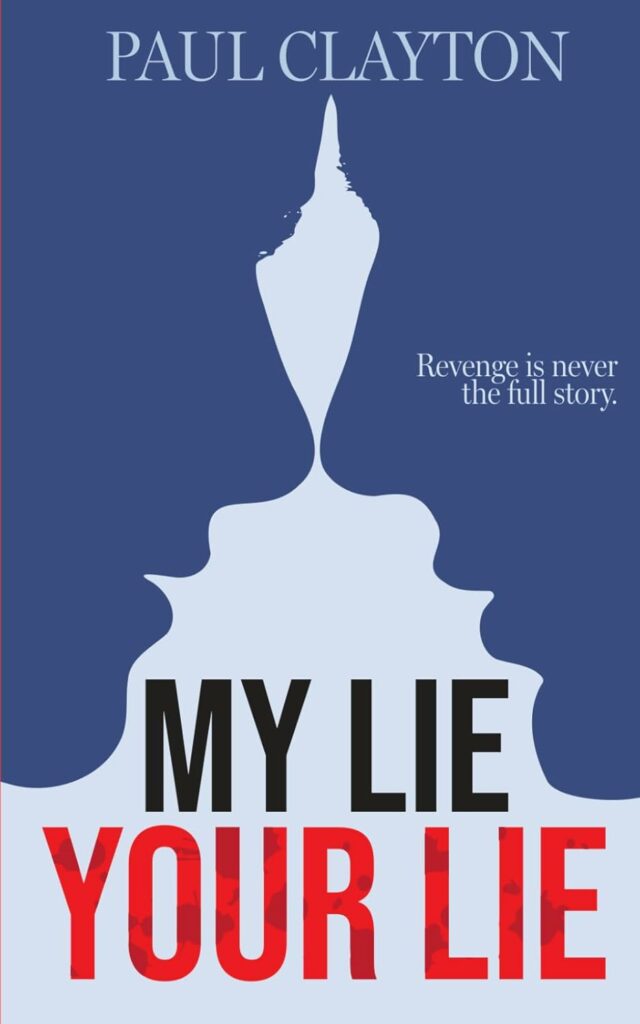
The revenge tragedy genre goes all the way back to the Middle Ages, and love gone bad has become a mainstay in contemporary thrillers. Enter Paul Clayton with a twist – what if that love gone bad is between two men, Patrick and Barney, and moreover, the gay protagonist is left for a woman, Marcella? In Patrick, Clayton creates one of the most fascinatingly dislikable anti-heroes in recent LGBTQ+ fiction. He puts his own spin on the genre by slowly pulling out to reveal just how deep-set the rot is in this disastrous romantic triangle. Who is the real villain in this web of lies, deception and betrayal?
I’m Fine by Richard Hall
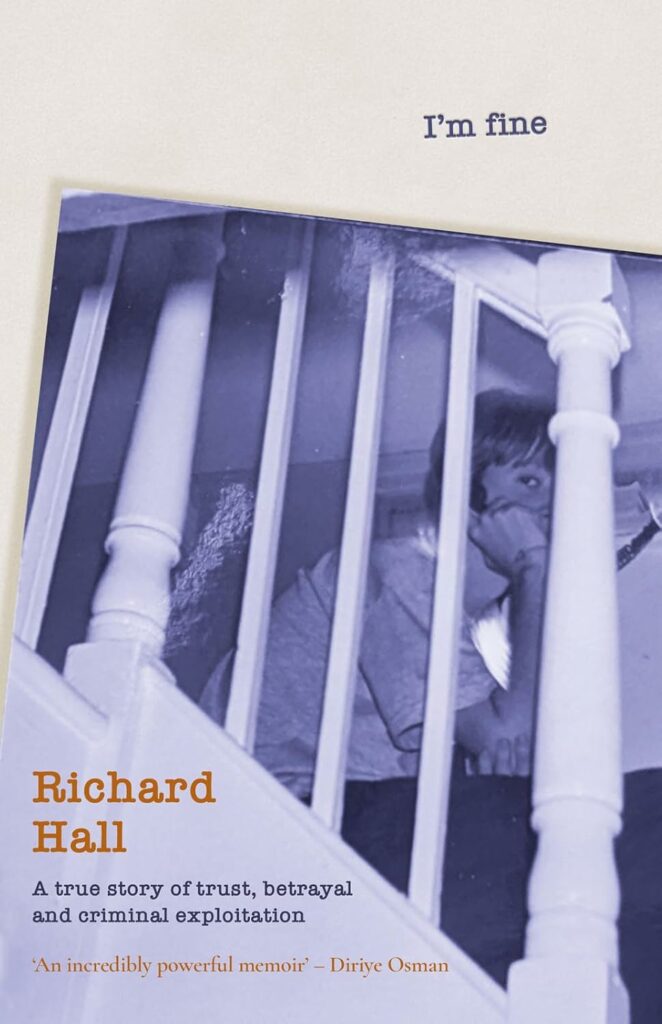
This visceral read, a true story about the abuse of the author by his counsellor, was at once so moving that I wanted to put it down and process its contents, but equally so gripping that I couldn’t stop reading. Telling the tale of the coming-out years of a vulnerable teenager, narrator Richard not only has to navigate the challenges of a tense family home and bullying at school, but in his liberation is manipulated and exploited by the queer men around him who are supposed to offer him community. A testament to the author’s inner strength, this is honest storytelling at its finest.
Seven Days in Tokyo byJosé Daniel Alvior
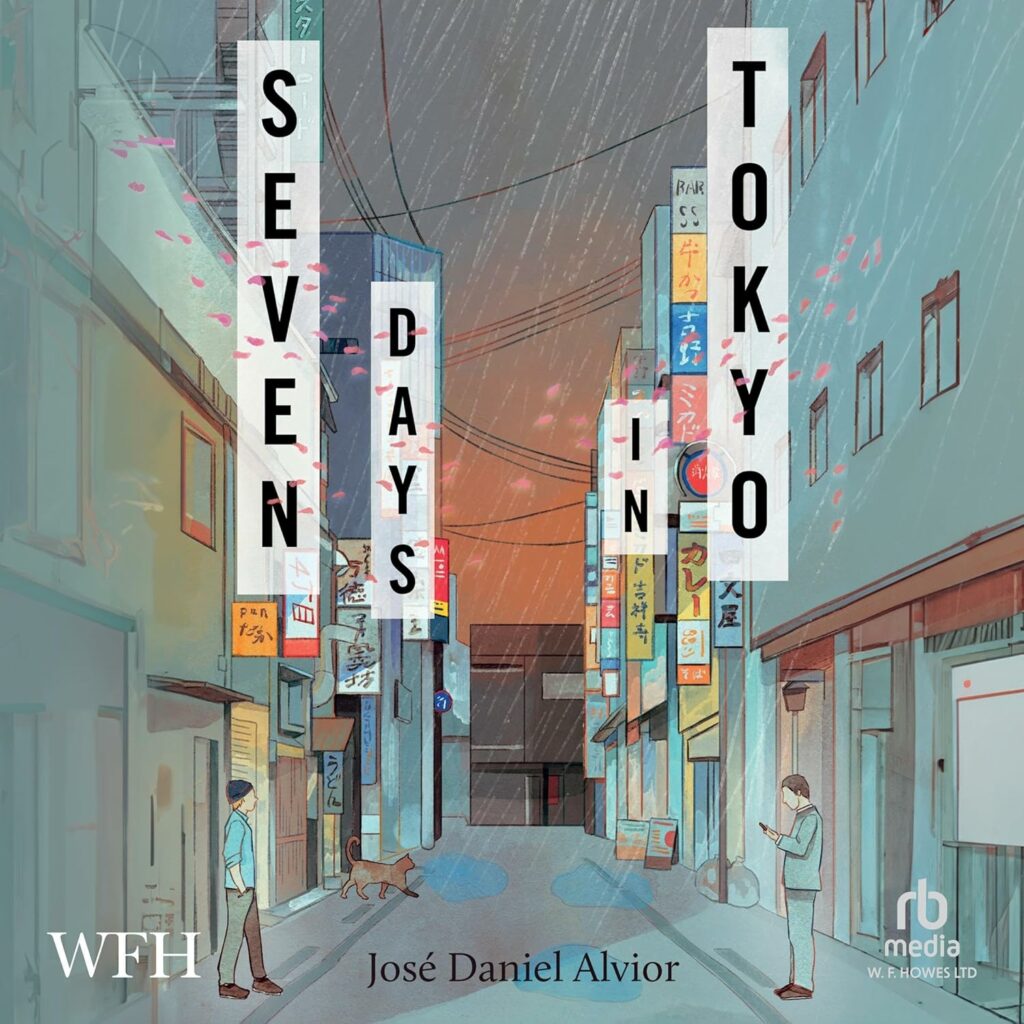
On reading the blurb, Seven Days in Tokyo gives the impression of an international love story. After the perfect one-night stand, Louie decides to leave Manhattan for Tokyo and explore his connection with Landon, who lives on the other side of the world. Will romance transcend distance?
However, the novel swiftly becomes more: a reflection on what it means to be in a relationship today, when romantic connections feel more complicated than ever. What at first appears to be a story of boy-meets-boy is quickly made complex: Louie is in an open relationship instigated after infidelity. What does it mean for him and his partner and, equally, for Landon? The surrounding cast of characters only further the entanglement of what it means to love: through affairs, double lives and settling.
Apart from an exploration of relationships, the novel is also a love letter to Japan, which makes a poetic backdrop to this thought-provoking and reflective read.
New to Audible? Get a free trial and enjoy bestselling audiobooks, exclusive Originals, and more on the Audible website.
This is an excerpt from a feature appearing in Attitude’s January/February 2026 issue.
Subscribe to Attitude magazine in print, download the Attitude app, and follow Attitude on Apple News+. Plus, find Attitude on Instagram, Facebook, TikTok, X and YouTube.