LEGACY’s Love Pride Ball returns to Cape Town’s ballroom scene as co-founders reflect on the vital role of chosen family (EXCLUSIVE)
"In a society where queer and trans individuals can face marginalization, the Floor becomes a sacred stage," says co-founders Léa Debbah and Rori Bingham
By Aaron Sugg & Callum Wells
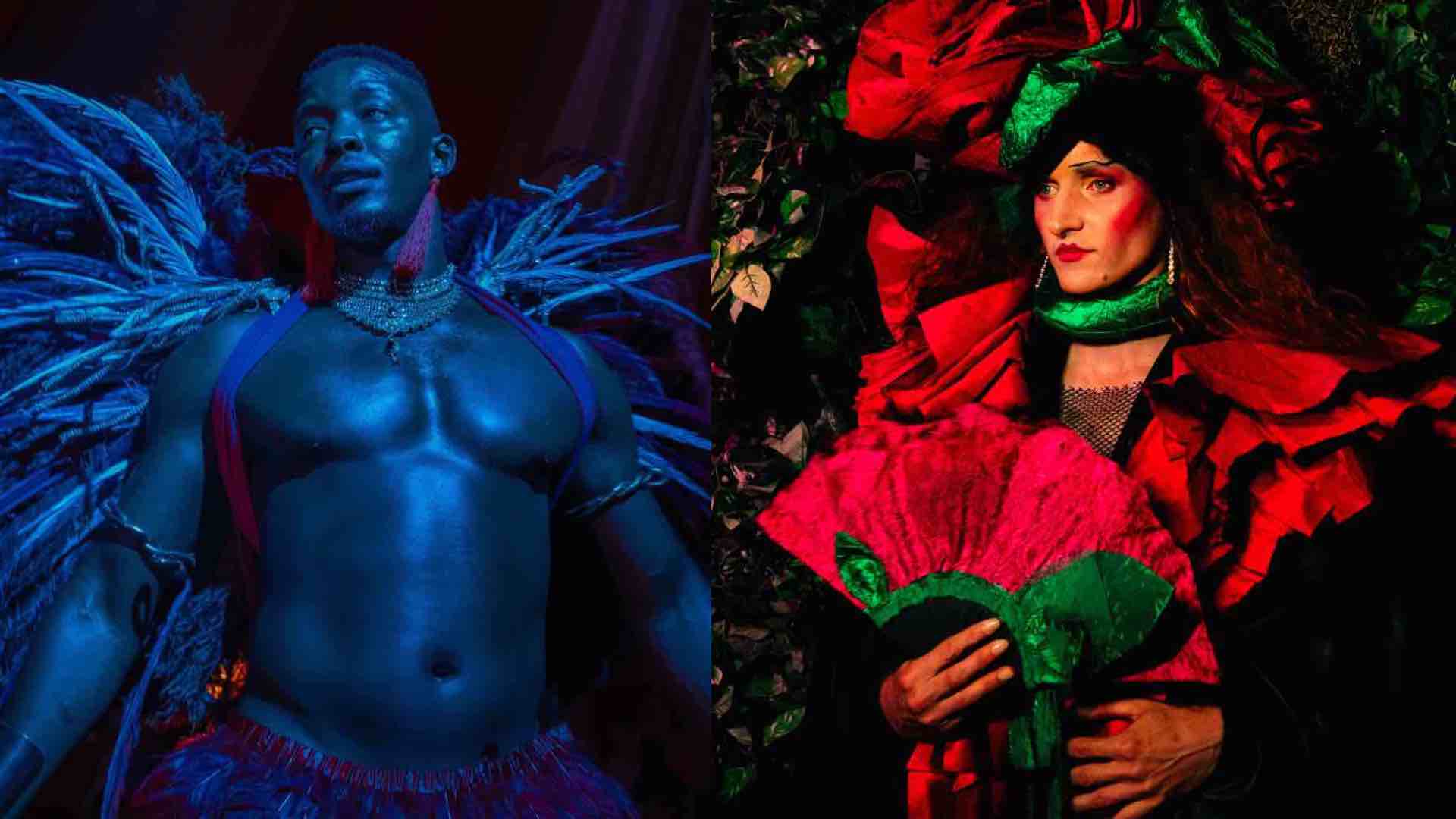
LEGACY returned to Cape Town on 7 February 2026, with the Love Pride Ball at The Old Biscuit Mill, opening the city’s cultural calendar with a celebration of ballroom. Now in its fourth year, the platform has become a monumental event of the South Africa’s ballroom scene, honouring community on a global and local level.
Ballroom was established in New York in the late 1960s by Black and Latino LGBTQ+ communities, providing a safe space for creatives, dancers, and chosen family. It is a vibrant competition, with participants judged on voguing, walking and fashion. Beginning as a private, underground celebration born out of necessity for the trans and queer community, South Africa’s ballroom movement has since flourished into a celebrated, multi-cultural phenomenon.
Ahead of the event, co-founders Léa Debbah and Rori Bingham reflect on LEGACY’s roots, chosen family, and why ballroom remains a vital space for queer visibility in Cape Town today.
What is LEGACY, and why is ballroom such an important space for Cape Town’s queer community right now?
Léa and Rori: LEGACY is Cape Town’s premier Ballroom event series, created as a bold and beautiful love letter to the late Kirvan Fortuin (Kirvan Le Cap), a pioneer of African Ballroom culture and the founding mother of the House of Le Cap. Co-created by Rori Bingham and produced by Edition Events, LEGACY is a safe, joyful, and affirming space for queer, trans, and gender non-conforming communities. It blends performance, fashion, music, and storytelling to celebrate identity, creativity, and chosen family. Each event is part of a living archive, honouring Kirvan’s visionary legacy, nurturing the local Ballroom community, and creating a platform for Cape Town’s queer voices to be seen, heard, and celebrated.
Ballroom itself is vital for Cape Town’s queer community because it is more than entertainment, it is a space of visibility, empowerment, and belonging. In a society where queer and trans individuals can face marginalization, the Floor becomes a sacred stage where people can fully express themselves, claim pride in their identities, and connect with a supportive chosen family. It fosters mentorship, celebrates artistry and fashion, and bridges Kiki and Main scenes to build community, educate audiences, and preserve cultural history.
In the current moment, Ballroom in Cape Town is both a creative outlet and a social lifeline. It gives the queer community a space to be celebrated authentically, to practice self-expression without fear, and to lay the foundation for future generations of artists, performers, and leaders. LEGACY, as the leading platform for this culture, ensures that the vibrancy, resilience, and joy of Cape Town’s queer community are both visible and valued.
How does South Africa’s ballroom scene differ from what people might recognise from TV and mainstream pop culture?
Léa and Rori: The South African ballroom scene is still young, and one of the biggest differences from the US is how we walk and the categories we offer. Most balls currently feature between three and five categories, with the most popular being Runway, Best Dressed, Sex Siren, Realness, and Vogue Performance.
Because our scene is relatively small and still developing, we place equal emphasis on both Kiki and Main events, whether at a Kiki function or a mainstream ball. We intentionally create space for Houses, acknowledging their presence and educating audiences about what Houses are, what ballroom represents, and why this culture matters. At this stage, our focus is on building, teaching, and laying the foundation for future generations.
South African ballroom is deeply community-centred. While TV shows and mainstream pop culture often focus on glamour, drama, or celebrity, our balls prioritize care, connection, and inclusion. They are safe spaces for queer, trans, and gender non-conforming people to express themselves, celebrate identity, and belong. Participation and self-expression are just as important as technical skill or spectacle.
Another defining feature is the influence of South African music and movement. Our DJs are significant figures in the local music and entertainment industries, so the sounds of our balls carry the pulse of local culture. This shapes the energy, style, and atmosphere across both Kiki and Main events. For example, our African Performance category draws from local dance traditions, incorporating rhythms, styles, and movement vocabularies unique to South Africa.
In contrast, the US ballroom scene is more established, layered, and rooted in decades of history. While we honour and learn from these traditions, the South African ballroom is still in a stage of growth, developing its own identity while guided by international inspiration.
In short, the South African ballroom is distinctly local, deeply communal, and purposefully inclusive. It fuses global ballroom structure with South African expression, creating a scene that celebrates identity, resilience, artistry, and the power of chosen family.
What does the House structure mean in practice for the people who walk the floor?
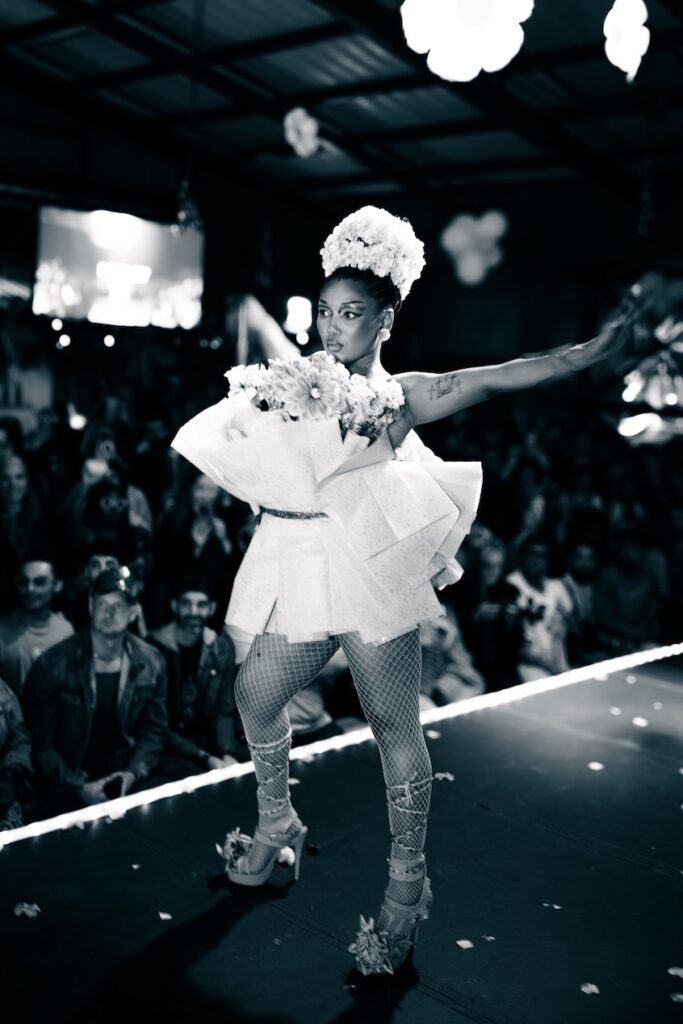
Léa: In Ballroom culture, a House is like a chosen family, offering support, mentorship, and community to its members. For the people who walk the floor, this structure provides guidance, encouragement, and a sense of belonging. Each House has leaders, often called “Mothers” or “Fathers,” who mentor newer members, help them develop their performance and fashion skills, and offer emotional and social support both on and off the floor.
When someone walks for a House, they are not just competing for themselves,they are representing their House, carrying its name, reputation, and legacy. This adds a layer of pride, responsibility, and motivation, as every performance contributes to the House’s collective honor. Houses also foster collaboration and creativity, with members learning from each other, sharing ideas, and supporting each other during competitions and events.
In practice, the House structure transforms Ballroom from a solo performance into a community-centered experience, where individual skill, self-expression, and artistry are amplified by belonging, guidance, and shared history. For many, being part of a House is just as meaningful as winning trophies, it’s about family, mentorship, and being seen in a supportive space.
Can you explain the difference between Mainstream Houses, the Kiki scene and 007s?
Mainstream Ballroom Houses:
* Mainstream houses are legacy-driven, competitive, and deeply community-rooted.
* Formal leadership structures (Mother, Father, etc.)
* Focus on major balls, lineage, and long-term house reputation
* High-stakes categories with trophies, prizes, and status
* Function as chosen family systems, offering mentorship, discipline, and cultural stewardship
* These houses uphold ballroom tradition while shaping its future through excellence and representation.
Kiki Houses:
* Kiki houses are youth-centered, accessible entry points into ballroom culture.
* More playful, experimental, and flexible in structure
* Lower-pressure environments focused on growth and confidence
* Categories are often freer and less rigid
* Designed for learning, social connection, and creative exploration
* For many, the kiki scene is the gateway into mainstream ballroom, though some choose to remain within the kiki space long-term.
007 (Independent Walkers):
* A 007 is a ballroom participant who is unaffiliated with any house.
* Can walk categories, compete, and win independently
* The term references James Bond’s Agent 007, the solo agent
* Fully respected within ballroom culture
Why someone may choose to be 007:
* They are new to ballroom and exploring the scene
* They prefer independence without house obligations
* They are transitioning between houses
* They want to build a personal reputation before committing
Cultural note:
* Strong 007s who consistently perform well often attract attention from houses and may be invited to join. Others choose to remain independent permanently and still make significant cultural impact.
LEGACY’s approach:
* Many participants move fluidly between kiki, mainstream, and 007 spaces.
* LEGACY honours and supports all three, ensuring equal respect, visibility, and opportunity across the ballroom ecosystem.
What makes The Love Pride Ball stand out within LEGACY’s calendar?
Léa: The Love Pride Ball stands out in LEGACY’s calendar as the first ball of the year, setting the emotional and cultural tone for everything that follows. It marks a new beginning for the community, grounded in love, pride, and reconnection after time apart.
Centred on themes of love and pride, this ball intentionally moves beyond competition to focus on connection, intimacy, and shared humanity. Through relationship-driven categories and interactive elements like the speed-dating experience, it invites participants and guests to engage not only as performers, but as lovers, partners, friends, and chosen family.
By bridging Love Month and Pride Month, The Love Pride Ball celebrates queer love in all its forms: single, partnered, open, complicated, and self-defined. Within LEGACY’s calendar, it is both a welcome home and a declaration: a reminder that ballroom is built on care, visibility, and pride as much as excellence on the runway.
Why is “the floor” such a powerful and symbolic space in ballroom culture?
Rori: In Ballroom culture, the Floor is where you make your statement. It is a sacred and symbolic space, created by marginalized Black and Latinx queer individuals, where self-expression and self-identity take center stage. On the Floor, participants compete in categories such as Vogue Femme, Realness, Sex Siren, and Runway, battling not just for trophies or status, but for the honor and pride of their Houses.
The Floor is more than a stage, it is a safe and empowering space where performers are celebrated, adored, and uplifted by their community. It is where artistry, courage, and identity intersect, and where every movement communicates skill, personality, and personal narrative.
It is also a place of connection and legacy: Houses demonstrate cohesion, mentorship, and pride, while the audience witnesses, affirms, and engages with the performance. In essence, the Floor is where Ballroom becomes both performance and sanctuary, a space of liberation, visibility, and community affirmation.
How do you balance honouring ballroom’s roots while building something distinctly South African?
Rori: South Africa maintains active connections to the global Ballroom community, particularly in the United States, Europe, and South America. These relationships are reflected through local chapters of several major Houses, including the Iconic House of LaBeija, the Iconic House of Ninja, the Trailblazing House of Vineyard, and the Iconic House of Mizrahi. Their presence supports knowledge-sharing, mentorship, and helps preserve Ballroom’s historical traditions.
At the same time, the South African scene is building its own distinct cultural identity. One key example is the African Performance category, created by Kirvan Fortuin. This category integrates South African musical genres, Amapiano, Gqom, Kwaito, and Afro House, with local dance styles such as Pantsula, Gwara Gwara, and Vosho, highlighting the vibrancy of South African culture within the global framework of Ballroom.
By combining these international ties with locally specific categories and cultural expression, South African Ballroom both honours its roots and asserts its own unique voice on the global stage.
What do you hope first-time attendees or readers unfamiliar with ballroom take away from the event?
Léa: For first-time attendees or readers unfamiliar with Ballroom, we hope they leave with a sense of community, empowerment, and joy. Ballroom is more than performance; it is a space where marginalized identities are celebrated, affirmed, and uplifted. The Floor is a sacred space where self-expression, artistry, fashion, and creativity take center stage, and where participants are not just performing, they are claiming visibility, pride, and agency.
We also want attendees to experience how kindness and care permeate the scene, from staff to participants, everyone is supported and welcomed into the space. Beyond the artistry, guests can see how Ballroom blends tradition with local culture, from voguing and runway, reflecting music, movement, and identity.
Ultimately, we hope first-timers leave feeling inspired, included, and celebrated, recognizing that Ballroom is a space for everyone, whether you walk a category, cheer from the sidelines, or simply soak in the energy of creativity, fashion, and chosen family.
Get more from Attitude