
Bebe Rexha: ‘I’ve performed at Heaven. I call it Hell because it’s so f*****g hot in there!’ (EXCLUSIVE)
As she gears up to release her latest album Dirty Blonde, Rexha chats to Attitude about queer clubbing, mental health, major label frustrations and making music on her own terms
By Callum Wells
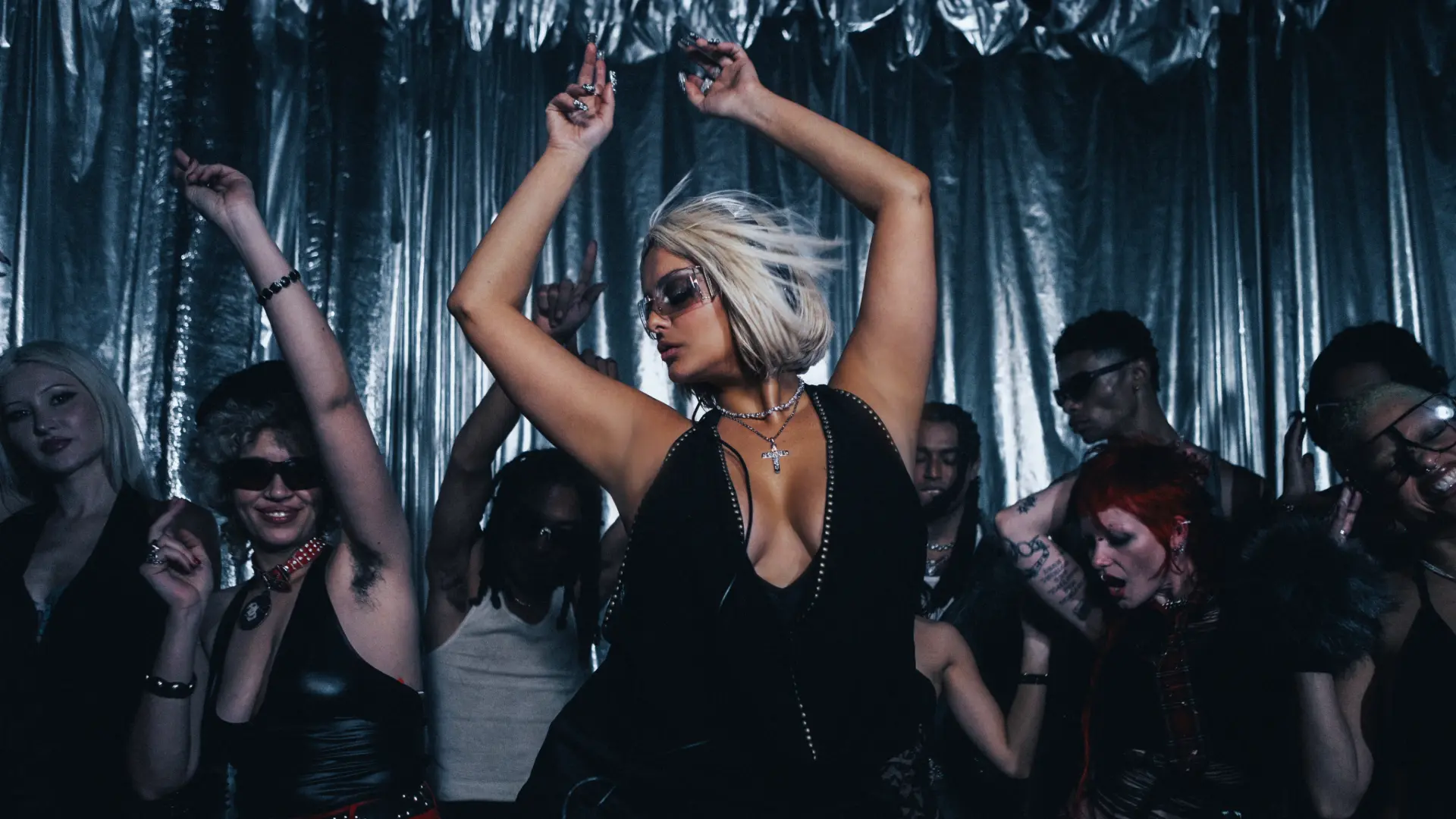
Bebe Rexha is pointing at a wayward bra slung across the floor of her Rosewood London suite.
“This represents my life right now,” she laughs. But as I assure her I’ll “keep that off the record”, she quips back, “No, actually, I don’t care.”
That pretty much sets the tone for the next half hour with the ‘Meant to Be’ hitmaker, who is exactly as tactile and disarmingly open as you’d hope. One minute she’s offering me chocolate biscuits to take home, the next she’s asking my star sign and declaring that she usually gets on well with Cancers (“You guys are sensitive.”).
A few hours later, she’ll be on the Eurostar to Paris, but for now Rexha is curled up on the sofa chatting about queer clubbing, mental health, major label frustrations and the freedom she’s found making music on her own terms.
It’s a fittingly unfiltered moment for an artist entering what she describes as her most liberated era yet. On her upcoming album Dirty Blonde, Rexha leans fully into vulnerability, dancefloor escapism and emotional honesty, while reflecting on the burnout and industry pressures that left her feeling “in a cage” during her years in the major label system.
The result is a record shaped as much by queer nightlife and impulsive dancefloor moments as it is by anxiety, heartbreak and the hard-won confidence that comes from finally, in her words, “stopping giving a fuck”.
Attitude: How does it feel releasing Dirty Blonde as your first album as an independent artist with EMPIRE?
Rexha: Exciting. Scary. I guess. I know that’s terrible, but that’s how I feel.
How has working independently changed things compared to being on a major label?
When you’re on a major label you usually have to try to get everyone behind one project and then behind one song. Sometimes that’s not always your choice. I was always part of the songwriting process, but your first choice might not be what they think will work at radio or be a hit or what they like in general.
At an independent label, they kind of let you guide the process more. With this approach, with the independent label, it’s like we’re taking a more non-traditional approach, which is way more fun, way more inspiring, and just thinking outside the box is kind of how I live my life. So it’s been so much more exciting and so much more fun.
Have there been songs in the past you really had to fight for?
My first song I ever put out on Spotify and stuff was ‘I’m Gonna Show You Crazy’, an older song. I really wanted that to be a single at the time, but I remember the label saying it was too depressing or too dark to talk about, or people were not ready to hear about mental health.
This was in 2015. To be talking about mental health like that – things have changed. I remember Logic came out with [1-800-273-8255] and that was so important. I wish they would’ve let me put mine out properly as a single. It was a single, but it was never pushed to radio or promoted. It was more like a Spotify drop, an online drop.
Where does your openness about mental health come from?
My struggles. When I was younger and going through a lot of stuff, I couldn’t really put a name to anxiety or depression. I just thought that was a normal thing. I remember from being super young always struggling and feeling like not 100%.
Then when I found out what I was struggling with and how to work with it, it made my life so much better. So for me I just like to be outspoken because if I could help one person it’s worth it.
I think growing up, especially in the ’90s and 2000s, it was always about looking perfect, being untouchable, all of the above. Times have changed and there’s a lot going on in the world and I feel like being transparent is important to me.
Have there been any standout fan interactions over the years?
I actually had a fan come out to his mother in front of me. It was after a show outside in the street. All the fans lined up and he was shaking, he was so nervous. I think it might’ve actually been in London.
His mother was like, “Oh love, I’ve always known, but I’m so happy that you could tell me. I still love you.” That was special.
I have fans message me all the time saying they’re going through rough times and depression. The best I can say is keep your head up and make sure you speak to a doctor. I’m not a medical professional, you’ve got to be careful.
It’s such a fine line because I want to be able to help them, I’ll always give advice, but I don’t want God forbid something to happen and then feel like I have to live with that for the rest of my life. It’s a really scary thing.
You’re dropping visuals for every song on the album. Why was that important to you?
I feel like now, in the age we’re at, we always have our phones in our hands. I’m the ultimate ADHD queen. I’m always pressing things, I’m watching videos on two-times speed.
I just feel like we’re in such a different landscape right now with online, social media that for me, I would love to see visuals of what the artist was thinking in their head, just to connect to the song.
I feel like that’s fun. Fans can watch it, take clips and feel connected to the record and see how I envision it.
How much did queer club culture influence this record?
One thing I’ve always loved about the queer community is that I felt like I was never judged. I’ve been around people where coming out came super easy to them and other people where it’s still a struggle. I even know people to this day who still have not come out and I know what they go through and I try to be there for them.
I don’t know if it’s the heartache and all the heaviness that comes with it because even to this day, while queer people are being celebrated more than ever, when I’m around queer people it’s always a celebration. Music can uplift us and I love partying with queer people, karaoke, dancing, watching YouTube videos.
One thing I love with this record is that I was able to be vulnerable on a lot of the songs, which I feel like the LGBTQ+ community has always loved me for, whether it’s speaking about feeling insecure in my body or unrequited love. But then there’s also the fun dance stuff like ‘I’m The Shit’ and ‘Hysteria’. Sometimes you just want to have fun. Especially when I go to a gay club, I always have the best time.
Do you have favourite queer venues?
I’ve performed at Heaven. I call it Hell because it’s so fucking hot in there. They need to sort the air con out!
Back home, we’ll usually just bar hop in West Hollywood. I took my mum and my aunts to Flaming Saddles once and we had the best time because it’s cowboy-themed.
The last time I went to The Abbey I just wanted to sit and get a drink, but it turned into a meet-and-greet. Eventually I was like, “Babes, let’s just dance.”
What lessons from the past few years shaped this album?
To stop reaching for approval. I think I was so frustrated with where I was at five, six, seven years ago.
When COVID hit there was a halt in my career and I felt like I wasn’t a priority in the major label system. I felt really sad and I got to points where I wasn’t happy. I felt like no matter what I did, I was in a cage. That’s the worst feeling. It’s kind of like being in a bad relationship but you can’t leave.
I got to a point where I didn’t know what to do anymore and it felt like desperation. I don’t like when artists reek of desperation. I might come off cringe sometimes, but that’s normal.
I just kind of stopped giving a fuck. That’s why I can make fun of all the stuff online, whether they want to call me fat or in the Khia Asylum or whatever. I don’t mind if people are talking about me. My mum says, “Look, I’m just an old lady from Staten Island. Nobody talks about Bukurije Rexha.”
I’ve learned to let go. It’s still a journey, but I’m working hard and doing the best I can right now without killing myself trying to force everything. I’m just letting the world take me where it wants to and hopefully people connect to it.
What does success look like for you now?
I want to travel more. I love travelling and being around the people I love. I’d love to perform sold out shows, but I also just want to see more of the world.
I’d love to go to Antarctica. The way to get there is apparently a nightmare and I hate flying, but I’ve done research on it. I’d also love to go to Morocco. There are so many places I want to go.
How important was it to bring your Albanian heritage into the album?
Really important. It’s part of who I am, but I also feel like I can go even further in the future. I want to incorporate more of those sounds. I thought it was really important for me to finally do something like that.
You’ve spoken before about regretting selling certain songs. Is there anything on this album you’re especially glad you kept for yourself?
‘The Way I Want You’. I love that song so much. I love the way it starts on the organic guitars and then builds into a rhythmic verse, then these big rock chords and then turns into a dance song. I feel like that’s me encapsulated sonically. That’s how my brain works.
It’s also about unrequited love and needing to speak to a therapist a billion times a day. I just love that song. It’s one of my favourites on the album.
Will you continue writing for other artists too?
I have so many demos and stuff. I’m just so busy right now that it’s hard for me to even send things out. I’ll still send stuff sometimes.
Maybe in the future when things calm down a bit. I’m always open. I’ll never stop songwriting no matter what happens with my performing career or artist career. That’s one thing they can’t take away from me.
Dirty Blonde is released 12 June. Pre-order here.