
Exploring the Californian desert beyond the glamour of LGBTQ+ hotspot Palm Springs
There’s a lot more to Palm Springs than sunshine, desert, hot springs, and Old Hollywood glamour. Instead, expect spectacular scenery, fascinating history and a truly inclusive vibe
By Ashley Davey
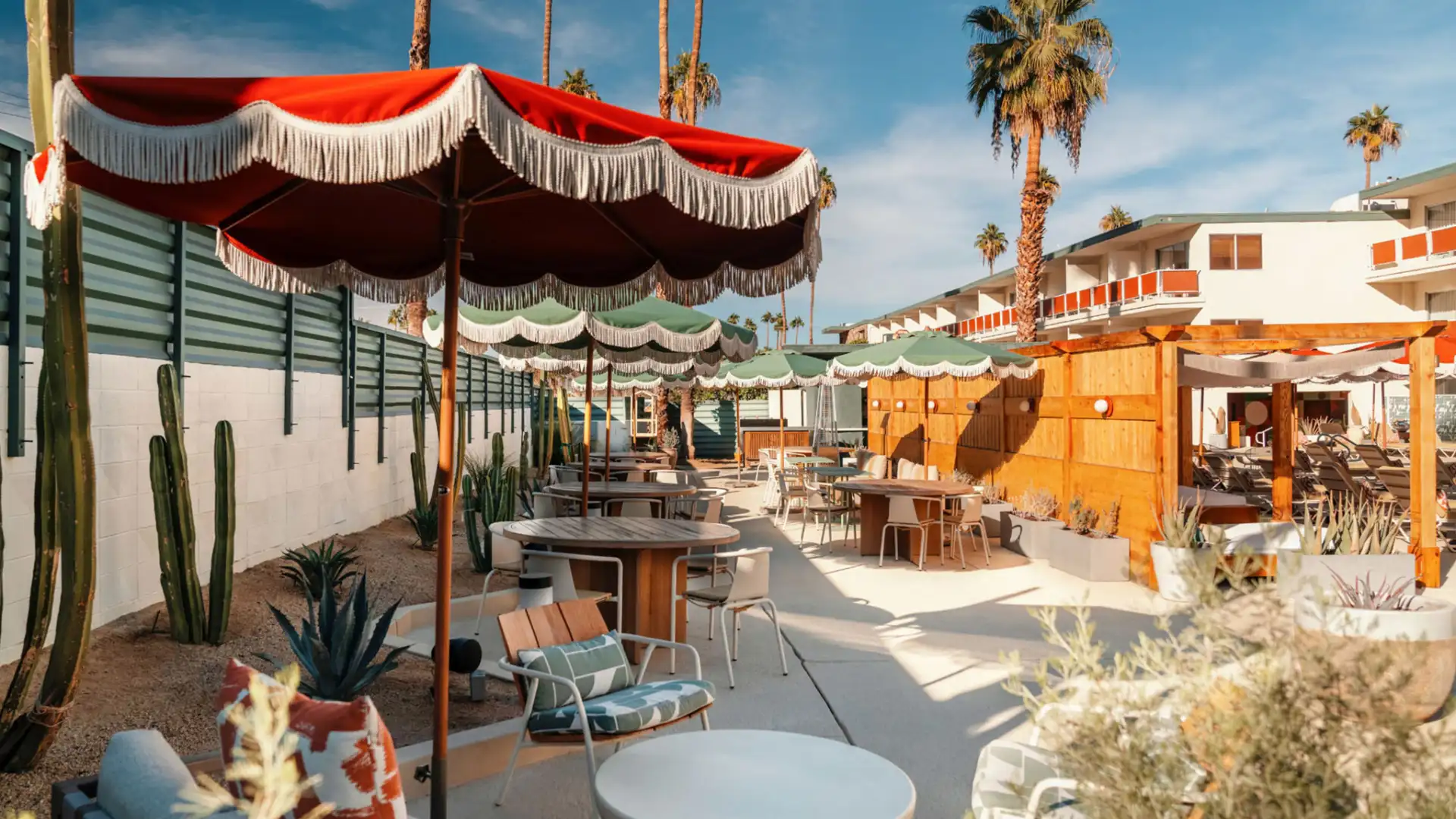
Palm Springs has long been considered a place of pilgrimage for LGBTQ+ travellers. Over decades, this patch of Californian desert has evolved from a closeted Hollywood escape into one of the most established queer communities in the United States. But beyond the sunshine, striking mid-century architecture, legendary pool culture and nightlife lies a destination that is home to some of America’s most spectacular natural landscapes, as well as fascinating Indigenous history.
After a well-needed rest at Royal Sun Palm Springs hotel, we’re up early for a whistle-stop introduction to the city, and there’s no better guide than local historian and pop culture enthusiast Charles Phoenix. His Super Duper Double Decker Bus Tour offers a captivating overview of the city’s colourful past, from Elvis’s honeymoon hideaway to larger-than-life personalities, with the kind of insider knowledge and infectious humour only a local can bring.
Agua Caliente Cultural Museum in Palm Springs
After the tour, our next stop is the Agua Caliente Cultural Museum, which sits in the heart of downtown Palm Springs. While many visitors associate the city with Hollywood glamour, few realise that Palm Springs occupies the ancestral homeland of the Agua Caliente Band of Cahuilla Indians, whose connection to this land dates back thousands of years.
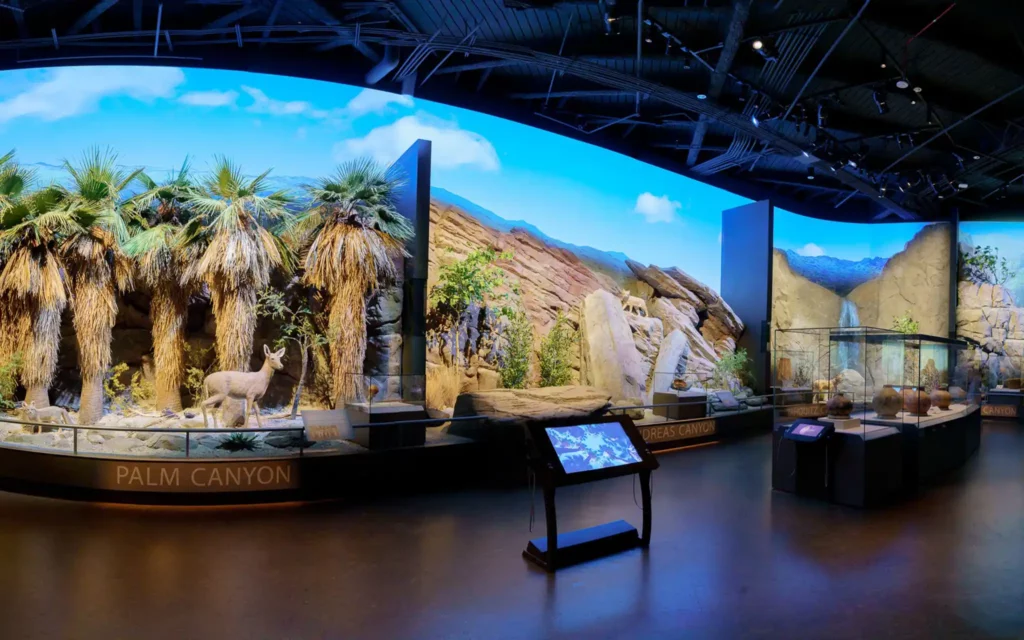
The museum does an outstanding job of bringing that history to life. Interactive exhibits condense a rich history into an informative celebration of how the Agua Caliente people thrived in one of North America’s harshest climates, utilising the region’s natural hot mineral springs as both a practical resource and place of healing.
Unwinding at Séc-he’s natural hot springs
This story continues just a few minutes away at The Spa at Séc-he, which is fed by the same hot mineral spring water that has flowed beneath the desert for more than 12,000 years. The spa blends the Agua Caliente ancient tradition with modern wellness, and we spend the rest of the afternoon soaking in naturally heated pools, halotherapy salt caves, and a eucalyptus steam room. After the flight, this meditative experience is the perfect welcome and immediately changes my perception of Palm Springs. This isn’t simply a luxury Californian retreat – it’s a place with deep cultural roots.
Our evening takes an unexpected turn with a trip to Living Out, a residential community created for active LGBTQ+ adults over 55 years old and their allies. As a young traveller, Living Out offers an intriguing glimpse into the future of LGBTQ+ living – a chosen community built around inclusivity, connection and authenticity. It’s refreshing to see a space where growing older isn’t about compromise, but living proudly among a community that truly understands you. The visit continues with a private screening of FORKED, a remarkable film exploring identity and family, before a curated dinner at Alice B restaurant by award-winning chefs Susan Feniger and Mary Sue Milliken.
Palm Springs Aerial Tramway into the mountains
The following morning offers another surprise. Within minutes of boarding the Palm Springs Aerial Tramway, the desert landscape transforms dramatically. The world’s largest rotating tramcar climbs more than 8,500 feet from the desert floor onto Mount San Jacinto State Park, revealing stunning views that overlook the Coachella Valley below. As we reach the summit, the temperature drops 20 degrees, and the palm trees we are accustomed to seeing have been replaced with pine forests, making us feel like we have travelled hundreds of miles rather than 10 minutes. Looking out from one of the viewing platforms, it’s hard not to appreciate the sheer geographical diversity Southern California has to offer. Palm Springs appears like a miniature model among an endless sea of desert stretching towards the horizon.
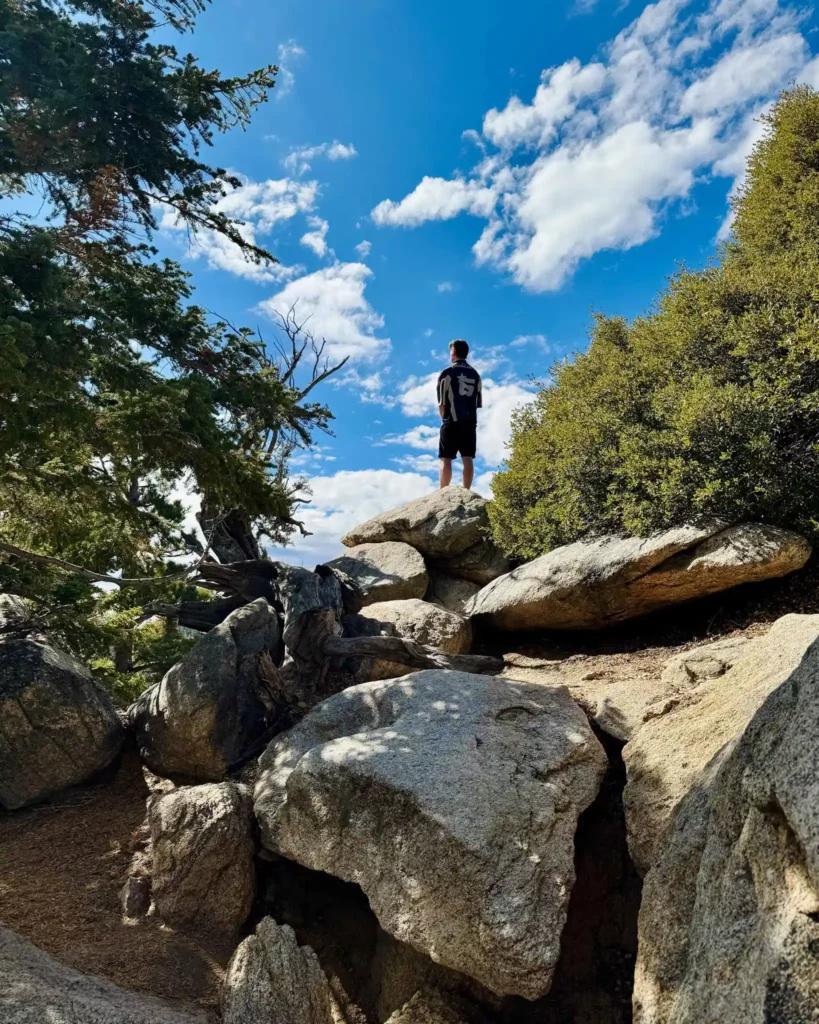
If the tramway journey showcases California from above, Joshua Tree National Park reveals its beauty on the ground. Named after the distinctive Yucca brevifolia trees that populate it, Joshua Tree has become one of the state’s most recognisable national parks, thanks in part to its contribution to pop culture – featuring on various album covers, in films and, of course, on Instagram feeds. Yet, none of it truly captures its beauty compared to seeing it in person. Gigantic granite boulders seem almost impossibly balanced on one another, like a giant’s game of Jenga, while the famous Joshua trees’ twisted branches stretch towards perfect blue skies. Two distinct desert ecosystems meet within this park, creating one of the most biologically diverse places in North America. What can initially appear barren is actually teeming with life, from the resilient cacti to the small wildflowers thriving among the enormous rocks. It’s also remarkably quiet. There is an overwhelming stillness that makes it easy to understand why so many artists, filmmakers and musicians have found inspiration here.
Attitude was hosted by Visit Greater Palm Springs. To find out more about the destination, see visitgreaterpalmsprings.com.
This is an excerpt of a feature appearing in the September/October 2026 issue of Attitude, available on digital platforms and in print now.