JK Rowling actress Laura Kay Bailey tells her side of the story ahead of new play Rowling In It (EXCLUSIVE)
In Rowling In It, Bailey revisits the summer of 2024, when she played JK Rowling in Terf at the Edinburgh Fringe. Establishing herself as a trans ally, she tells Attitude why she is stepping back into controversial territory
By Aaron Sugg
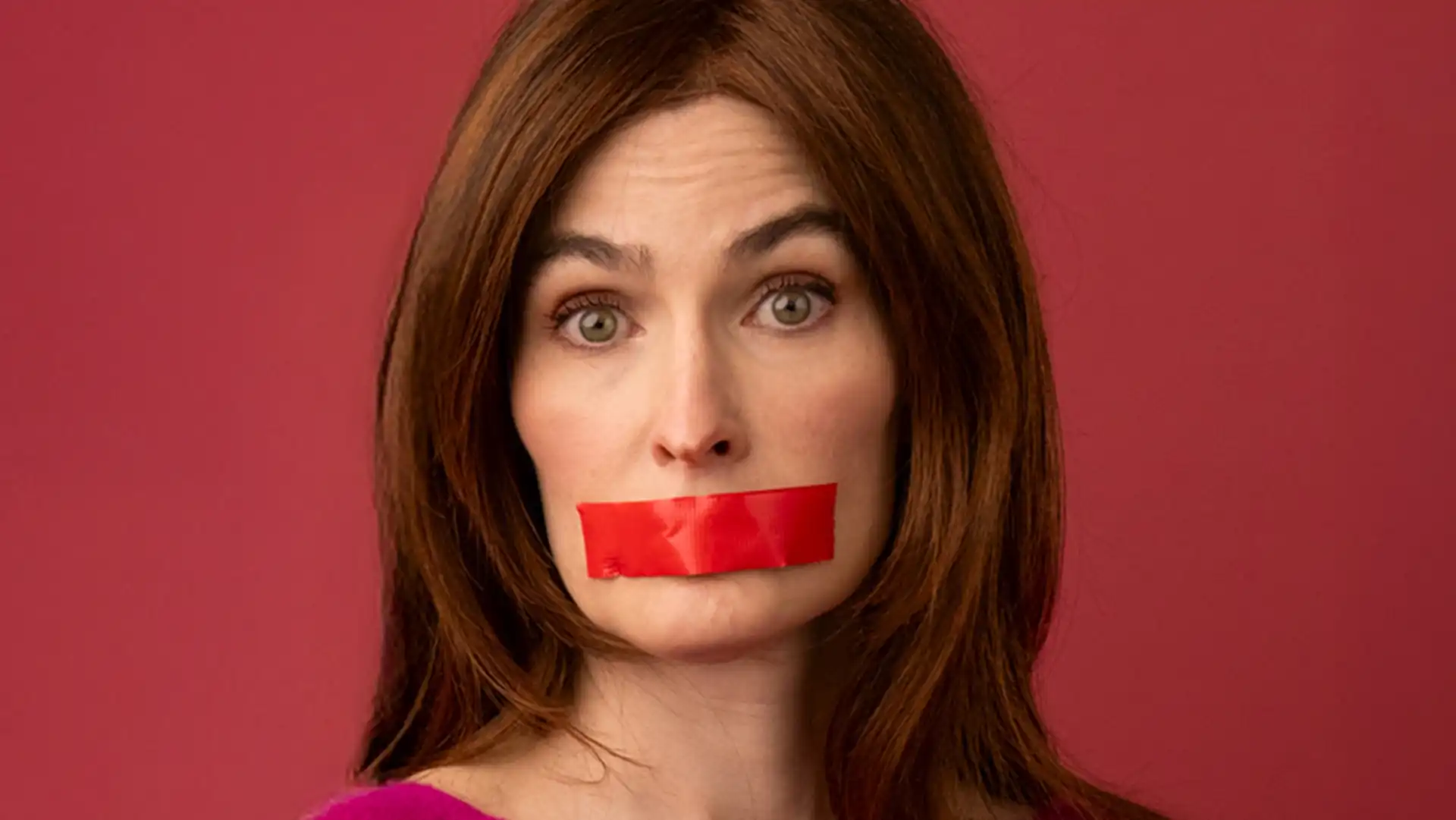
Actress Laura Kay Bailey reaches out to tell her side of the story as she prepares to revisit her role as JK Rowling in her upcoming one-woman play, Rowling In It.
After a rollercoaster ride following the Edinburgh Fringe 2024, Bailey faced intense backlash for portraying the transphobic Harry Potter author in Terf.
Speaking previously with The Times post-show, she described herself as “woefully uninformed.” Since then, she has taken it upon herself to read, learn, and grow from her past mistakes.
In Rowling In It, Bailey revisits that turbulent summer, offering a comedic exploration of what happens when embodying a controversial figure forces you to confront your own assumptions about identity, empathy and what it truly means to be a woman.
Speaking exclusively to Attitude, Bailey explains why she feels compelled to step back into Rowling’s metaphorical shoes, reflecting on the burden of memorising “something like 498 transphobic barbs” as her original character, and how she has prepared more thoroughly this time around.
Attitude: Who is Laura Bailey outside her role as JK Rowling?
Laura Bailey: Okay, well, I’m a mum. My life is like an episode of Motherland. I’ve been acting professionally since I was 16, on and off. I was a big theatre nerd in high school. It’s been a massive part of my life, and actually, theatre is the love of my life. So that’s probably me in a nutshell, I would say. I started writing fairly recently, maybe just about five or six years ago, so that part is newer. And I’m American, but I’ve been in London now for 11 years, something like that. I got a British passport last year.
What would you say is your main genre of writing?
Comedy or dark comedy. I think I’ve learned through an irresponsible number of hours of therapy that humour is one of my coping mechanisms. So that’s how I process things. I’ve written a film script about my dad’s experience in the Vietnam War, which I tried to make a dark comedy – a tall order, but we’ll see. I was actually in the middle of writing that when I was cast as JK [Rowling], so there was a bit of a weird mental shift.
Yeah, so I would say comedy. I also tried to write a psychological thriller because I really enjoy that genre, and it was just terrible.
This new play came about as you wanted to establish the fact that you were a trans ally. So let’s begin with the big question: are you a trans ally?
Yes. So, a large part of the play is exploring empathy and examining my own assumptions about identity and what it means to be a woman. I really had to dig deep. This role was very much a watershed event in my life in many ways.
I was coming from a mostly heteronormative bubble, if I’m honest – small kids, school runs, pureeing sweet potatoes for decades, head full of Peppa Pig plot-line and all that. When I took on the role, I truly did not know much about the JK Rowling controversy, which I had a producer say they didn’t believe me on. They wanted me to explain that further, and I was trying to, but I was clueless.
In fact, I told The Times in an interview that I was “woefully uninformed,” which was entirely accurate at the time. I had to do a deep dive on everything to get up to speed very quickly, while also trying to learn 498 lines, work on my British accent, and all the other things actors do.
I’ve spent a couple of years now doing pretty heavy research, and I feel very strongly that… how do I say this? There’s a lot of scary things going on in the world right now. I mean, with [Donald] Trump, there’s women dying of ectopic pregnancies, and in Kansas, they just took away driver’s licences from the trans community. There’s a lot happening. I do think we have a responsibility to learn if we’re uneducated. And that can start with just saying, “I don’t know much about it, and I want to learn.” And that’s part of the arc, I suppose, of the show.
What makes you an ally?
I’ve done a really deep dive on this. So, how do I put it… I’m a bit of a nerd. I’ve gone through all these academic articles and things like that. There was one that really hit me like a ton of bricks. I can’t remember the woman’s name, but it was an academic article about how the rhetoric – the words being used against the trans community – are literally exactly the same as those used against the gay community in the 1980s, and against the Black population in the US during segregation, for example.
When I read it, it was just like a light bulb moment. Does that make sense? I was like, “Oh, wow, my God.” And I’m from Texas. Both my parents lived during segregation.
I’ve always been, yes, an ally back when it was just LGB, because I’m that old. But I did have to play a bit of catch-up with this role and this topic.
Do you think trans rights can exist alongside and equal to women’s rights?
I do. Yes, I do. I don’t see them as mutually exclusive. That’s my personal view. In fact, I did a whole Master’s, basically on gender studies, another lifetime ago, you know? And of course, you learn about the intersectionality of race and gender, and how the patriarchy… it’s all part of the same process, essentially the same forces. And of course, as a woman born in the 1980s, I’ve encountered a lot of misogyny, as you do, right? And so that’s something I can understand a bit myself.
Speak to me about Rowling In It, how did it start?
It’s a process, it’s been a process. Okay, so it started during the run of The Fringe two summers ago, when I just realised at some point this is going to be a major watershed event in my life on multiple levels – career-wise, personal life, all of it. And I just started to take notes. I didn’t know what I was going to do with it yet, but I began a daily journal.
Personally, I find writing for film or TV infinitely easier than theatre. I find theatre so much harder. My original idea was always to try some kind of TV pilot. I was working with a Scottish female director I met in Edinburgh, and she said, “Why don’t you write it as a one-woman show?” I was like, “I don’t think that’s possible”. But when she planted that idea, I was like, “could I… could I do that?”
It percolated for months. I can’t speak for everyone, but I needed several months to decompress from the experience. Then, in December, I was on a ten-hour flight to Texas because my dad had knee surgery, and I was going to help out. Out of nowhere, I vomited this 28-page draft on the airplane – just this manic burst of creativity. It was complete dribble, of course, basically narrative therapy. But then I started refining it and working on it. And yeah, that’s how it started.
When you first began reading your lines as JK Rowling in TERF and embodying her character, how did that make you feel?
When I got the script, I was like, “Wow.” As an actor there are two parts of my brain. The actor side, for example, I just played the villain in a horror film, a film called Gale: Yellow Brick Road. And that’s such a delicious part, because it’s complex. They never think they’re wrong – they’re certain they’re right. And you have to figure out why that is psychologically, what the reasonings are, and give yourself a motivation as an actor, which was a bit… it was tough.
I mean, for me, that’s just what we do as actors – we play a role, right? And it’s, I don’t know if it’s almost a public service of sorts. I don’t know… somebody’s going to play these parts; otherwise, we can’t have the theatre shows about it, right?
But it was hard. I had a line in an earlier draft of my play [Rowling In It] about something like 498 transphobic barbs being seared into my memory, you know? There’s always a psychological element to it when you embody a character like that.
Why do you feel it’s important to revisit that character two years down the line?
Great question. And it’s something I’ve definitely struggled with, because obviously there’s an argument for – do we give this more airtime, right? But to be clear, I don’t actually really play JK Rowling in my one-woman show. I’m not her show. It’s me playing several different characters. I do say a couple of lines as her on stage, but it’s actually not about her. It’s about what happens when an actor steps into a role that’s a cultural lightning rod, and what that does psychologically.
How did you feel about playing a woman who has been described by the public as a ‘stochastic terrorist,’ ‘transphobic,’ ‘gender critical’ and ‘racist’?
So, yes. As I said, the whole experience from two summers ago was traumatic on a number of levels, right? But also fun. The cast all bonded and managed to have a great time at the Edinburgh Fringe, thankfully.
It was definitely a watershed event, and it hit me like a ton of bricks psychologically. I had to sit with it for three months, and then I just… vomited it out. As I said, it was really like narrative therapy. Then I had to come up with: what is it that I’m trying to do here? Why am I writing this, right? Sometimes, as writers or artists, we just feel driven to write about something, but we’re not even sure why yet.
I think the point of the show is that it’s a comedic exploration of what happens when playing a controversial woman forces you to examine your own assumptions about identity, empathy, and what it means to be a woman. I do a lot of self-examination in the piece as well.
Do you not think putting yourself back into JK Rowling’s metaphorical shoes somewhat, presenting yourself as her, may come with consequences?
100%, of course. I fully realise I’m… again, potentially stepping into an area where it could go wrong, right? But I think that’s what theatre is for. I think it’s important that we’re able to discuss these things rather than not, even if it’s done imperfectly. That’s my personal view. People may take issue with it, but I guess we’ll see.
How has your idea of what it means to be a woman changed since educating yourself on trans issues?
It’s an interesting one, you know, because I went really, really deep and did a lot of self-reflection in my research while writing this. I actually have this monologue at the moment – I don’t want to give anything away – but it’s about uteruses and, like, do I want my uterus?
It’s just… it’s an interesting one because the feminist movement, from my understanding – and I’m not an expert on the topic – wanted to avoid being defined by that. Why your uterus, right? I thought we decided that. And now it feels like some people are trying to go back to that, which is confusing, you know?
It’s a really self-critical exploration of identity, identity politics, and all these things.
Do you have a way that you’re going to navigate the kind of backlash you may get from Rowling In It?
I am not on Twitter [X], so that’s probably going to help. I won’t go there. And that definitely helped the first time around. You know, I think my hope is that people who come to the play will leave thinking a little bit more deeply about empathy.
One of the key learnings for me personally through this experience has been that when an issue doesn’t affect you directly, it’s very easy to remain uninformed or detached. The show is really about what happens when you’re forced to confront that, and how comedy can sometimes help us process difficult ideas.
I would also say that a large – in my opinion, vast – majority of the cis community know very little about trans rights issues and the LGBTQ+ community. Not that it’s my place, or my job in this piece, to be a mouthpiece for that at all, but I do think there’s progress to be made on that front, let’s put it that way. People just don’t know, and they’re curious, but they don’t know how to approach the topic. Sometimes, just throwing something out there, right or wrong, a fine line between brave and stupid can start a conversation.
How have you tried to avoid similar backlash to what you faced in Terf?
Well, I’ve had input from trans creatives on the project, for one thing. I’ve tried to treat the topic with the utmost respect and care. One of my major issues in putting this play on was: how do I, as a cis woman, tell this, darkly comedic story about taking on this role, while not ignoring the trans part of the storyline, but also not co-opting it? That’s because it’s not my story to tell. So that’s been a struggle in writing this, finding that line of… So, we’ll see. We’ll see what people think.
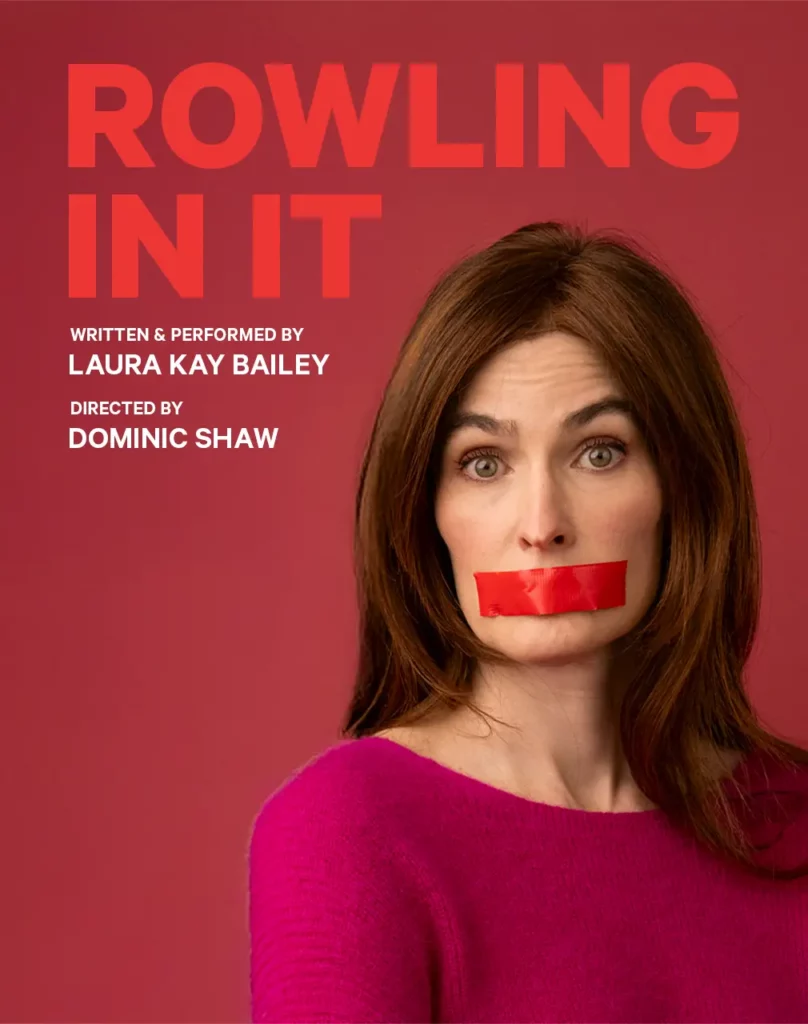
Written and performed by Bailey, Rowling In It will take place at King’s Head Theatre, London from 6 to 18 April 2026.
Get more Attitude