Does hip-hop still struggle to make space for queer masculinity?
"Rap culture has traditionally been shaped by a very narrow performance of masculinity," writes Alexandru Bleu
Queer is not any specific sexuality. Queer is counterculture. Queer is political. Queer is loud. Queer is unapologetic. Queer is freedom. Replace “queer” with “hip-hop” and every statement would still stand true. I’m the embodiment of that overlap. It’s always been important to centre queerness in my art while distinguishing it from sexuality. Sexuality is irrelevant; who you love doesn’t need to be crucial to your art, but how you show up does.
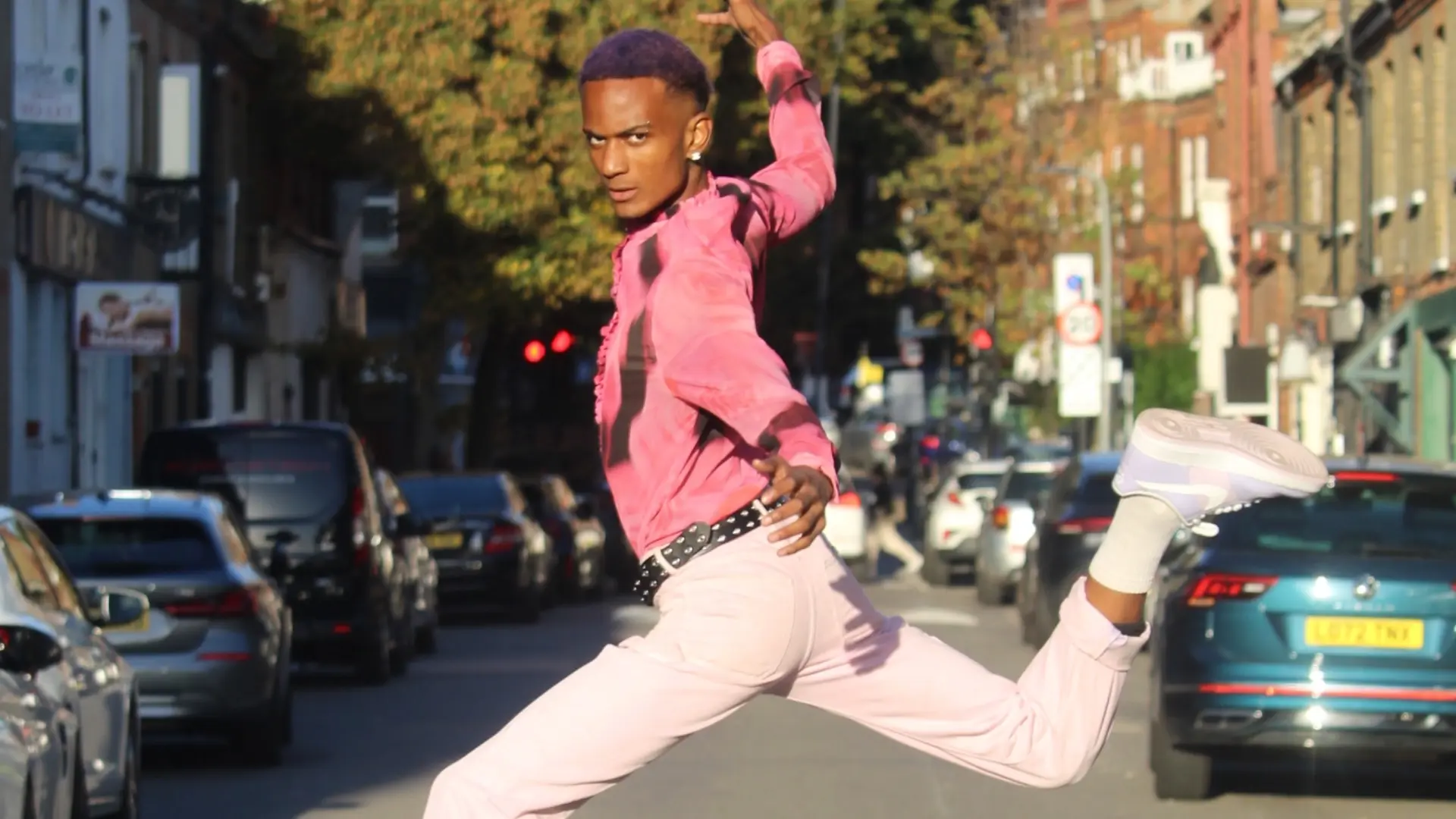
In summer 2025, I got caught in an uproar of homophobic backlash when a video of me dancing in a pink cowboy outfit went viral. The problem wasn’t what I wore, but how it disrupted the visual cues people expect of hip-hop culture.
In person, nobody cared other than to tell me I looked great. I mean, it was Boomtown. And as with any multi-day mega-festival, wacky fits are a given, so I leaned into it.
The power of pink. Who knew that a colour would have so many people so mad?
The online hate didn’t particularly phase me as a person, but as a hip-hop artist it suddenly dawned on me how much of an antithesis to the genre I was going to be read as. As an artist, I’ve always liked having a slightly clashing visual and sonic identity. You don’t hear BATSHIT CRAZY and think someone who looks like me is rapping it. That contrast was the audiovisual presentation of my life’s irony.
But that separation was never only an aesthetic choice. It was the most honest way I could reconcile my artistry with my lived experience of existing within two seemingly conflicting communities that have two very distinct codes of normalcy. Thus, I had to learn to negotiate how I showed up before I ever learned how to explain it. As an artist, my music carried authority and anger, while my visual presentation gave me room to exist outside the expectations that usually come with that.
The moment at Boomtown wasn’t part of that negotiation. I was caught lacking, completely off guard, dancing without the masculine authority that rapping affords me. Suddenly, the veil of negotiation was lifted, and I didn’t have the music to soften the blow of my image. Too queer for hip-hop, but too ‘hood’ to exist neatly within the mainstream queer cultural economy.
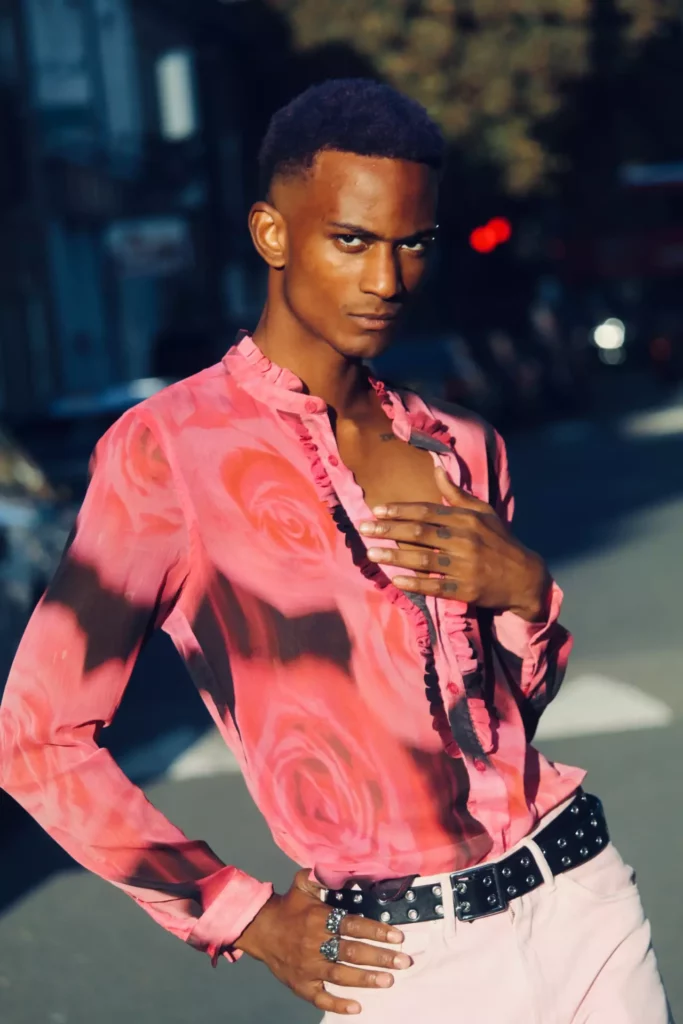
The power of pink. Who knew that a colour would have so many people so mad? Mainly, and almost exclusively, from straight men. It just showed me that pink was my superpower. So I dusted off my metaphorical pink powersuit and made everything pinker. Pitching my song BATSHIT CRAZY – branded in a signature pink fit – at what was meant to be a feedback opportunity turned into my first national radio play on BBC Radio 1Xtra. But somehow, it still felt like I was playing a sort of game. Purposefully foregrounding the version of myself that sonically felt the most palatable to the traditional rap audience, or ‘the culture’. While that version of me is completely authentic, a whole other side of me became shunned. A side that was freer, bolder, and unapologetic in everything. Where’s the authenticity in that?
I decided I was going to create a record where I could brandish my own interpretation of masculinity
That’s when I began conceptualising a song centred around the catalyst for the trolling against me: the colour pink. I decided I was going to create a record where I could brandish my own interpretation of masculinity, one that was mediated through soft pink aesthetics. Not the version that had become ubiquitous within hip-hop.
Cue ALL PINK EVERYTHING.
ALL PINK EVERYTHING did exactly what it needed to do. Not only did I bring pink to UK rap in a way that felt unmistakably mine, I brought it to the top of the iTunes Rap chart. It was provocative; it got the people going. This was the final “fuck you” of the saga. For the first time as an artist, I was able to present my own version of masculinity that wasn’t bound to any code. Nothing about the song centres any specific sexuality, but the curated optics told a story about my role in the binary of traditional masculinity: fluid and undefined.
For the first time, I wasn’t asking for permission; I was demanding respect. Unfiltered and untainted, there I was – a pink boy with a pink song: the #1 song on the iTunes rap chart. For the entirety of my birthday, I defied all odds, rising to the top of the iTunes rap sales chart while being fully myself. Not an inflated representation of my childhood or the ‘ends’ that made me. At this moment, all outside opinions ceased to matter in the pink world I had curated. I had already proved I could adapt, but ALL PINK EVERYTHING showed that I didn’t need to.
Learning how to move between different, sometimes conflicting fragments of my identity has taught me that it’s okay to exist as a walking paradox. People who value authenticity will always gravitate towards you – then it’s up to you how you show up.
For queer artists in rap, especially those that are read as visually queer, the work doesn’t stop at the music or the image
Rap culture has traditionally been shaped by a very narrow performance of masculinity. Men perform toughness largely for other men, while women are expected to carry similar hardness in their lyrics while still visually satisfying the heterosexual male gaze. I’m inevitably going to disrupt that, but I’ve come to see that as my strength. Being able to exist comfortably across different cultural codes gives space to soften those boundaries rather than always crashing through them.
But for queer artists in rap, especially those that are read as visually queer, the work doesn’t stop at the music or the image. It extends into the everyday negotiations that sit around visibility. The intrusive questions that flatten your artistry into identity, the strategic placement of hashtags on music content on TikTok to avoid homophobic algorithmic reach, and the constant search for spaces that can hold both parts of you at once without reducing either to a gimmick. There are still very few spaces, be it physical or editorial, that meaningfully cater to artists who exist at the intersection of hip-hop culture and visibly queer expression. Too often, you’re forced to show up as one or the other. There simply isn’t any infrastructure for queer presence in rap.
I’m grateful for the experimentalism coming from the UK underground scene recently, and there’s a refreshing relaxation on what hip-hop is allowed to look like. For queer artists, that means a playing field with fewer rules than ever before, but we’ve yet to see that fully cross over into the mainstream. Sure, in terms of queer representation that is decentered from sexuality, America gave us Lil Uzi Vert. But the UK has yet to produce queer representation with a similar level of visibility or relative success, and that’s a problem. I’ll keep showing up as me, and when I get to the right ears and eyes, I can contribute to that change.
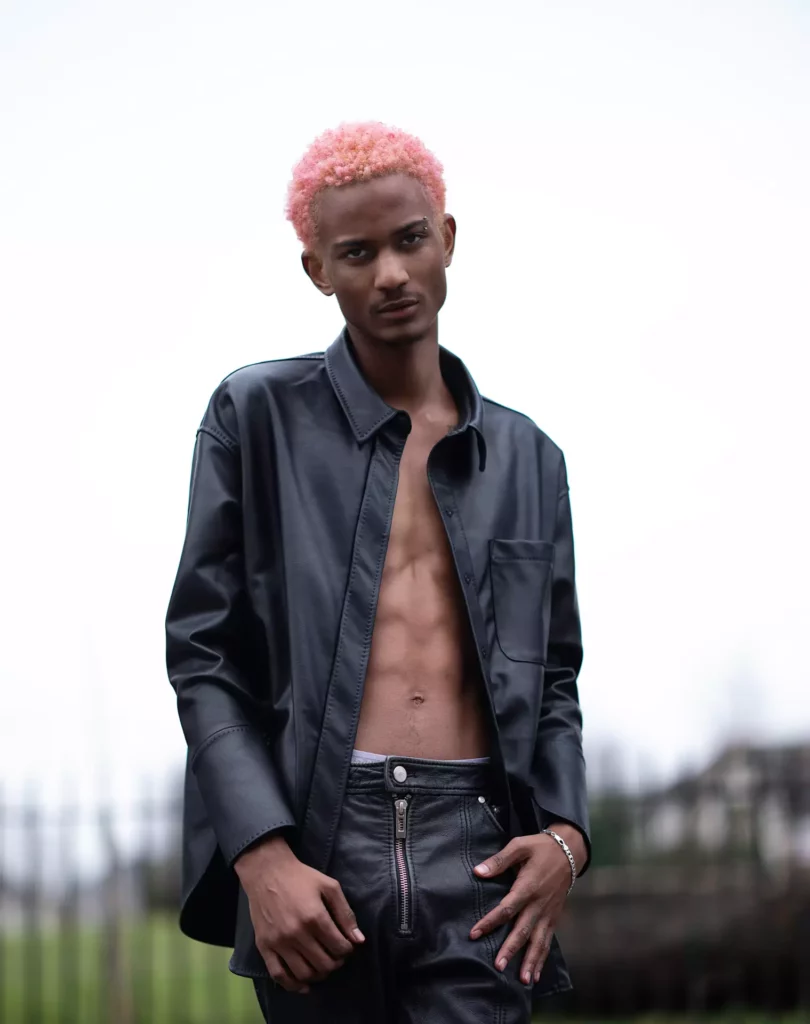
In the viral clip, what struck me was that I wasn’t acting in a way that was particularly effeminate. It was the visual cues of the colour that caused such a frenzy. But even if I was, why should it have mattered? I’m not going to ‘correct’ the image, soften myself, or explain what should already be understood. I’m going to double down and turn the very thing that unsettled people into a defining part of my visual and sonic identity. The chart placement was a step in the right direction. And now, as I gear up to release my first LP in the spring, I feel more assured than ever in myself and how I’ll show up. Aptly titled This Is Not a Joke, the project blends anger with a vulnerability I’ve finally afforded myself as I’ve realised it’s okay to live in contradiction. I don’t feel the need to perform masculinity or package hardness as credibility. The record moves through the most honest versions of me I’ve ever put into my music as an authentic London hip-hop sound shaped by the textures of grime and softened by melodies, with nods to soundsystem culture that has always lived in the background of the city and my upbringing.
Compete with yourself and let your art speak for you – you’ll always rise to the top. Your expression, and how you show up, is your art. Access isn’t always given, but it can be built – so even when there isn’t a seat waiting for you, make your own table.
And paint it pink.
Alexandru Bleu is a London-born recording artist, model and fundraiser. A graduate of the BRIT School, Bleu released his debut single, ‘LINE OF ASSAULT’, in 2025, followed by ‘ALL PINK EVERYTHING’, which reached number one on the UK iTunes Rap Chart. He also appeared in the 2024 Channel 4 documentary More Than a Runner.
Get more Attitude