Heated Rivalry creator Jacob Tierney on gay storytelling, DMs from closeted athletes and critics calling the series unrealistic (EXCLUSIVE)
Tierney reflects on the impact Heated Rivalry has had on athletes, both positive and negative, as he remains deeply grateful for its reach
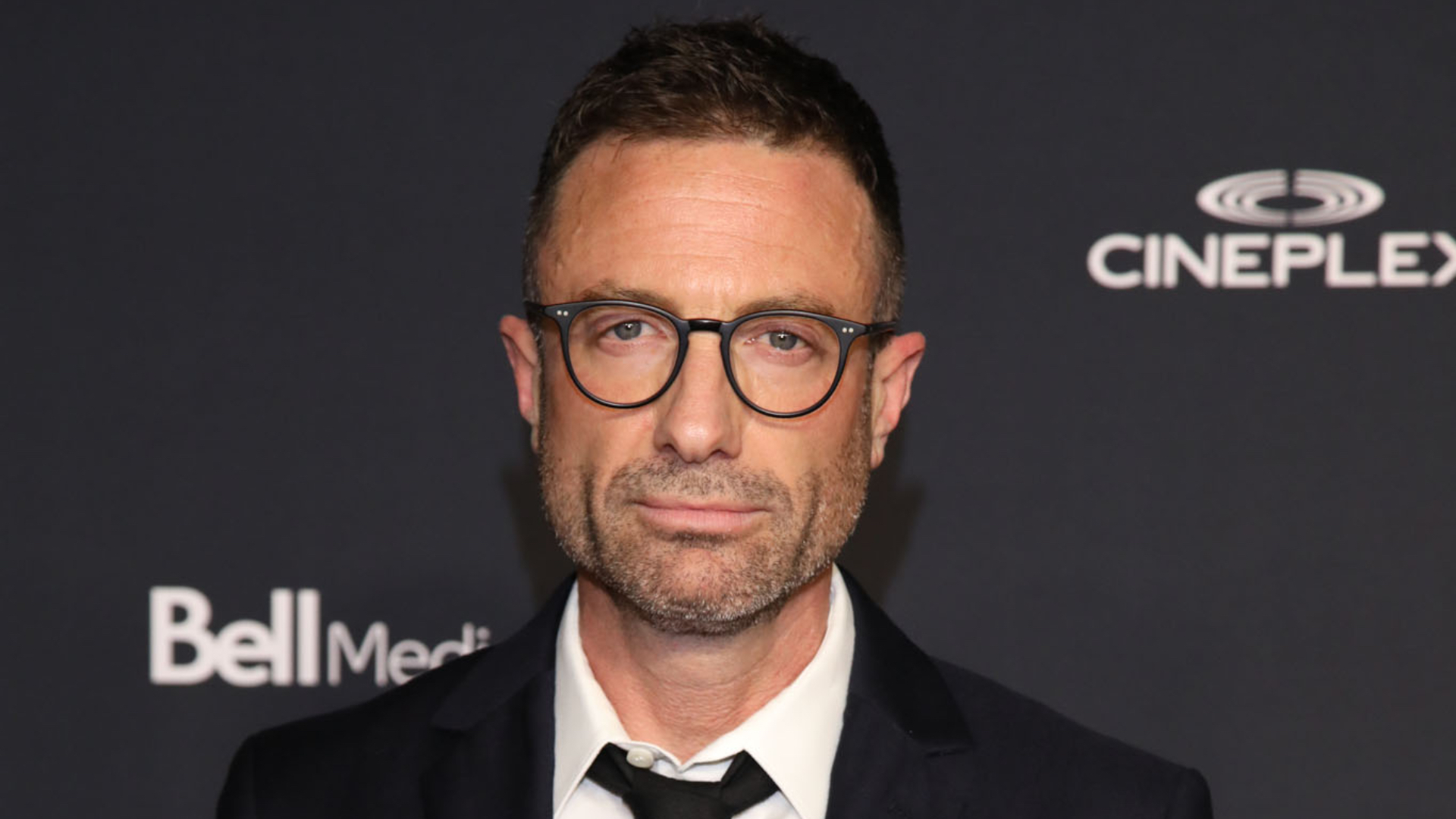
Heated Rivalry creator Jacob Tierney sent shockwaves through the gay world when his on-screen adaptation of Rachel Reid’s novel landed on Crave and HBO Max in late 2025. The gay ice hockey romance series tackles themes of homophobia – both internalised and within the sport – while portraying gay sex in scenes that are as passionate and unflinchingly steamy as they are intimate and tender.
Away from issues around gay shame and the unapologetically hot fucking, at its heart is a love story with [spoiler] the kind of happy ending that has rarely been depicted on TV to wider mainstream success since Russell T Davies’ game-changing Queer as Folk series first aired in 1999.
Since its debut, Heated Rivalry has surged up the streaming charts, topping HBO Max’s most-watched series in the US and hitting number one on NOW in the UK. The six-part series is now Crave’s most-watched original series ever, with viewership continuing to grow rapidly week on week – and its fans reach beyond gay men, but straight men and women alike. (Watching straight guys react to Heated Rivalry scenes is this writer’s current algorithm indulgence.)
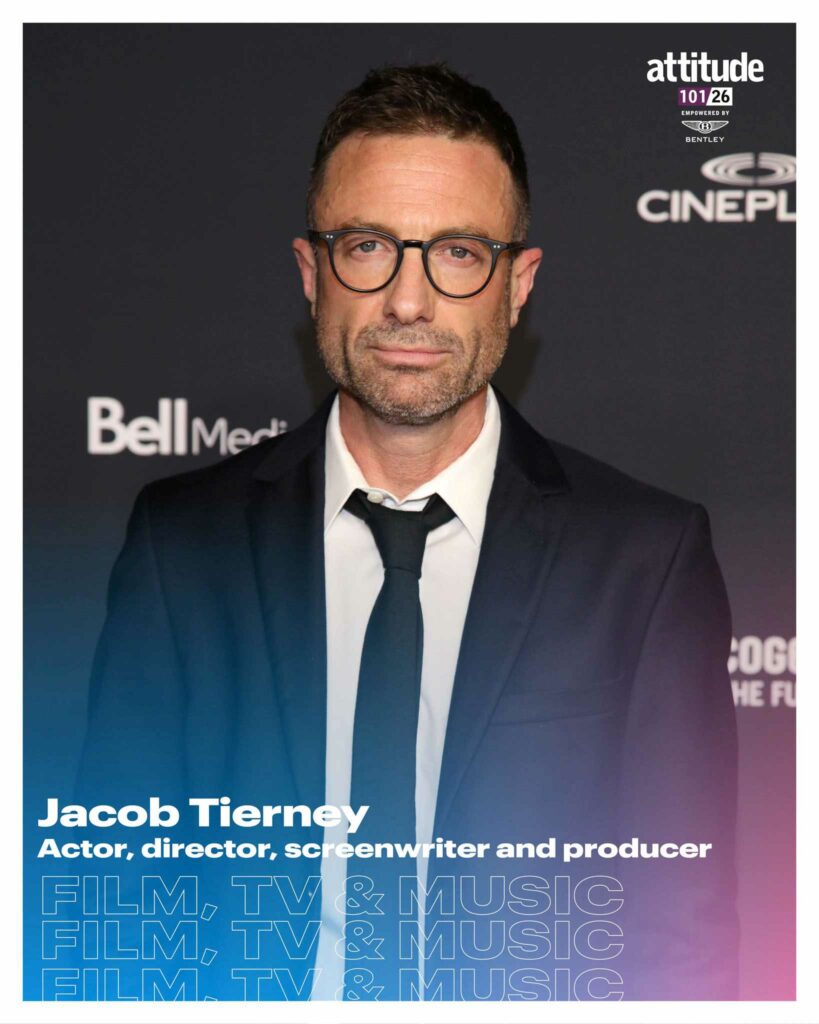
Attitude 101, empowered by Bentley ‘Film, TV and Music’ category trailblazer Tierney reflects on the show’s impact.
Attitude: Given that the show was landing at quite possibly the worst time for gay representation in the past 25 years, did you have any apprehension ahead of the series first airing?
Jacob: Not with it airing. In trying to get it made, I was acutely aware that this was pushing a boulder up a hill until I found the right people to make it with. It’s fun to watch people dance around why they don’t want to tell a gay story without saying that. I’d spent a couple of years trying to get a really, really good script that I didn’t write for a queer horror comedy made. And it was really interesting to watch people explain and never say it’s because it’s gay, as they were telling me why they weren’t gonna make it.
I obviously did not expect what happened with Heated Rivalry to happen, but I thought at least it has a chance. I knew that meant that it had a fighting chance to be a part of a conversation. I didn’t, obviously, realize the extent to which it would be in the conversation.
Attitude: What’s the moment or scene that resonates most with you?
Jacob: The ending of episode five is incredibly important to me. And episode five and six are why I wanted to tell this story. I wanted to get to show things that we don’t get to see as queer people, and I wanted to show… not just happiness, but that kind of over-the-top rom-com happiness you get to have at the end of episode five. And then I wanted the quiet happiness of episode 6 as well. And so those two episodes, not so much moments, but those two episodes are incredibly important to me. And it’s incredibly gratifying to see the way that people have responded to them.
Attitude: It’s filmed in such a cinematic way. Each episode is like a short film in itself…
Jacob: I shot it cinematically because that’s the way I like things to look. That’s the way I like things to feel, in general. My director of photography and I looked at a lot of noirs. I think everything should look like In the Mood for Love. I don’t understand why it wouldn’t, because it’s so beautiful. But especially when you’re making a romance, and we were acutely aware that we’re making a romance – we’re making a fantasy in so many ways. And part of that should be that everything should be as gorgeous as it can be, especially when you’re also doing a contrast between places like a hockey tournament in Saskatchewan, a gorgeous cottage, these opulent hotel rooms that they find themselves in, or the lifestyles of these professional athletes who live in a way that the rest of us do not.
Attitude: The impact has resonated in the sports world as well. Jesse Kortuem came out in January. Have any other closeted athletes reached out to you directly?
Jacob: They have, yeah.
Attitude: Zach Sullivan, who came out as bisexual in 2020, said that he felt conflicted about the series – how it resurfaced past trauma, but also highlighted the positive that it brings to the sport community. Was it hard for you to keep yourself focused on telling Shane and Ilya’s love story and not focusing too heavily on the trauma that we expect to see in so many gay narratives on screen?
Jacob: I very consciously was avoiding the trauma. I mean, that’s the idea. That this is a love story. This is a romance. I wanted a happy ending. I wanted to service the source material, as well. I mean, this is a book, right? So, I’m doing this book. Quite honestly, there was no part of me that imagined this show having the impact that it would have. There was no part of me that thought that I would be on the receiving end of any of this, or that the show would be making a difference in people’s lives the way that it seems to have. And so, it was an easy thing to not think about because… well, I’d have to be an egomaniac to think that anything I was doing here was going to reach people like this. I’m very grateful it has.
And I think that if you’ve lived an experience similar to this, your story is your story. I’m not trying to tell your story. The show is what it is in that way. Again, I can’t speak for everybody and I can’t speak to every experience. And there is obviously a very different show to be made about how unquestionably traumatic it must be to actually be in a hockey league, being gay, being out. I imagine his experience is not fun, and I’m sorry for that, and I’m not trying to take anything away from that.
Attitude: Do you remember the first time you saw queer representation on screen?
Jacob: The first one, and I would say probably the biggest one, because this director impacted me enormously, would have been My Beautiful Launderette and Stephen Frears. My Beautiful Launderette was one of my favorite movies when I was a teenager or a kid. I absolutely adored it. Wong Kar-Wai had a huge effect on me, [and his film] Happy Together. André Téchiné, a French filmmaker. I loved his movies as well. You know, I think when you’re a gay kid growing up in the 90s, you take what you can get. You’re not drowning in stories about you. You kind of look for these coded films. I mean, Gus Van Sant was obviously a huge, huge influence on me, a huge director for me. And Francois Ozon.
Attitude: LGBTQ+ people – and speaking specifically for gay, bi and queer men here – we’re so starved of representation that when we see it on screen, unless those journeys mirror our own, we can distance ourselves and not allow us to enjoy the story. Were there any sections of the gay community that you felt that from with Heated Rivalry?
Jacob: Sure, of course. When people have said things like, “Well, this isn’t realistic.” I’m like, “Well, no shit.” It’s based on a Harlequin book. And it’s about professional hockey players. I mean, if you are under the impression this is a documentary, you’ve really come to the wrong spot. But I understand where that frustration comes from. And I understand the desire for something, and especially when something like Heated Rivalry gets so much attention and that makes it even starker how little attention other things get, which I appreciate and that is true.
I think all things can be true at the same time. I don’t think I would have been telling this story effectively had I tried to do everything all at once. I think that’s a mistake. My Venn diagram has always been gay and hockey. I’m a huge hockey fan. I’m gay. Like this was a way for me to combine my interests and experiences and things that I know about and love where I feel like I can offer something.
I don’t think I can offer something on any and every queer story across the spectrum, and nor should I. We should be out celebrating as many storytellers as we can, especially when their stuff is good. I don’t have to be able to have lived something to find it extraordinary and to relate to it and to learn and to grow, or even just to appreciate. I do understand that can be difficult. We’re a community, we’re many communities, but we are all traumatized and we are all marginalized in different ways.
And I try to leave those voices with a bit of kindness, even if they aren’t directing kindness my way, I’m like, that’s okay. I can still be kind back.
Heated Rivalry is available to stream now in the UK, via Sky and NOW.
Get more from Attitude